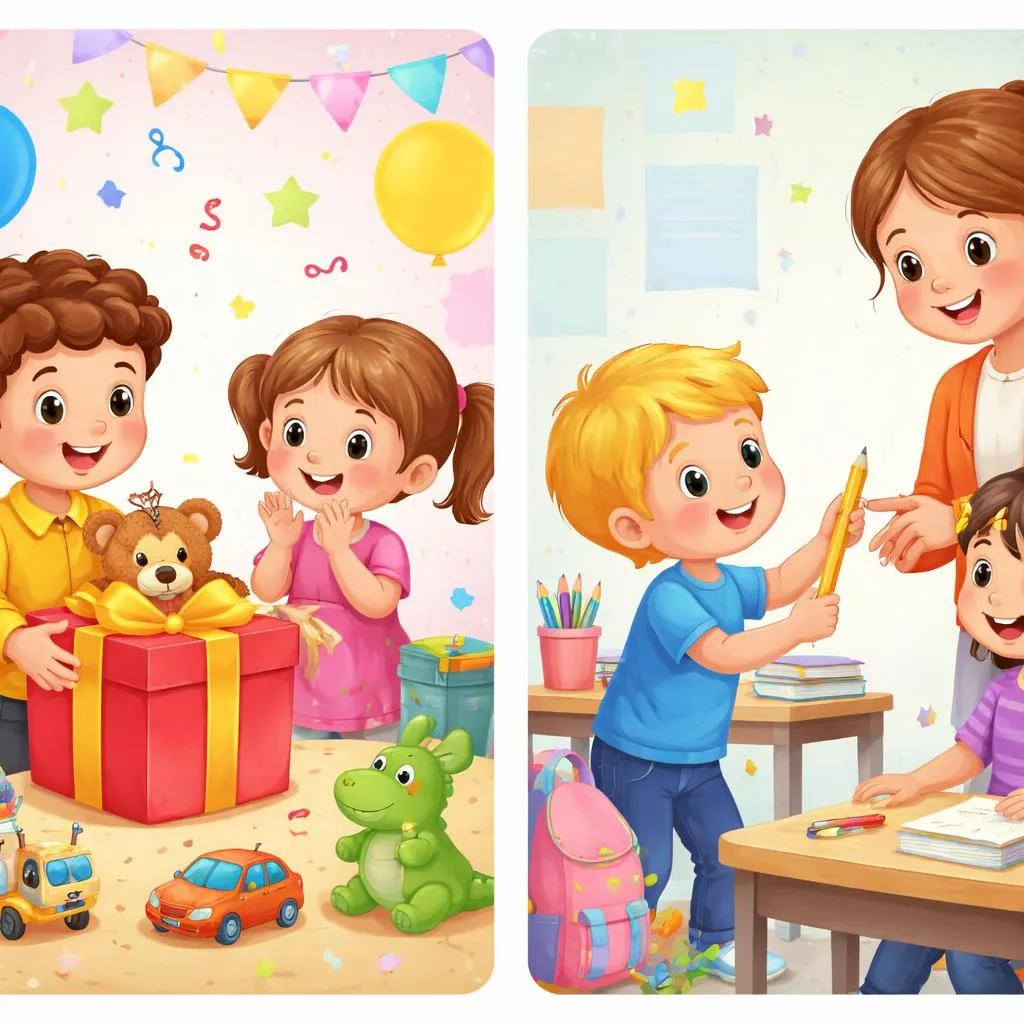

Children receive things every day. They get presents on birthdays. They receive certificates at school. Parents hear kids say, "I received an award" or "I got a new book". These two words seem very close. But they describe different ways of obtaining things. Knowing the difference between a "receive to" and a "get to" helps children talk about how things come into their possession. Let us explore these two acquisition words together.
What Do These Expressions Mean?
A "receive to" means to be given something, often passively. You do not go out and find it. Someone gives it to you, or it arrives. For example, you receive a letter in the mail. You receive a trophy at a ceremony. A "get to" means to obtain something, often actively. You go and get it yourself. For example, you get a book from the library. You get a snack from the kitchen. For a child, receive feels like something comes to you. Get feels like you go to it.
Both are about things becoming yours. That is why the two expressions seem similar. Receive is more passive. Get is more active. Understanding this difference helps children describe whether they worked to obtain something or whether it was given to them.
What's the Difference?
The main difference lies in activity level and formality. A "receive to" is more passive and formal. The item comes to you. You do not chase it. A "get to" is more active and casual. You go and obtain it. Think of receive as sitting in a chair while someone hands you a package. Think of get as walking to the store and buying milk. One is waiting and accepting. The other is moving and acquiring.
Another difference is formality. Receive sounds more formal. You receive an award. You receive a diploma. Get sounds casual. You get a snack. You get a pencil. This difference helps children know which word to use in which situation. Write a story? Use receive for special moments. Talk to a friend? Use get for everyday things.
When Do We Use Each One?
Use a "receive to" for things that are given to you, especially formal or special things. At school, a child says "I received a perfect attendance certificate." Use receive for mail. "She received a letter from her cousin." Use receive for gifts. "He received many presents for his birthday." Use receive for any situation where someone or something sends or gives you something without you going to get it.
Use a "get to" for everyday obtaining, especially when you go and get it yourself. At home, a child says "I will get a drink of water." Use get for shopping. "We got groceries from the store." Use get for finding. "She got a shell on the beach." Use get for earning. "I got a good grade on my test." Get is for active obtaining. You do something to get it.
Real-life situations use both naturally. A parent says "You received a birthday card from Grandma. It came in the mail. You did not go anywhere. It came to you. This morning, you got your own bowl of cereal. You walked to the kitchen. You opened the cupboard. You got the cereal. That was active. Receive is passive. Get is active." Another example: a child receives a trophy for winning a race. The trophy was handed to them. The child got the trophy by winning. Both words work, but the feeling is different.
Example Sentences for Kids
Here are simple examples of a "receive to":
"I received a thank-you note from my friend."
"She received an award for her drawing."
"He received a package in the mail yesterday."
Here are simple examples of a "get to":
"I need to get some milk from the store."
"She got a new backpack for school."
"Can you get me a tissue from the box?"
Notice how the receive examples involve things coming to the person. The get examples involve the person going to get the thing. Receive is like catching a ball thrown to you. Get is like picking up a ball from the ground. Both end with you holding the ball. But the path is different.
Common Mistakes to Avoid
Many children say "get" for everything. They say "I got a gift" instead of "I received a gift." That is fine in casual talk. But the correct way is to know that receive is more precise for gifts and formal situations. Using receive shows a bigger vocabulary. It also matches formal writing. This helps children adjust their language for different audiences.
Another mistake is thinking receive is always better. A child says "Receive sounds smarter, so I will always use it." That is not correct. The correct way is to know that get is perfect for daily life. "I got a drink" sounds natural. "I received a drink" sounds strange. Use the right word for the right moment. Get is for active, everyday obtaining. Receive is for passive, formal, or special obtaining.
A third mistake is forgetting that you can receive without wanting something. A child says "Receiving is always good." That is not true. The correct way is to know that you can receive bad things too. You can receive a bill. You can receive bad news. Get can also be for bad things. "I got a bad grade." Both words are neutral. The good or bad comes from the thing itself, not the word. This understanding helps children use both words honestly.
Easy Memory Tips
Here is a simple trick. Imagine a "receive to" as sitting on your couch while the mail comes through the slot. The mail comes to you. You do not move. Imagine a "get to" as walking to the mailbox yourself. You go to the mail. So receive = stay (passive). Get = go (active). This comparison works beautifully.
Another tip uses the first letters. Receive starts with R. Think of "R for Relax." When you receive, you can relax. The thing comes to you. Get starts with G. Think of "G for Go." When you get something, you go and get it. Practice with your child. Ask "Did you go and get this, or did it come to you?" If you went, say get. If it came to you, say receive. This question works for almost every situation.
Quick Practice Time
Try these simple exercises with your child.
Fill in the blank: Choose "receive" or "get".
"I __________ a package from my grandparents every year for my birthday." (Answer: receive)
"Please __________ your shoes from the closet." (Answer: get)
Multiple choice: Pick the correct description.
Which one is more passive and formal, often for things that come to you?
A) Get
B) Receive
(Answer: B)
Which one is more active and casual, often for things you go and obtain?
A) Receive
B) Get
(Answer: B)
These quick questions take only two minutes. They help children see the difference between passive and active obtaining. Think about your day. Ask your child "What did you receive today (that came to you)?" Then ask "What did you get (that you went and got)?" That real practice builds vocabulary and self-awareness together.
Wrap-up
The key difference is simple. Receive means to be given something passively, often formally, as it comes to you. Get means to obtain something actively, often casually, as you go to it. Learning this difference helps children describe how things come into their possession and choose the right word for formal or casual situations. Keep receiving surprises and getting what you need. Your child will learn that both words are tools for a rich vocabulary, and knowing when to use each one is a skill that grows with practice.