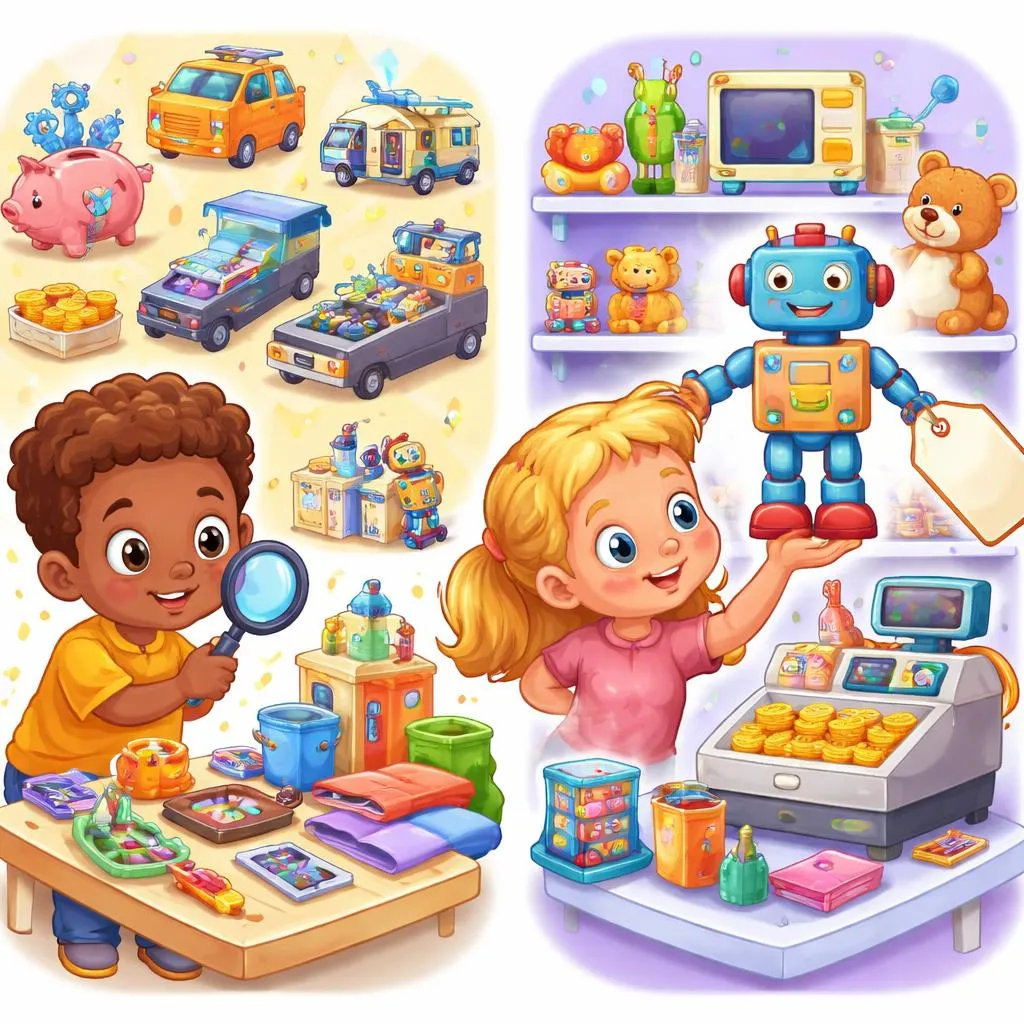

Children see numbers on price tags. They hear parents talk about how much things cost. Kids say, "What is the price of this game?" or "How much does it cost?" These two words seem the same. But they describe different sides of the same money exchange. Knowing the difference between a "cost to" and a "price to" helps children understand how money works when buying and selling. Let us explore these two money words together.
What Do These Expressions Mean?
A "cost to" means the amount of money the buyer must give up to get something. Cost is from the buyer's point of view. For example, the cost of a new backpack is twenty dollars. A "price to" means the amount of money the seller asks for something. Price is from the seller's point of view. For example, the price tag on a toy says fifteen dollars. For a child, cost feels like what you pay. Price feels like what the store charges.
Both are numbers on a tag. That is why the two expressions seem similar. Cost and price are often the same number. But they look at that number from different sides. Understanding this difference helps children see that every transaction has two perspectives.
What's the Difference?
The main difference lies in whose point of view you take. A "cost to" is what the buyer pays. It is the sacrifice you make. A "price to" is what the seller asks. It is the number on the sticker. Think of cost as the amount of money leaving your pocket. Think of price as the amount of money going into the store's cash register. One is about spending. The other is about charging.
Another difference is that cost can include more than just money. The cost of something can include time, effort, or even sadness. "The cost of missing the party was feeling left out." Price is almost always about money. This difference helps children understand that cost can be bigger than price. A toy might have a low price but a high cost if it takes an hour to drive to the store.
When Do We Use Each One?
Use a "cost to" when talking about what the buyer gives up. At the store, a child asks "How much does this book cost?" Use cost for experiences. "The cost of staying up late is being tired tomorrow." Use cost for decisions. "What is the cost of choosing this game over that one?" Cost is about what you lose or spend. It helps you decide if something is worth it.
Use a "price to" when talking about what the seller charges. At a yard sale, a child sees "The price of this lamp is five dollars." Use price for tags. "The price on the box is ten dollars." Use price for asking amounts. "What is the price of admission to the zoo?" Price is the number you see. It is the number the store wants you to pay.
Real-life situations use both naturally. A parent says "The price of that video game is forty dollars. That is what the store charges. The cost to us is forty dollars plus the gas to drive there and the time we spend. The price is just the number on the box. The cost is everything we give up to get it." Another example: a child wants a candy bar. The price is one dollar. The cost is one dollar plus maybe missing out on buying something else later.
Example Sentences for Kids
Here are simple examples of a "cost to":
"The cost of a new bike is one hundred dollars."
"What is the cost of missing the school trip?"
"The cost of eating too much candy is a stomachache."
Here are simple examples of a "price to":
"The price of milk at this store is higher than at the other store."
"Please check the price before you buy."
"The price tag said twenty dollars, but it was on sale."
Notice how the cost examples often include non-money things like time or feelings. The price examples are almost always about money numbers. Cost is what you pay. Price is what they ask. Sometimes they are the same. Sometimes cost is bigger.
Common Mistakes to Avoid
Many children say "cost" and "price" as if they are exactly the same. They are very close. The correct way is to know that cost is the buyer's word. Price is the seller's word. If you are buying, ask "What does it cost?" If you are selling, say "The price is..." This helps children understand perspective in transactions.
Another mistake is thinking cost is always money. A child says "If it does not cost money, it is free." The correct way is to know that everything has a cost. Time is a cost. Effort is a cost. Missing something else is a cost. Even a free gift might cost you a thank-you note. This understanding helps children appreciate that nothing is truly free. Everything has a cost of some kind.
A third mistake is forgetting that price can change. A child says "The price is always the same." That is not true. The correct way is to know that stores change prices. Sales lower the price. Demand raises the price. Cost also changes. If you find a cheaper store, the cost to you is lower. Both words describe numbers that can go up and down. This helps children be smart shoppers.
Easy Memory Tips
Here is a simple trick. Imagine a "cost to" as money flying out of your wallet. The cost is what you lose. Imagine a "price to" as a number written on a sticker. The price is what you read. So cost = wallet leaving (buyer). Price = sticker reading (seller). This comparison works beautifully.
Another tip uses the first letters. Cost starts with C. Think of "C for Customer." The customer pays the cost. Price starts with P. Think of "P for Price tag on the Product." The seller puts a price on the product. Practice with your child. Ask "Are you buying or selling?" If buying, say cost. If selling, say price. This question works for almost every money situation.
Quick Practice Time
Try these simple exercises with your child.
Fill in the blank: Choose "cost" or "price".
"The __________ of this video game is too high for my allowance." (Answer: cost)
"The __________ tag on the shirt said fifteen dollars." (Answer: price)
Multiple choice: Pick the correct description.
Which one is from the buyer's point of view, what you give up to get something?
A) Price
B) Cost
(Answer: B)
Which one is from the seller's point of view, the amount asked on the tag?
A) Cost
B) Price
(Answer: B)
These quick questions take only two minutes. They help children see the difference between buying and selling perspectives. Look at a price tag at a store. Ask your child "What is the price?" Then ask "What will it cost us in money and time?" That real practice builds financial literacy and vocabulary together.
Wrap-up
The key difference is simple. Cost is what the buyer pays, including money, time, and effort. Price is what the seller asks, usually just the money number on the tag. Learning this difference helps children understand that every purchase has two sides and that the real cost of something is more than just the price. Keep comparing costs and prices. Your child will become a thoughtful shopper who sees the full picture of every transaction.