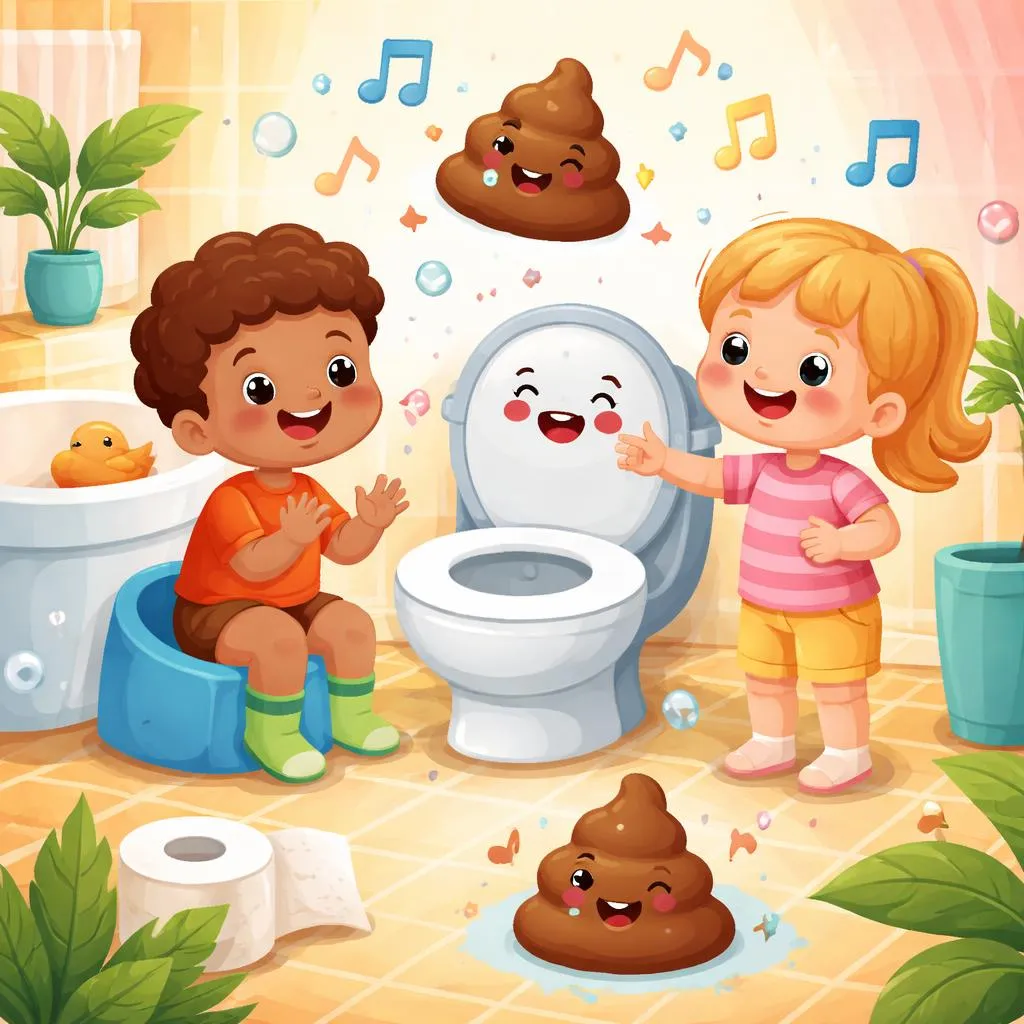

Hello, wonderful educators! Today we are exploring a topic that children find naturally fascinating. We will focus on the "poop poop song." This type of song appears in many classrooms and homes. It addresses a subject children think about often. We will examine what these songs mean. We will explore their educational value. We will share practical teaching strategies. We will provide engaging classroom activities. This guide will help you use this topic effectively. Let's begin this honest and helpful journey together.
What Is the "Poop Poop Song" Rhyme?
The "poop poop song" is a playful children's song about using the bathroom. Many versions exist in different cultures. Some are simple and silly. Others teach proper bathroom habits. The common element is talking openly about a natural body function.
These songs serve several purposes. They help children feel comfortable with their bodies. They reduce anxiety about using the toilet. They teach important hygiene habits. They make a potentially stressful topic fun and normal.
Children naturally find bathroom humor funny. Using this interest for learning makes sense. The songs capture attention quickly. Children remember the messages because they enjoy them.
The Lyrics of Common Versions
Let us review some typical lyrics for this type of song. Many versions exist with different words.
Simple Potty Training Version:
When you feel it in your tummy,
And it's starting to feel funny,
Run to the potty, don't delay,
Sit right down and push away!
Poop, poop, poop goes into the potty,
Poop, poop, poop, hooray!
Animal Poop Song Version:
Elephants poop big and round,
Mice leave little poops on the ground,
Bunnies leave their pellets small,
Every animal poops, that's all!
Poop, poop, everybody poops,
Poop, poop, it's natural news!
Hygiene Focus Version:
First we go, then we wipe,
Make sure our hands are clean and right,
Flush the potty, watch it go,
Wash our hands with soap, you know!
Poop, poop, wash your hands,
Poop, poop, that's the plan!
Vocabulary Learning from the Song
This type of song introduces several important vocabulary words. Let us explore each one carefully.
-
Poop: This is the main word for solid waste from our bodies. It is a simple word children understand. We can introduce other terms too. Stool, bowel movement, and number two are alternatives.
-
Potty: This is the place where we go. Toilet, bathroom, and restroom are related words. Children need to know these for daily life.
-
Wipe: This is the action after using the toilet. We use toilet paper to wipe. Teaching proper wiping technique is important for hygiene.
-
Flush: This is what we do after finishing. We press the handle. Water carries the waste away. This teaches bathroom mechanics.
-
Wash: This is what we do with soap and water. Hand washing prevents germs. This is a crucial health habit.
-
Tummy: This is the part of our body that tells us when to go. Stomach and belly are related words. Children learn body awareness.
Phonics Points to Practice
The "poop poop song" offers phonics opportunities. Let us focus on specific sounds.
-
The P Sound: Poop starts and ends with P. We can practice the /p/ sound. We can feel our lips pop open. We can think of other P words. Pop, pup, and pip are good examples.
-
The Short O Sound: Potty has the short o sound. We can practice /o/ with mouth open. Other short o words include hot, dot, and lot.
-
The SH Sound: Wash has the /sh/ sound at the end. This is a digraph to learn. Other SH words include fish, dish, and wish.
-
Rhyming Words: The song often uses rhymes. Tummy and funny rhyme. Round and ground rhyme. Recognizing rhymes builds reading readiness.
Grammar Patterns We Can Teach
The simple sentences in these songs provide grammar lessons. Let us look at a few patterns.
-
Imperative Sentences: The song gives commands. Run to the potty. Sit right down. Push away. Flush the potty. Wash your hands. This teaches the imperative form.
-
Sequence Words: The song shows order. First we go, then we wipe. This teaches chronological order. Children learn to follow steps in sequence.
-
Present Tense Verbs: The song uses present tense. Animals poop. We wash. This describes general truths and habits.
-
Exclamations: The song uses hooray and other exclamations. This teaches emotional expression in language.
Learning Activities for the Classroom
Let us explore activities that bring this topic to life respectfully. These ideas work for various learning styles.
Activity 1: Bathroom Routine Sequencing
Create picture cards showing bathroom steps. Pull down pants. Sit on potty. Use toilet paper. Flush. Pull up pants. Wash hands. Students arrange them in order. This builds sequencing and independence.
Activity 2: Animal Poop Matching Game
Create cards showing different animals. Create matching cards showing their droppings. Students match each animal to its poop. This teaches animal science alongside bathroom talk. It normalizes the topic through nature.
Activity 3: Hand Washing Practice
Bring soap and water to the classroom. Practice proper hand washing technique. Sing a hand washing song while scrubbing. Time twenty seconds of washing. This builds lifelong health habits.
Activity 4: Potty Dance Creation
Create a simple dance for bathroom time. Students invent movements for each step. Walking to the bathroom. Sitting down. Wiping. Flushing. Washing hands. Perform the dance together. This adds movement to learning.
Printable Materials for Your Lessons
Visual supports enhance learning for young children. Here are some printable ideas.
-
Bathroom Routine Chart: Create a colorful chart showing each bathroom step. Include pictures for non-readers. Children can check off steps as they complete them. This builds independence.
-
Animal Poop Matching Cards: Create cards with animals on one set. Create cards with droppings on another set. Students match them. Include elephants, rabbits, mice, and birds.
-
Hand Washing Poster: Create a step-by-step hand washing poster. Show wet hands, add soap, scrub, rinse, dry. Display near the classroom sink. This reminds children of proper technique.
-
Potty Training Sticker Chart: Create a simple chart for bathroom success. Children add a sticker each time they use the potty. Celebrate when the chart fills up. This motivates young learners.
Educational Games to Reinforce Learning
Games make bathroom learning fun and stress-free. Here are some game ideas.
Game 1: Bathroom Bingo
Create bingo cards with bathroom-related pictures. Toilet, toilet paper, soap, sink, towel, flush handle. Call out the names. Students cover matching pictures. This builds vocabulary recognition.
Game 2: What Comes Next?
Practice sequencing with a game. Say two steps in the bathroom routine. Students guess the next step. "First I sit on the potty. Then I wipe. What comes next?" They say "Flush!" This builds logical thinking.
Game 3: Poop or Not Poop Sort
Create picture cards of various items. Some are foods. Some are animals. Some are bathroom items. Students sort them into groups. This builds categorization skills while keeping the topic light.
Game 4: Healthy Habits Memory Match
Create pairs of healthy habit cards. One card shows washing hands. Its match shows soap. One card shows using the potty. Its match shows toilet paper. Students find matching pairs. This reinforces habit connections.
Game 5: Bathroom Charades
Act out bathroom steps without speaking. Students guess what you are doing. Sitting on potty. Wiping. Flushing. Washing hands. This builds observation and vocabulary.
Game 6: Everybody Poops Discussion
Read the book "Everybody Poops" by Taro Gomi. Discuss how all living things poop. Animals at the zoo poop. Family members poop. Even teachers poop! This normalizes the body function completely.
Game 7: Toilet Paper Roll Crafts
Save empty toilet paper rolls for crafts. Create animals, binoculars, or simple stamps. This recycles bathroom items creatively. It connects the topic to art activities.
Game 8: Bathroom Safety Discussion
Talk about bathroom safety in a game format. What do we do if we need help? How do we keep water off the floor? Why do we walk slowly in the bathroom? This builds practical life skills.
Game 9: Flush the Letter Game
Write letters on small pieces of paper. Say a letter sound. Students find that letter and "flush" it into a container. This combines bathroom play with phonics practice.
Game 10: Hand Washing Song Contest
Create new verses for a hand washing song. Use familiar tunes. Students invent their own lyrics about washing hands. Perform the best ones together. This builds creativity and habit reinforcement.
We have explored a topic that many adults avoid discussing. The "poop poop song" actually serves important educational purposes. It helps children feel comfortable with their bodies. It teaches essential hygiene habits. It reduces anxiety about bathroom use. It makes a natural function normal and unembarrassing. We looked at what these songs mean. We explored sample lyrics. We learned vocabulary and phonics. We practiced grammar patterns. We shared activities and games. Using this topic respectfully helps children develop healthy attitudes. They learn to listen to their bodies. They learn proper bathroom routines. They learn hand washing importance. Use these strategies in your classroom. Adapt them to your students' needs. Watch as your learners gain confidence and independence. The simple act of using the bathroom becomes a positive learning experience. Everybody poops, and now everybody learns from it too.