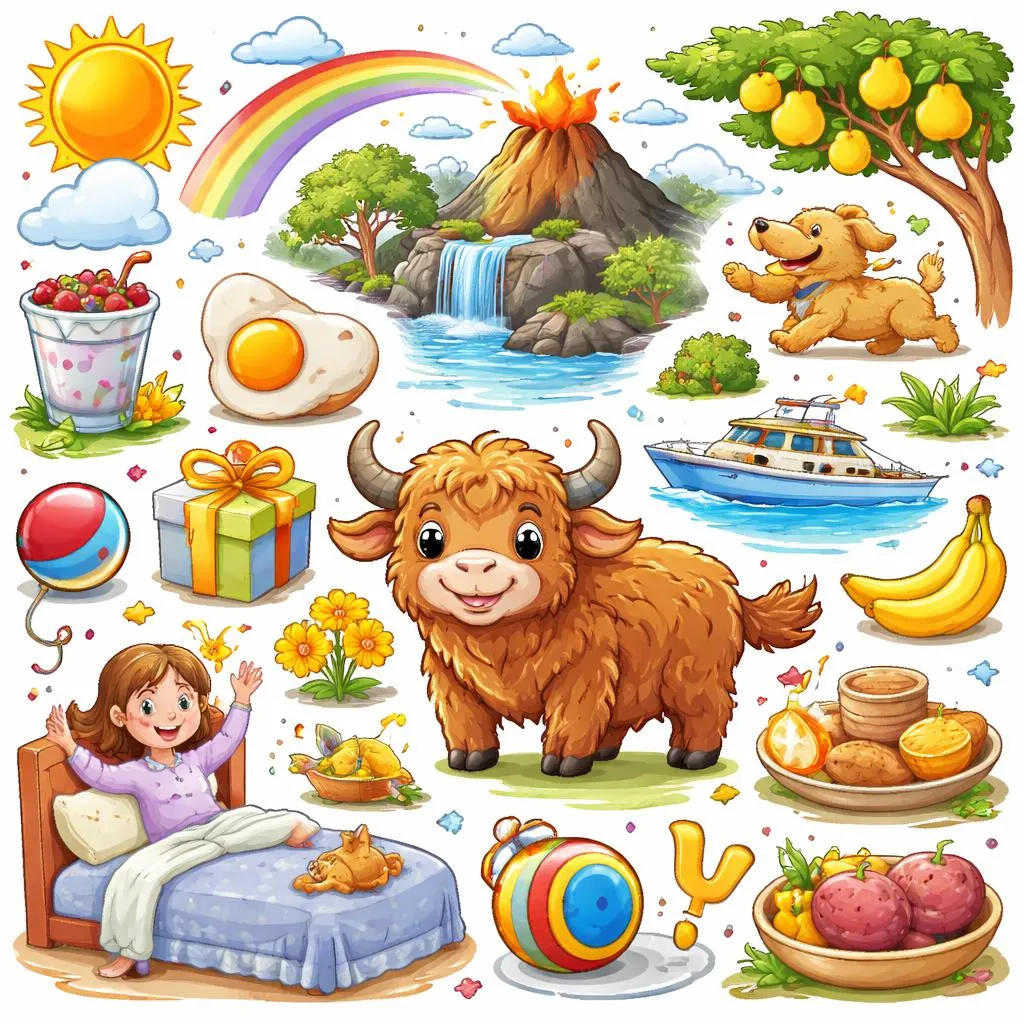

Yes, you use 'Y' words every day. This letter starts simple yet powerful words. They mark time, express feelings, and name objects. Mastering them helps you sound natural. It also helps you understand tests better. This article explores these essential words. You will learn their precise meanings. You will avoid common errors. Your communication will become more clear and correct.
Here is a core list of useful 'Y' words. Study them well. yacht, yak, yam, yank, yap, yard, yardstick, yarn, yawn, yeah, year, yearbook, yearling, yearly, yearn, yearning, yeast, yell, yellow, yelp, yen, yeoman, yes, yesterday, yet, yield, yodel, yoga, yoghurt, yoke, yolk, yonder, you, young, youngster, your, yours, yourself, youth, youthful, yowl, yo-yo, ytterbium, yttrium, yuan, yucca, yuck, yummy, yuppie, yurt.
Let us explore one word in detail now. yield ( /ji?ld/ ) v./n. (to produce; to give way; the amount produced) Exam Context: The farm's yield of wheat was high this year. The investment yields a good return. Life Context: "You must yield to oncoming traffic. This tree yields delicious fruit." Key Learning Point: It has multiple meanings. The verb can mean to produce or to surrender. The noun means the amount produced. In driving, 'yield' means to let others go first.
Now, we dive deeper into key 'Y' words. These words are frequent in tests. They are also vital for daily talk.
youth How is it tested? It is a noun meaning the time of being young. It can also mean young people as a group. It appears in social studies and literature. Test Example: "He spent his youth in the countryside. The program aims to inspire the youth of today." How is it used daily? Talking about age and young people. A: "I miss the energy of my youth." B: "The youth center is for people under eighteen. The youth of this nation are very active." Common Errors: Usually uncountable when meaning the time of life. Can be countable for a young male (a youth). The adjective is 'youthful'.
year How is it tested? It is a common noun for a time period. It tests collocations and prepositions. It appears in listening and reading. Test Example: "The project will take a year to complete. She is ten years old." How is it used daily? Discussing age, dates, and durations. A: "Happy New Year!" B: "This year has gone quickly. I have lived here for five years. The school year starts in September." Common Errors: Plural is 'years'. Common phrases: 'per year', 'year after year', 'all year round'. Do not confuse with 'ear'.
yesterday How is it tested? It is an adverb and noun for the day before today. It tests time expressions and verb tenses. It is common in dialogues. Test Example: "I saw her yesterday. Yesterday was a public holiday." How is it used daily? Talking about recent past events. A: "Where were you yesterday?" B: "I was sick yesterday. The meeting was yesterday. I called you yesterday." Common Errors: It is not used with prepositions like 'on' or 'in'. Simply say 'yesterday'. The adjective is 'yesterday's' (e.g., yesterday's news).
yawn How is it tested? It is a verb and noun for the act of opening the mouth wide when tired. It appears in descriptive passages and dialogues. Test Example: "The long lecture made him yawn. He tried to hide a yawn." How is it used daily? Showing tiredness or boredom. A: "Are you tired? You're yawning." B: "Yes, I can't stop yawning. That movie was a yawn. It was so boring." Common Errors: The verb is regular: yawn, yawned, yawned. The noun form is also 'yawn'. Can be used informally to mean something boring.
yard How is it tested? It is a noun with two main meanings. It is a unit of length or an area near a building. Tests check the correct meaning from context. Test Example: (Length) "The fabric is sold by the yard." (Area) "The children are playing in the yard." How is it used daily? Talking about measurement or outdoor space. A: "How big is your garden?" B: "It's about ten yards long. We have a big back yard. The school yard is empty now." Common Errors: As a unit, it is three feet. The symbol is 'yd'. Do not confuse with 'garden'. A yard is often paved or grassy area.
yell How is it tested? It is a verb meaning to shout loudly. It appears in stories and dialogues. It tests synonyms and context. Test Example: "The coach had to yell to be heard. She let out a yell of surprise." How is it used daily? In situations of excitement, anger, or need. A: "Why did you yell at me?" B: "I had to yell because you were far away. Don't yell indoors. I heard a loud yell." Common Errors: Similar to 'shout', but can imply more emotion. Past tense is 'yelled'. The noun is also 'yell'.
Now, let's practice with some interactive tasks.
Practice 1: Fill in the Blanks Read the story. Choose words from the 'Key Words' list. Fill in the blanks. Use each word once. Key Words: yield, youth, year, yesterday, yawn, yard, yell.
My grandfather loves his garden. He tends it every day. The garden yields many vegetables. He has done this for many a year. In his youth, he was a farmer. He taught me to measure a yard. Yesterday, I helped him plant seeds. The sun was hot. It made me yawn. My brother ran into the yard. He let out a yell of joy. The harvest will be good.
Practice 2: Create a Dialogue Imagine you are at a sports game with a friend. It is very loud. Use these three words in your 4-sentence dialogue: yell, year, yesterday. Example: "I come to this game every year. Did you see the match yesterday? You have to yell to talk here! I will yell for our team."
Practice 3: Match the Word Draw a line to match the word on the left with its common partner or meaning on the right.
- yield
- youth
- year
- yawn
- yard a. the time of being young b. to open the mouth when tired c. to produce or give way d. a unit of length (3 feet) e. a period of 365 days (Answers: 1-c, 2-a, 3-e, 4-b, 5-d)
Answers and Explanations Practice 1 Answers: yields, year, youth, yard, Yesterday, yawn, yard, yell. Explanation: 'Yields' means produces. 'Year' is a time period. 'Youth' is the time of being young. 'Yard' is the unit of measurement. 'Yesterday' is the day before today. 'Yawn' is the act of being sleepy. The second 'yard' is the garden area. 'Yell' is a shout.
Practice 2: Sample dialogue provided. Ensure the three target words are used naturally in a sports context.
Practice 3 Answers: Listed above. This checks core meanings and uses.
A good strategy helps you master 'Y' words. Try the "Time and Sound" method. Group words about time: year, yesterday, youth. Group words about actions or sounds: yell, yawn, yield. This creates logical categories for memory. Another way is the "Measurement" group: yard, year, yield (as in amount). This connects concepts of quantity and time.
You have explored a useful set of tools today. These important words starting with 'Y' are yours to use. They help you talk about time and space. They help you express actions and feelings. Use them in your next conversation. Try them in your next writing task. This active step builds real skill. Your English will become more natural and expressive. Keep learning and using new words every day.