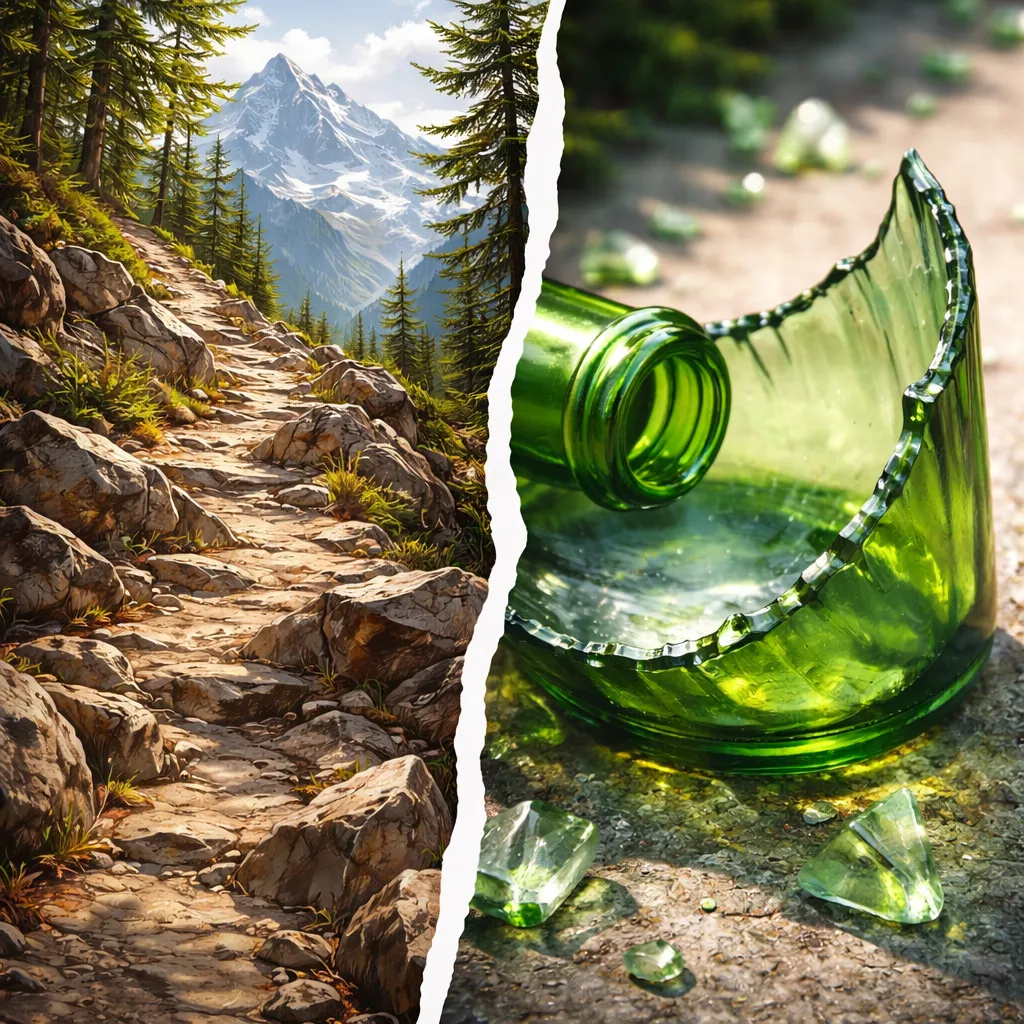

Children climb on playground rocks. They also see broken branches in the woods. Parents often hear kids say, “This path feels rough.” Or “This edge looks jagged.” But are these two words the same? Can we always use one instead of the other? This article helps families explore the words “rough and jagged” together. We will compare them with similar words. We will see which one fits a gravel road and which one fits a cracked window. Let us help your child describe uneven, sharp textures with care.
Are Similar Words Really Interchangeable? Many English words describe surfaces that are not smooth. But they each carry different meanings. “Rough” and “jagged” both describe uneven or bumpy textures. Yet we use them in different situations. A rough blanket feels scratchy. A jagged rock has sharp points. You cannot always swap them. For example, a rough voice sounds harsh. A jagged voice has no meaning. So similar words are not always interchangeable. Parents can show this with real objects. Point to a rough piece of sandpaper. Then point to a jagged piece of broken plastic. Ask your child: “Can I call the sandpaper jagged?” The answer is no, because sandpaper has tiny bumps, not sharp points. Teaching these small differences builds a strong vocabulary.
Set 1: Rough vs Jagged — Which One Is More Common? “Rough” appears much more often in daily English. We say rough road, rough skin, rough draft, rough day. “Jagged” appears less frequently. People say jagged edge, jagged line, jagged rock, jagged scar. In children’s books, “rough” dominates. Think of rough bark and rough fabric. “Jagged” shows up in adventure stories about mountains or broken glass. Look at Google Ngram. “Rough” has always been far more common. For young learners, teach “rough” first. Use it for any uneven or bumpy surface. Save “jagged” for things with sharp, irregular points. This order helps kids build a useful vocabulary.
Set 2: Rough vs Jagged — Same Meaning, Different Contexts Both words mean “not smooth or even.” But context separates them. “Rough” focuses on small bumps or general unevenness. A rough road has many bumps. Rough skin feels dry and scratchy. “Jagged” focuses on sharp, pointed, or zigzag edges. A jagged mountain peak has sharp points. A jagged tear in paper has uneven, sharp edges. You can have a rough surface that is not jagged. Sandpaper is rough but not jagged. You can have a jagged edge that feels smooth between the points. So one word is about general texture. The other word is about shape with sharp projections. Tell your child: “Rough means many small bumps. Jagged means big, sharp points like teeth.”
Set 3: Rough vs Jagged — Which Word Is “Bigger” or More Emphatic? “Jagged” often feels more dangerous and dramatic. A jagged knife edge can cut deeply. Jagged lightning splits the sky. “Rough” feels more common and less threatening. A rough towel is annoying but not dangerous. Rough weather is unpleasant. So “jagged” carries intensity and risk. “Rough” carries discomfort but not severe danger. For children, explain this way: “Rough means not comfortable. Jagged means it could hurt you.” A rough rug is fine to walk on. A jagged piece of metal needs careful handling. This helps kids understand safety. They learn that “jagged” warns of sharp points. “Rough” just warns of scratchy feelings.
Set 4: Rough vs Jagged — Concrete vs Abstract Both words work concretely and abstractly. Concrete “rough”: rough bark, rough stone, rough cloth. Abstract “rough”: rough estimate (not exact), rough patch (difficult time), rough draft (not finished). Concrete “jagged”: jagged glass, jagged rock, jagged scar. Abstract “jagged”: jagged rhythm (uneven beat), jagged line in a graph, jagged memory (fragmented). However, abstract “jagged” almost always describes something broken or uneven in pattern. Abstract “rough” describes something incomplete or difficult. For children, start with concrete meanings. Show a rough sponge. Show a jagged piece of a broken cup. Later, introduce abstract uses through stories. Explain that a “rough day” has many problems. A “jagged line” goes up and down sharply.
Set 5: Rough vs Jagged — Verb or Noun? First Understand the Role Both words are primarily adjectives. “Rough” can be a noun in golf. “The rough” is long grass. “Rough” as a verb is rare. “We roughed it in the woods.” “Jagged” is almost always an adjective. The verb is “jag,” which is very rare. For young children, focus on adjectives. “This surface is rough.” “This edge is jagged.” Later, teach the noun “rough” in sports. “The ball landed in the rough.” This is advanced. For safety, keep it simple. Teach children to say “rough” for bumpy textures. Say “jagged” for sharp, pointy edges. This prevents confusion. Also teach “rough” as a verb in “roughhousing,” but that means play-fighting, not texture.
Set 6: Rough vs Jagged — American English vs British English Both words work similarly in American and British English. However, small differences exist. In the UK, “rough” can mean difficult or unfair. “That’s rough” means that’s unfortunate. Americans use this too. In the US, “jagged” appears more in medical and nature writing. “Jagged wound” is common. Britons use the same. Also, “rough” in British slang can mean a dangerous area. “A rough neighborhood.” Americans say the same. For children, these differences are minor. Teach the core meanings. If your child reads British adventure books, they will see “jagged” for mountain peaks often. American books use “jagged” for broken glass. A family activity: compare a US nature guide and a UK one. Count how many times each word appears for rock descriptions.
Set 7: Rough vs Jagged — Which Fits Formal Situations? Both words work in formal and informal settings. “Rough” appears in science and engineering. “Rough surface increases friction.” “Jagged” appears in medicine and geology. “Jagged fracture” or “jagged coastline.” For school reports, both are fine. But “rough” is more common in basic descriptions. “Jagged” sounds more precise for sharp, irregular shapes. Teach your child this rule: “Use rough for general bumpiness. Use jagged for sharp, pointy edges.” In a geography report about mountains, “jagged peaks” sounds excellent. In a texture report about fabrics, “rough wool” is correct. This helps kids learn precision. They understand that word choice shows how carefully they observe.
Set 8: Rough vs Jagged — Which One Is Easier for Kids to Remember? “Rough” is easier for young children. Why? Because it has one syllable. It sounds like “cuff” or “tough.” Children learn “rough” early from touching sandpaper or a rough towel. “Jagged” has two syllables. The “jag” sound is like “jog.” The “ed” ending adds a step. A three-year-old can say “rough” clearly. That same child may say “jagged” as “jag-ed” slowly. So start with “rough.” Use it for all bumpy textures. Introduce “jagged” around age five or six. Use real objects. A jagged piece of a broken cracker. A jagged line drawn with a zigzag ruler. Let them see the sharp points. Then say “jagged.” This sensory learning works better than definitions. Also compare side by side. A rough sponge has many small bumps. A jagged rock has big, sharp points. Touch both carefully.
Mini Exercise: Can You Spot the Differences Between These Similar Words? Read each sentence with your child. Choose “rough” or “jagged.” Answers below.
The _______ bark of the tree hurt my hand.
Please be careful with the _______ edge of this broken shell.
We drove on a _______ road full of potholes.
The mountain had a _______ skyline full of sharp peaks.
This is just a _______ draft. I will fix it later.
Bonus question: Is this sentence correct? “The jagged of the rock cut my finger.” Why or why not?
Answers: 1. rough, 2. jagged, 3. rough, 4. jagged, 5. rough. Bonus: Not correct. “Jagged” is an adjective, not a noun. Say “The jagged edge of the rock cut my finger.”
Talk about each answer. Ask your child which sentences describe many small bumps. Which describe sharp, pointy things. Which describe something unfinished. This discussion builds precision. Do the exercise again with real objects. A nail file? Rough. A broken plate edge? Jagged. A wool sweater? Rough. A zigzag line? Jagged.
Parent Tips: How to Help Kids Learn and Remember Similar Words You can teach “rough and jagged” during daily moments. Breakfast time: “This toast feels rough. This broken cup edge is jagged.” Playtime: “The sandbox feels rough. Look at the jagged pieces of that broken toy.” Nature walk: “Find rough bark. Find a jagged rock.” Art time: “Draw a rough line with many bumps. Draw a jagged line with sharp points.” Use your body. Rub your hand on your shirt to show rough. Make a zigzag motion with your finger to show jagged. Say the words as you move. Play the “Rough or Jagged” sorting game. Gather ten objects. A piece of sandpaper? Rough. A broken seashell edge? Jagged. A bumpy sponge? Rough. A jagged piece of plastic? Jagged. A pinecone? Rough. Ask your child to explain each choice. Do not correct mistakes harshly. Instead, ask “Does it have sharp points? If yes, it might be jagged. Does it just feel bumpy? That is rough.” This gentle guidance works better than rules. Read books about nature and textures. “The Rough-Face Girl” by Rafe Martin is a great story. Pause on each page. Ask “Is this rough or jagged? Why?” Keep a texture journal. Draw one rough thing and one jagged thing each week. Label them. Review old entries. Praise specific observations. “You noticed that a broken window edge is jagged and dangerous. Very smart.” This positive feedback builds a careful sense of touch and sight. Your child will soon feel and see rough and jagged textures everywhere. They will also understand the difference between general bumpiness and sharp, dangerous points. That is a sophisticated skill for a young learner. Keep exploring words together. Every surface, every broken object, every natural material offers a new chance to learn about texture and safety.