
What is the rhyme?
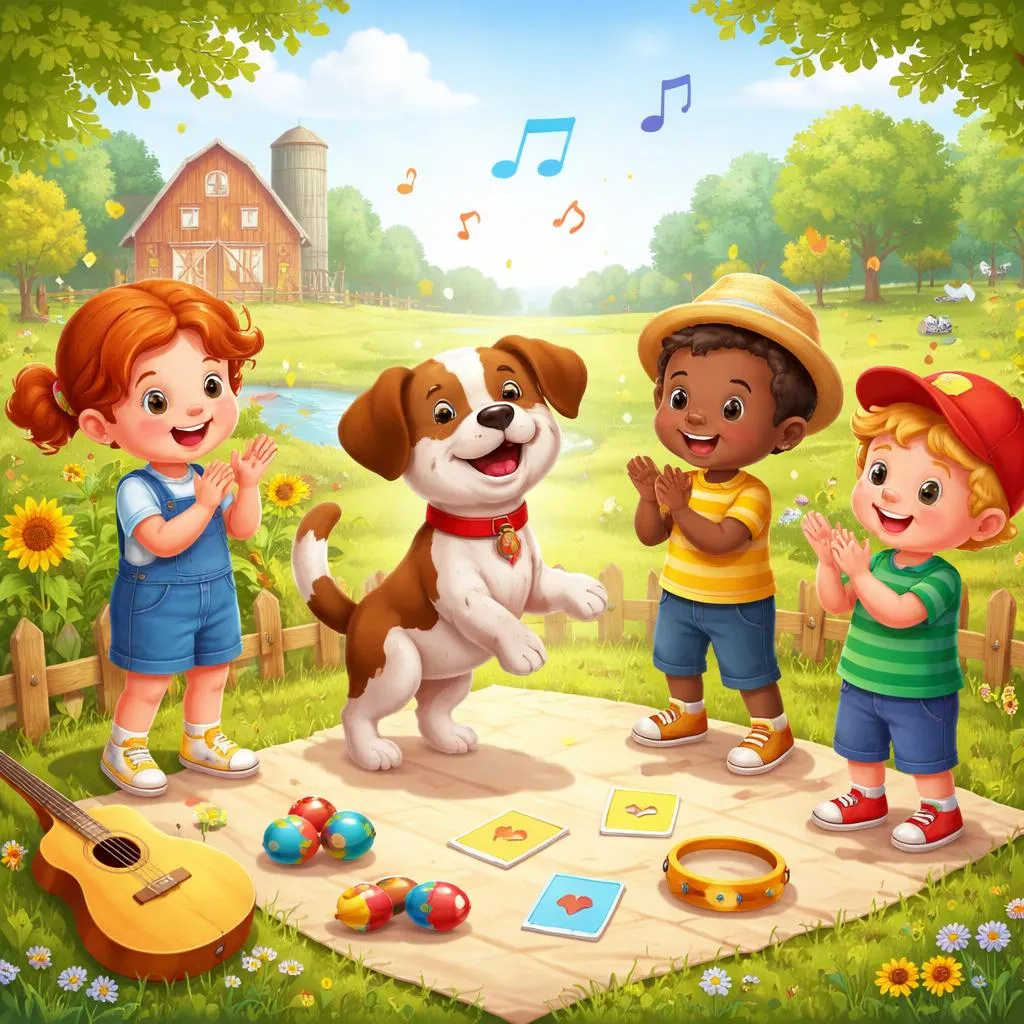
“bingo the dog” is a classic English nursery rhyme. It appears in early childhood classrooms around the world. Teachers often use it to teach spelling, rhythm, and phonics. The rhyme focuses on a farmer and a dog named BINGO.
The song repeats the dog’s name with clapping patterns. This structure supports memory and phonemic awareness. In teaching contexts, repetition builds confidence and fluency.
This rhyme belongs to traditional folk songs. It uses simple words and clear rhythm. That makes it ideal for early language learners.
In structured lessons, this rhyme can introduce letters, sounds, and basic sentence patterns. It also helps learners connect music with language learning.
The lyrics of nursery rhymes
The most common version of “bingo the dog” includes these lines:
“There was a farmer had a dog, and Bingo was his name-o.”
Then the song spells B-I-N-G-O. Each repetition removes a letter and replaces it with a clap.
This pattern keeps attention high. It also reinforces spelling through rhythm and physical movement.
In teaching practice, the lyrics support multisensory learning. Learners hear, see, and move at the same time.
Teachers often slow down the song. This helps learners follow each sound and letter.
Vocabulary learning
The rhyme introduces several core vocabulary items. Key words include farmer, dog, name, and letters.
The word “farmer” connects to occupations. This opens lessons about jobs and daily life roles.
The word “dog” connects to animals. It supports early animal vocabulary lessons.
The word “name” introduces identity language. Teachers can link it to self-introduction sentences.
Spelling B-I-N-G-O introduces the alphabet. This supports letter recognition and spelling skills.
In guided practice, learners can spell their own names after singing the song. This connects the rhyme to real communication tasks.
Phonics points
“bingo the dog” supports several phonics skills. The rhyme highlights initial consonant sounds.
The letter B introduces the /b/ sound. The letter N introduces the /n/ sound. The letter G introduces the /g/ sound.
The vowel sounds in BINGO are also clear. Teachers can isolate each sound slowly.
Clapping for missing letters strengthens phoneme deletion skills. This is an advanced phonological awareness skill.
By removing letters, learners notice sound structure. This helps prepare for reading and spelling tasks.
The rhythmic pattern also supports stress and intonation practice. Learners feel the beat of English naturally.
Grammar patterns
The rhyme uses simple sentence structures. “There was a farmer had a dog” shows past tense existence.
“Bingo was his name” uses the verb “to be” in the past tense. This pattern introduces identity sentences.
Teachers can highlight subject, verb, and complement. This builds early grammar awareness.
The possessive “his” introduces pronouns. Learners can practice “his,” “her,” and “my” in guided activities.
The song also demonstrates repetition for emphasis. This helps learners understand how English uses rhythm for meaning.
In classroom practice, teachers can model similar sentences. For example, “There was a teacher had a book.”
Learning activities
Teachers can extend “bingo the dog” into multiple classroom tasks. One activity focuses on spelling practice.
Learners can write B-I-N-G-O on paper. They can trace each letter while singing.
Another activity uses puppets or toys. A dog toy can represent Bingo during storytelling.
Role-play can also support speaking practice. One learner can act as the farmer. Another learner can act as Bingo the dog.
Teachers can also connect the song to drawing tasks. Learners can draw a farmer and a dog. Then they can label the drawing with simple words.
For listening practice, teachers can pause the song and ask prediction questions. This builds comprehension and attention skills.
Printable materials
Printable worksheets enhance structured learning. Flashcards with B, I, N, G, and O can support letter recognition.
Teachers can prepare lyric sheets with missing letters. Learners fill in the blanks during listening practice.
Coloring pages with Bingo the dog reinforce vocabulary visually. These materials support visual learners.
Simple sentence worksheets can follow the rhyme. For example, “Bingo is a dog.” Learners trace and copy the sentence.
Printable mini-books can retell the story. Each page can show one line of the rhyme. This supports early reading development.
Educational games
“bingo the dog” easily transforms into classroom games. One game focuses on spelling races.
Teachers can say a letter. Learners hold up the correct flashcard.
Another game uses rhythm clapping. Learners clap when a letter disappears. This trains auditory discrimination.
A movement game can include actions for each letter. For example, jump for B, spin for I, nod for N.
Memory games can use Bingo cards with letters. Learners mark letters as they hear them.
Story-building games can extend the rhyme. Learners add new animals or names. This builds creativity and language production.
The playful nature of the rhyme keeps motivation high. It creates a positive learning environment.
“bingo the dog” remains a powerful teaching tool. It integrates vocabulary, phonics, and grammar in one simple song. With guided instruction, this rhyme supports early literacy and oral language development. Through music, movement, and repetition, English learning becomes natural and enjoyable.