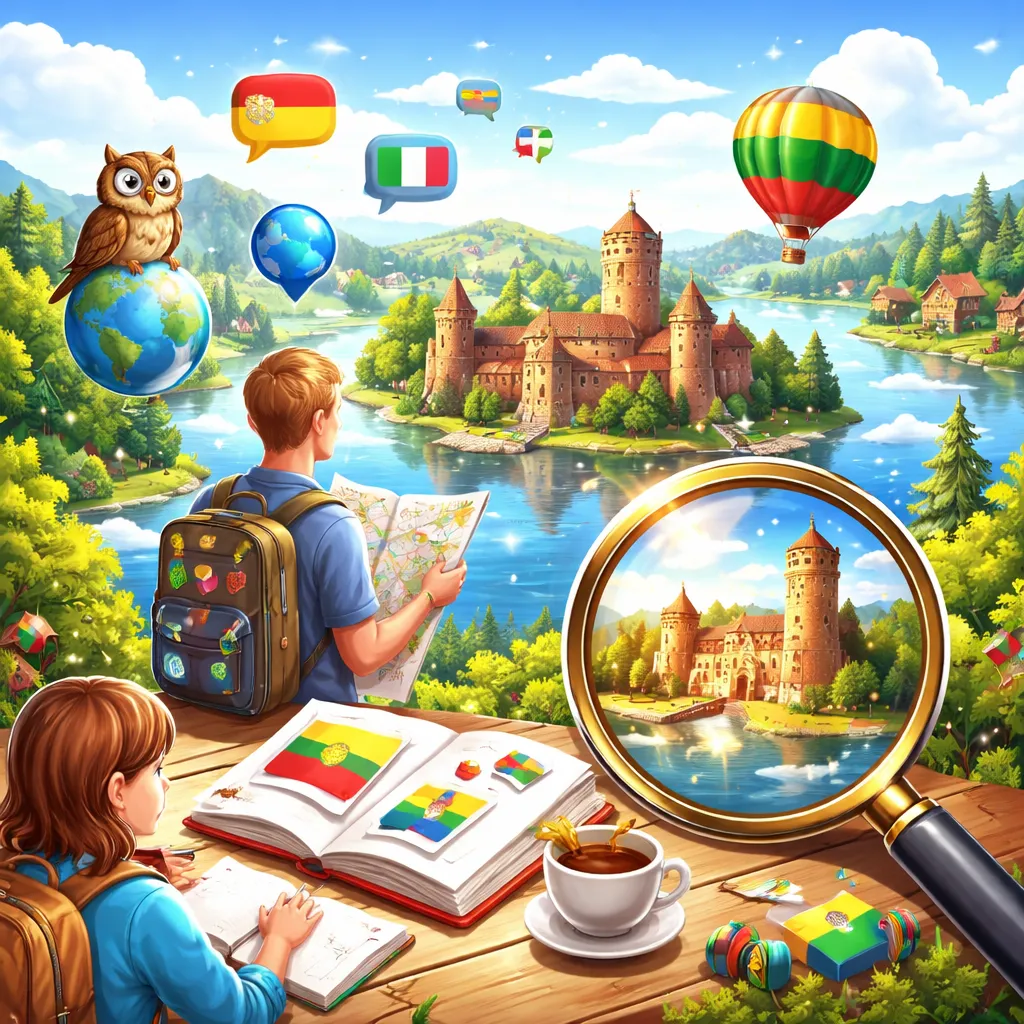

Introduction to Lithuania
Language learning invites us to explore new horizons. Today we journey to a land of forests, rivers, and amber shores. This Baltic nation carries a rich history and vibrant culture. Children will discover a country that treasures its traditions. They will learn about a people who value song, art, and nature. Exploring Lithuania builds reading skills in an exciting way. Every fact adds color to their understanding. Every word helps them picture a place where old meets new. Let us begin this discovery together.
Where Is Lithuania?
Lithuania sits in northeastern Europe along the Baltic Sea. It belongs to a region called the Baltic States. Latvia lies to the north, and Belarus borders the east. Poland touches the south, and Russia's Kaliningrad region lies to the southwest. The Baltic Sea forms its western edge. Vilnius serves as the capital city. Vilnius features beautiful old buildings and narrow streets. The country has many forests, lakes, and rivers. About one-third of Lithuania remains covered in trees. Finding Lithuania on a map shows its place between Europe and Scandinavia. This location shaped its history and culture. Understanding geography helps young readers connect to the stories they read.
Interesting Facts About Lithuania
Lithuania offers many wonderful facts for young learners. It was the last country in Europe to adopt Christianity. That happened in the late 1300s. The country also has a unique language. Lithuanian is one of the oldest living languages in the world. It preserves sounds from ancient times. Another interesting fact involves amber. People call amber "Baltic gold." Lithuania's coast provides much of the world's amber. You can find pieces washed up on beaches after storms.
Lithuania also loves basketball. Many people consider basketball the second religion of the country. Lithuanian players have become stars around the world. Another fun fact involves birds. The stork is a national symbol. Lithuanians believe storks bring good luck to homes where they nest. The country also has a special way of celebrating. Every summer, people gather for song and dance festivals. Thousands of singers perform together in harmony. These festivals are recognized by UNESCO. These facts show children a country full of passion, nature, and tradition.
Key Vocabulary About Lithuania
Let us build vocabulary for this Baltic country. These words help children describe what they learn.
Baltic: relating to the sea or region in northeastern Europe.
Amber: a hard, yellowish fossilized tree resin used for jewelry.
Stork: a large bird with long legs and a long beak.
Forest: a large area covered with trees.
Capital: the city where a country's government works.
UNESCO: a United Nations organization that protects important cultural sites.
Tradition: a belief or custom passed down through generations.
Introduce these words with pictures and objects. Show a piece of amber if available. Show a picture of a stork building a nest. Let children say each word aloud. Using these words builds a foundation for deeper understanding.
Simple Sentences for Reading Practice
Short sentences help new readers gain confidence. Use these sentences about Lithuania for practice.
Lithuania is a country in northeastern Europe.
The capital city is Vilnius.
The Baltic Sea lies to the west.
Forests cover much of the land.
Amber washes up on the beaches.
People speak Lithuanian in Lithuania.
Basketball is a very popular sport.
Read each sentence together. Let children point to the words. Encourage them to repeat after you. Use a map to show where each fact belongs. These simple sentences prepare young readers for longer passages.
Short Reading Passage About Lithuania
Here is a short passage for children to read together.
“Lithuania sits on the coast of the Baltic Sea. Forests and lakes fill the countryside. The capital, Vilnius, has beautiful old buildings and winding streets. People in Lithuania speak a very old language called Lithuanian. It sounds similar to ancient languages from thousands of years ago. Along the coast, you can find amber. This golden stone comes from ancient trees. Waves wash pieces onto the sand. Lithuanians love basketball. Many children learn to play at a young age. The country also celebrates song and dance. Every few years, thousands of singers fill a large stage. They wear traditional costumes and sing together. Another special sight is the stork. Storks build large nests on roofs and poles. Families feel lucky when a stork chooses their home. Lithuania blends nature, history, and joyful traditions.”
Read this passage slowly together. Pause to talk about each idea. Ask children to find vocabulary words in the text. This activity builds reading fluency and comprehension.
Fun Questions About Lithuania
Questions turn reading into meaningful conversation. Use these to engage young learners.
What sea lies to the west of Lithuania?
What is the capital city of Lithuania?
What do people call the golden stone found on beaches?
What sport is very popular in Lithuania?
What bird is a symbol of good luck?
What do thousands of people do at the song festival?
Let children answer in their own words. Encourage them to use new vocabulary. Ask them to imagine finding amber on a beach. What would they make with it? Creative questions make the topic personal and exciting.
Tips for Learning English with This Topic
Use Lithuania to create engaging English learning experiences. Start with a map activity. Let children find Lithuania and trace its borders. Point to the Baltic Sea and the neighboring countries. Visual tools help children remember geographic details. Next, introduce the vocabulary through a scavenger hunt. Hide pictures of amber, storks, forests, and basketballs around the room. Let children find each one and say the word aloud.
Read the passage aloud with expression. Let your voice show excitement for the song festival. Sound curious when talking about the ancient language. After reading, let children draw a scene from Lithuania. One child might draw a stork on a roof. Another might draw amber on a beach. Let them label their drawings with vocabulary words. This combines art with language learning.
Incorporate music into your lesson. Play recordings of Lithuanian folk songs. Let children hear the language and the melodies. You can also listen to sounds of forests or waves. Sensory experiences deepen learning. If you have amber or yellow stones, let children hold them while talking about the topic.
Encourage children to teach someone else. Let them share one fact about Lithuania with a family member. They can explain what amber is or why storks are special. Teaching reinforces their own knowledge. It also builds confidence in their language skills.
Use movement to reinforce learning. Pretend to find amber on a beach. Pretend to sing in a huge choir. Pretend to play basketball like a Lithuanian star. Physical activity makes learning active and fun. Children remember more when they connect movement to words.
Connect Lithuania to your child's world. Ask, “What traditions does our family have?” Talk about how traditions connect us to our past. Ask about any birds that visit near your home. Compare them to the storks of Lithuania. These connections help children see that language learning reading is about understanding people everywhere. By exploring Lithuania together, you give children a rich experience. They learn new words, discover a vibrant culture, and grow their love for reading. This Baltic treasure becomes a meaningful part of their learning journey.