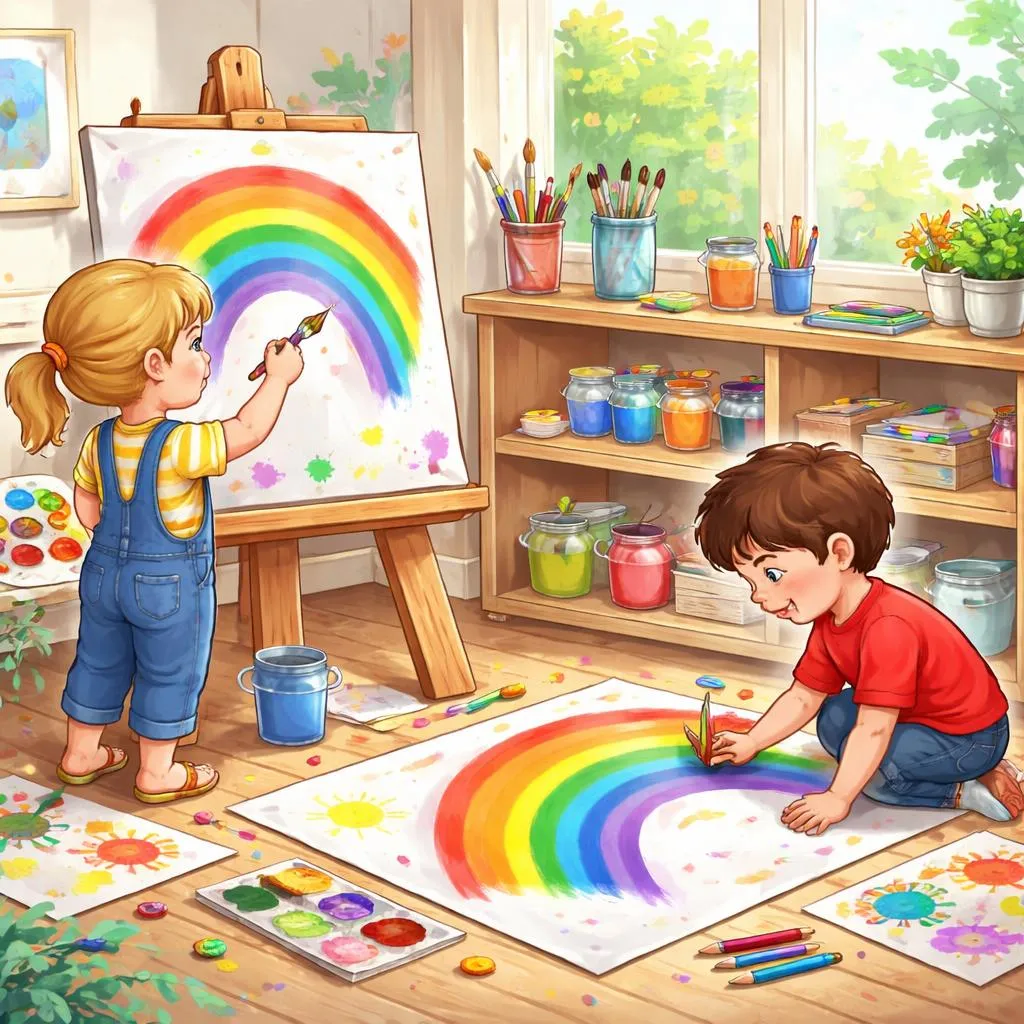

What Do These Expressions Mean? “An artist” and “a painter” both mean a person who creates art. They tell a child that this person makes beautiful things like drawings, paintings, or sculptures. Children hear these words when learning about art, visiting museums, or talking about hobbies. Both describe creators.
“An artist” is the broad word for anyone who creates art. A child says it when saying “I want to be an artist.” It includes painters, sculptors, drawers, and more.
“A painter” means a person who paints pictures using paint and brushes. It is a specific type of artist. All painters are artists, but not all artists are painters.
These expressions seem similar. Both mean “a person who makes art.” Both describe creative people. But one is general while one is specific.
What's the Difference? One is general for all art forms. One is specific to painting. “Artist” is the big umbrella. It includes painters, sculptors, potters, photographers, and even singers or dancers. It is very broad.
“Painter” is only for people who use paint on a surface. Canvas, paper, walls. It is a specific job. It does not include drawing with pencils or making sculptures.
Think of a child drawing with crayons. “You are an artist” is right. “You are a painter” would be wrong because crayons are not paint. One is for all art. One is for paint only.
One is for all creative people. The other is for one specific medium. “Artist” for a child who draws. “Painter” for someone with a brush and paint. Use the first for general. Use the second for specific.
Also, “painter” can also mean a person who paints houses. That is a different job. “Artist” does not have that meaning.
When Do We Use Each One? Use “artist” for general creative work. Use it for drawing, painting, sculpting, crafting, or making music. Use it for any art form. It fits all creative talk.
Examples at home: “You are an artist. I love your drawing.” “My sister is an artist. She makes jewelry.” “I want to be an artist when I grow up.”
Use “painter” for someone who uses paint on a surface. Use it for watercolors, acrylics, oils, or house painting (different job). Use it for the specific medium. It fits art class talk.
Examples for painting: “The painter used a brush and blue paint.” “My aunt is a painter. She paints landscapes.” “We need a painter to paint our house.” (house painting job)
Children can use both. “Artist” for general. “Painter” for paint. Both create beauty.
Example Sentences for Kids An artist: “An artist draws and paints.” “I am an artist when I use crayons.” “The artist made a clay bowl.”
A painter: “A painter uses a brush.” “The painter mixed yellow and blue to make green.” “I want to be a painter and paint murals.”
Notice “artist” is broader. “Painter” is specific to paint. Children learn both. One for all art. One for painting.
Parents can use both. A drawing: “you are an artist.” A painting: “you are a painter.” Children learn different art words.
Common Mistakes to Avoid Some children call every artist a painter. That is not accurate. An artist who sculpts clay is not a painter. Use “artist” for general art.
Wrong: “The sculptor is a painter.” Right: “The sculptor is an artist.”
Another mistake: thinking a painter is always a fine artist. Some painters paint houses, not art. Context tells the meaning.
Wrong: “The painter painted my room with flowers.” (unclear) Better: “The artist painted flowers on my wall.”
Some learners think “artist” is only for famous people. Anyone who creates art is an artist. A child with crayons is an artist. Celebrate all creativity.
Also avoid saying “painter” for someone who draws with pencils. They are an artist, but not a painter. Use the right word for the right medium.
Easy Memory Tips Think of “artist” as a big colorful umbrella. Covers drawing, painting, sculpture, music, dance. For all creativity.
Think of “painter” as a paintbrush. Only for paint. For the specific medium.
Another trick: remember the tool. “Artist” uses any tool. “Painter” uses brushes and paint. Any tool gets “artist.” Paint and brushes get “painter.”
Parents can say: “Artist for all. Painter for a wall.”
Practice at home. Drawing a picture: “artist.” Painting with watercolors: “painter.”
Quick Practice Time Let us try a small exercise. Choose the better phrase for each situation.
A child uses crayons to draw a house. a) “You are a good painter.” b) “You are a good artist.”
A child uses a brush and poster paint to make a sunset. a) “You are an artist.” b) “You are a painter.”
Answers: 1 – b. Crayons are drawing, not painting. “Artist” is correct. 2 – a or b. Both work. “Painter” is specific to paint.
Fill in the blank: “When I use markers to draw, I am an ______.” (“Artist” is the general, broad, inclusive choice.)
One more: “When I use a brush and paint to create a picture, I am a ______.” (“Painter” fits the specific, paint-based, medium-specific description.)
Every child is an artist. “Artist” celebrates all creativity. “Painter” celebrates the love of paint. Teach your child both. A child who learns both can name their medium and love their art.