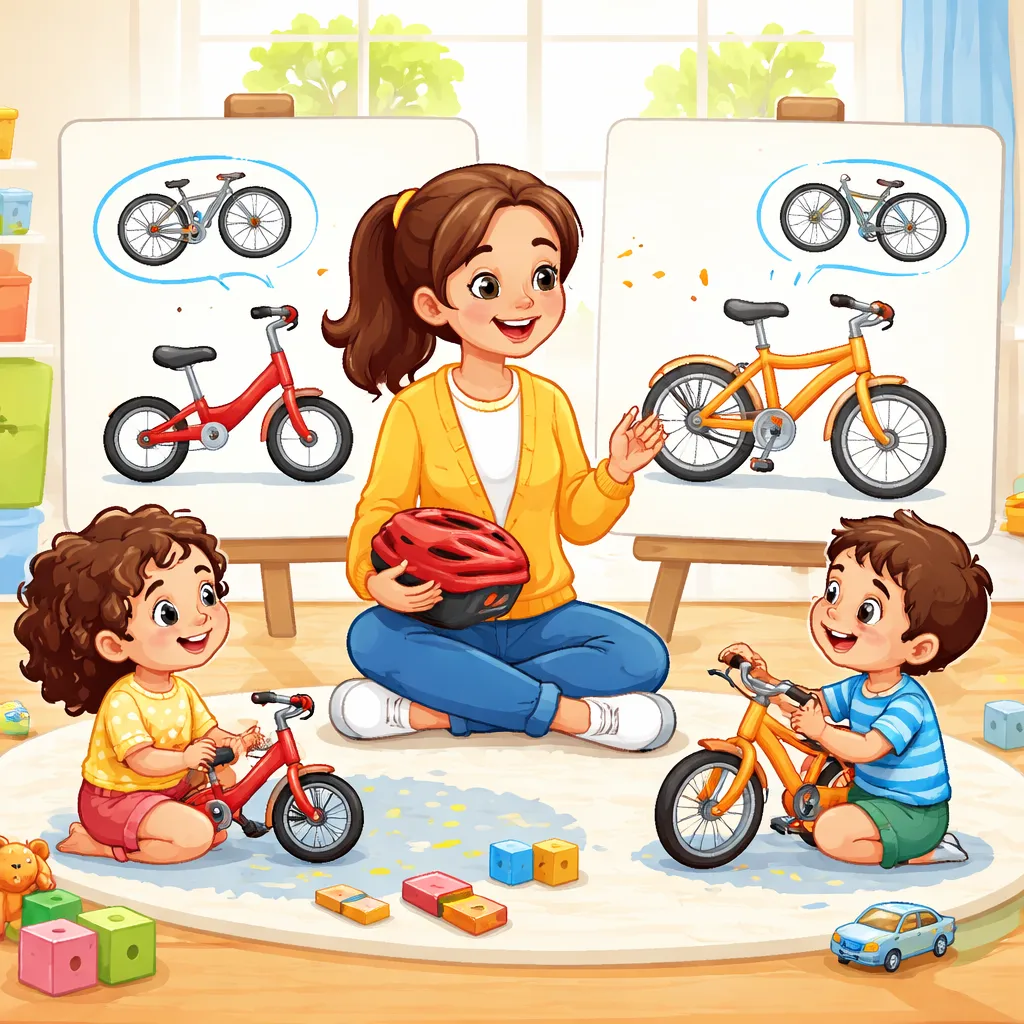

Are Similar Words Really Interchangeable? Many young students use the words cycling and bike as if they mean the exact same thing. In our daily lives, we see people pedaling through the park on two wheels. While these two terms often appear together, they represent very different ideas in the English language. One describes the activity and the sport, while the other describes the physical machine.
Understanding the unique roles of these words helps children communicate with more precision and professional flair. If a student says they are "doing bike," a native speaker might feel a bit confused. If they say they are "going cycling," everyone immediately understands the exercise they are enjoying. These small linguistic details are the building blocks of clear communication for young scholars.
Learning how these words function together allows parents and children to explore the world of travel more deeply. It moves a student beyond basic labels and into the world of logical and context-aware language application. When a learner knows the specific role of each word, they feel like a true expert. This foundation makes reading travel news or watching sports much more engaging for the entire family.
Set 1: Cycling vs Bike — Which One Is More Common? The word bike is much more common in daily conversation because it describes a very popular physical object. You will hear it in the garage, at the school gates, and in every neighborhood. It is a high-frequency noun that children encounter almost every single day in many different settings. Because it is a short and simple word, it is one of the first transport words a child masters.
Cycling is a more specialized word that people use when discussing the sport or the general activity. While it is a common word, its usage is more frequent in books, news reports, and athletic clubs. You might hear it more often during a sports broadcast or in a health class at school. It suggests a certain level of focus and dedicated exercise that a simple "ride" might not require.
In casual English, "bike" acts as a general word for the bicycle itself or a quick trip to a friend's house. "Cycling" acts as a more specific label for the hobby, the sport, or the act of traveling by wheel. Both words are essential for a child's vocabulary, but "bike" serves as a broader and more frequent starting point. Knowing which one to use makes a child's speech sound more natural and aware of the surrounding context.
Set 2: Cycling vs Bike — Same Meaning, Different Contexts We use the term cycling when we want to emphasize the physical act and the health benefits of the exercise. For example, a parent might say, "Cycling is a great way to keep your heart healthy and your legs strong." In this context, the focus remains on the movement of the body and the personal effort. It feels personal, energetic, and focused on the simple joy of being active outdoors.
We use the term bike to describe the specific physical object or a simple, short journey. If a child wants to play, they might say, "Can I go ride my bike in the driveway?" Here, the word provides a focus on the equipment itself rather than the competitive or athletic nature of the movement. The context moves from the general action of moving fast to the physical machine being used.
Think of it like the difference between "cooking" and a "stove" in a busy kitchen at home. "Cycling" is the activity and the skill, much like the process of creating a delicious meal. The "bike" is the essential tool or machine that makes the activity possible for the person using it. Using these contexts helps children understand that actions often belong to a larger world of specific tools.
Set 3: Cycling vs Bike — Which Word Is “Bigger” or More Emphatic? Cycling is the "bigger" word because it represents a massive global culture of health, transport, and competition. It encompasses the history of the Tour de France, city planning, and the fitness routines of millions. When a student says, "I love cycling," they are expressing a broad passion for a worldwide activity. It is an emphatic word that carries the energy of motion and the determination to travel far.
Bike is an emphatic word when it is used to describe the excitement and pride of owning a machine. Phrases like "mountain bike" or "new bike day" show how much joy this word can generate for a child. It highlights a specific piece of personal property that helps a child explore their local neighborhood. While it covers a specific object, the emotional impact of a "cool bike" is very high for young learners.
For a young learner, "cycling" feels like a grand adventure that connects people across different cities and countries. "Bike" feels like a loyal friend that waits in the garage for every afternoon play session. One word represents a lifelong habit of health, while the other represents the thrill of personal ownership. Both words have power, but they inspire different types of excitement and dedication in a child's mind.
Set 4: Cycling vs Bike — Concrete vs Abstract The word bike is almost always a concrete term because it refers to a physical, tangible machine. You can touch the rubber tires, feel the metal frame, and see the shiny bell on the handlebars. It is very easy for children to point to a bike in a shop and know exactly what it is. This concrete nature makes it an excellent word for beginners to learn through direct observation and touch.
Cycling can be more abstract because it often refers to a state of being or a general concept of travel. You cannot "touch" cycling, but you can see the results of the action through a person's movement. It involves abstract ideas like "stamina," "balance," and "safety" that guide how a person manages their journey. This makes it a great word for teaching children about invisible qualities like persistence and careful planning.
Shutterstock
Bridging these two concepts helps children see how concrete tools support abstract goals in their development. A concrete "bike" provides the machine, but "cycling" provides the internal drive and the abstract progress toward health. This connection helps children develop a more sophisticated way of describing their experiences and their physical growth. It turns a simple ride into a meaningful lesson about the relationship between objects and actions.
Set 5: Cycling vs Bike — Verb or Noun? First Understand the Role In standard English, the word cycling often functions as a gerund, which is a verb ending in "-ing" that acts as a noun. You might say, "Cycling is a fun way to spend time with my family on the weekend." In this sentence, the word acts as the subject, identifying the activity. It provides the "what" of the situation, giving the reader a clear image of the action and energy.
The word bike primarily functions as a noun that names the specific vehicle with two wheels and pedals. You might say, "The bike is leaning against the fence," or "My bike has a blue basket on the front." However, people also use "bike" as a casual verb in sentences like "I biked to school today." Understanding these different roles helps children build more creative and flexible sentences in their writing and speaking.
Teaching kids to identify the roles of these words prevents them from making common grammatical mistakes in school. They learn that "to ride" is the action, while "cycling" is the activity, and "the bike" is the machine. This level of awareness makes their English sound more polished and shows they understand the deeper rules. It gives them the right tools to express their interests with technical accuracy and total clarity.
Set 6: Cycling vs Bike — American English vs British English In American English, the word "biking" is often used as a synonym for "cycling" in casual conversation. An American child might say, "I am going biking with my friends," whereas a British child might say "cycling." The word "bike" is used universally in both countries to describe the bicycle itself. In America, "cycling" often sounds a bit more formal or refers specifically to professional racing or road enthusiasts.
In British English, "cycling" is the standard term for the activity and is used very frequently in daily life. A British child might talk about "cycle paths" where an American might refer to "bike lanes." Additionally, the word "bicycle" is often used in more formal British contexts than in casual American speech. These regional variations are a fun way for curious children to see how English changes across different cultures.
Despite these small regional flavors, the core meaning of these words remains a universal bridge for kids everywhere. A bicycle looks and feels the same whether you are in London, Sydney, or New York City. Learning that language can have different "styles" in different countries is a wonderful way to encourage a global mindset. It shows children that they are part of a worldwide team of students who share a love for wheels.
Set 7: Cycling vs Bike — Which Fits Formal Situations? Cycling is the standard term used in medical journals, city reports, and official physical education curricula. If a child is writing a school report on the benefits of exercise, "cycling" is the professional and accurate word. It signals a focus on human biology, cardiovascular health, and the general mechanics of transport. Using this word in a formal setting shows a high level of health literacy and scientific awareness.
Bike is a perfectly fine word, but it is often considered more casual or informal in serious writing. In a formal report, a student might use the full word "bicycle" to describe the machine they are studying. While "bike" is used in headlines, "cycling" is preferred when discussing the sport as an official Olympic discipline. Knowing this helps children realize that different situations require different levels of respect and precision in language.
Guiding children to choose the right word for the right situation is a key part of their educational development. When they use "cycling" in a formal presentation, they sound prepared and mature for their age and level. When they use "bike" in a technical way, they show they have a "specialist's eye" for the machine. Formal language is a tool that helps children communicate their big ideas with authority and total clarity.
Set 8: Cycling vs Bike — Which One Is Easier for Kids to Remember? Bike is often easier for children to remember because it is a short, one-syllable word that is easy to spell. Most kids recognize the sound of the word quickly and associate it with the physical machine in their garage. The name is easy to say and has a fun, punchy sound that kids enjoy repeating. This simplicity makes it one of the first transport words that many children master when learning English.
Cycling is also easy to remember because it is an action word that ends in a familiar "-ing" sound. Children quickly learn that adding "-ing" to words like "cycle" turns them into a description of an activity. Its connection to the physical movement of the legs in a circle makes it a very logical word to learn. This logical structure helps the word stick in the brain much more effectively over time for older students.
To help a child remember both, parents can use the "Machine and Motion" memory trick during a weekend ride. You use the "bike" (the machine) to go "cycling" (the motion) to keep the concepts separate but related. This hands-on practice ensures that the words are linked to physical movements and positive emotions. When learning is tied to fun activities, it becomes a permanent and joyful part of their memory.
Mini Exercise: Can You Spot the Differences Between These Similar Words? Are you ready to test your knowledge and see if you can tell these two words apart in a sentence? Read the sentences below and decide whether the word cycling or bike is the best fit for each blank space. This is a great way for parents and kids to work together while improving their reading and logic. Let's see if you can get all four correct!
My father wears a special helmet and bright clothes when he goes ______ on the long road.
I need to put some air in the tires of my ______ because they feel a bit soft today.
The ______ path in the park is only for people who are riding and not for walkers.
If you want to improve your leg strength, you should try ______ every morning for thirty minutes.
How did you do on our mini-quiz? For sentences one and four, "cycling" is the best choice because it refers to the activity and the exercise. For sentences two and three, "bike" or "cycle" are correct because they refer to the physical machine and the path. If you got them all right, you are ready to be the star of your own vocabulary team!
Parent Tips: How to Help Kids Learn and Remember Similar Words Helping your child learn new words is most successful when it is part of the activities they already love. If your child enjoys being active, use their time on wheels to introduce terms like "pedal," "gear," and "brake." Instead of a long list of words, these terms become part of the exciting story of their personal progress. This makes the language feel useful and worth remembering for their future matches and daily conversations.
Encourage your child to "narrate" their own activity as if they were a professional sports announcer on the radio. Ask them to say things like, "She gets on her bike... she starts cycling... she is moving very fast!" This active use of language helps bridge the gap between knowing a word and being able to use it correctly. It also builds their confidence in speaking English aloud in a very fun and low-pressure environment.
Keep a "Travel Word Chart" on the wall where you can add new terms as your child discovers them in books. You can even draw a picture of a bike and label the different parts, like the "saddle" and the "chain." Seeing the words every day helps with spelling and ensures they become a permanent part of your child's growing vocabulary. Your encouragement and participation make every new word a fresh opportunity for success and a love of learning.
Exploring the world of transport through English is a wonderful way to build a child's mind and body at the same time. By understanding the specific roles of cycling and bike, children gain a clearer view of the world and how to describe it. These words are not just for fun; they are the tools that help us share our adventures and achievements. Keep moving, keep talking, and enjoy every moment of this incredible educational journey together as a family.