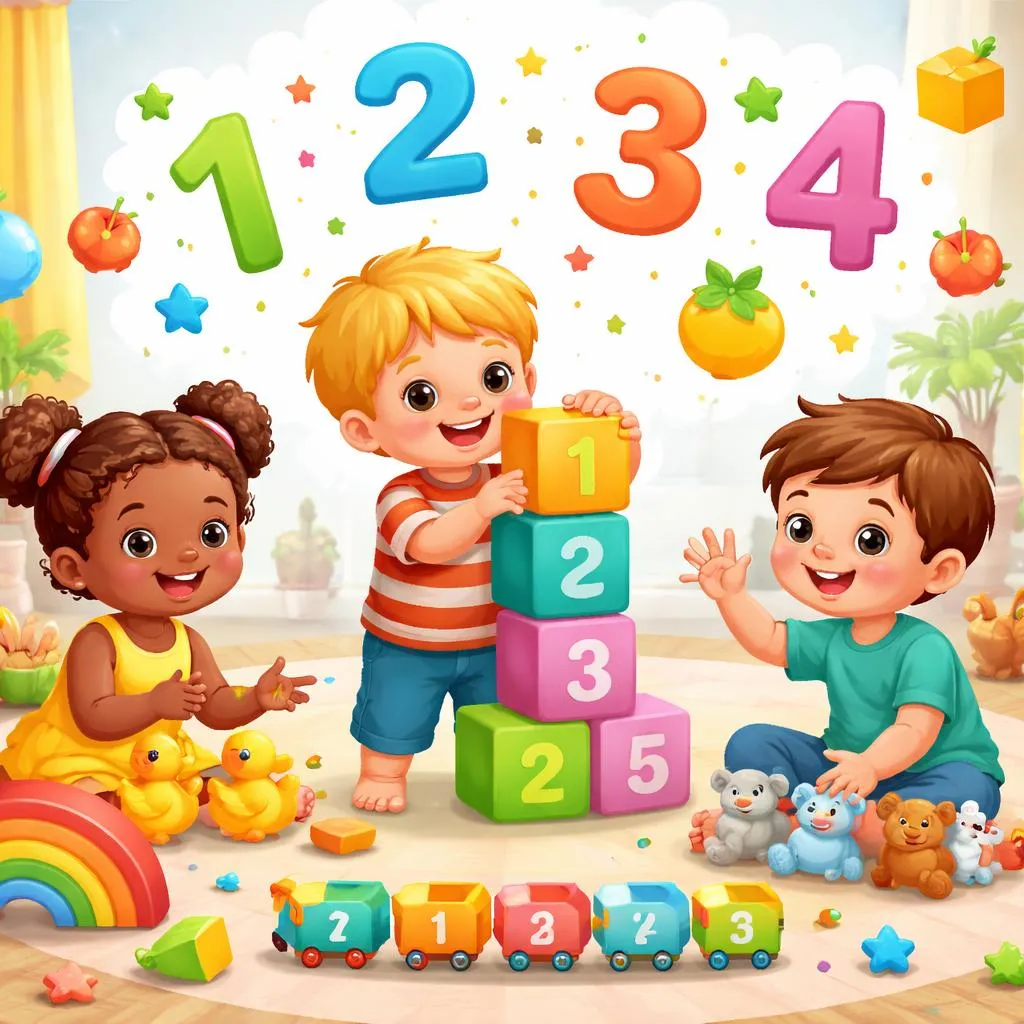

What is a Number in English?
A number in English is a word or symbol that shows how many things there are. Numbers help describe quantities, order, and positions. Learning numbers in English is important for daily life.
Numbers appear everywhere, from counting toys to checking the clock. Understanding numbers in English helps children communicate clearly. It also introduces basic math skills, like addition and subtraction.
Numbers can be written as words, such as “one, two, three,” or as digits like “1, 2, 3.” Using both formats improves reading, writing, and recognition skills.
Meaning and Explanation
A number in English represents a quantity, position, or order. Numbers can be used in many ways:
Counting objects, like apples or toys
Telling time, like “two o’clock”
Showing age, like “I am five years old”
Identifying order, like “first, second, third”
Numbers are part of everyday language. Learning them helps children describe their world and solve simple problems.
Categories of Numbers
Numbers in English can be grouped into categories:
Cardinal Numbers: These show how many of something exists. Examples: one, two, three, four.
Ordinal Numbers: These show position or order. Examples: first, second, third, fourth.
Even and Odd Numbers: Even numbers can be divided by two, like two, four, six. Odd numbers cannot, like one, three, five.
Large Numbers: Numbers beyond ten, like twenty, thirty, or one hundred. These introduce counting in tens, hundreds, and thousands.
Zero: Zero is a special number that shows nothing exists. It is important in math and everyday life.
Understanding these categories helps children organize numbers in their minds and use them in different situations.
Daily Life Examples
Numbers are part of everyday life. They appear in:
Counting snacks or toys
Reading clocks and calendars
Talking about birthdays or ages
Buying items in a store
Playing games or sports
Using numbers in daily activities helps children remember them faster. Associating numbers with real-life objects makes learning meaningful.
Printable Flashcards
Flashcards are useful for teaching numbers in English. Each card can show:
A digit, like 1, 2, 3
The word form, like one, two, three
Pictures showing quantity, like one apple or three balls
Flashcards help children match numbers with words and objects. They improve recognition, memory, and pronunciation.
Learning Activities and Games
Interactive activities make learning numbers fun:
Counting Objects: Use toys, blocks, or snacks. Children count items while saying the numbers in English.
Number Matching: Match a digit with its word. For example, “2” with “two.”
Number Bingo: Children mark numbers as they are called. This reinforces recognition and listening skills.
Number Hunt: Hide cards around the room. Children find them in order and say the numbers in English.
Sing Number Songs: Songs like “One, Two, Buckle My Shoe” make learning numbers easy and fun.
Order and Sequence Games: Arrange numbers in order from smallest to largest or first to tenth. This strengthens understanding of ordinal numbers.
Phonics and Pronunciation Points
Learning numbers in English also teaches pronunciation. Words like three, five, seven have unique sounds that may differ from children’s native language.
Singing number songs helps children practice pronunciation naturally. Repetition builds confidence and improves fluency. Using songs with rhythm also improves memory and engagement.
Tips for Parents and Teachers
Repeat numbers daily in speech, games, and songs
Use objects and real-life examples to reinforce numbers
Ask questions like “How many apples are on the table?”
Encourage children to write numbers in digits and words
Combine numbers with colors, shapes, or objects for more learning connections
Educational Benefits
Learning numbers in English helps children:
Improve counting and math skills
Enhance memory and observation
Develop vocabulary and language skills
Build confidence in reading and speaking
Connect numbers to everyday life
Hands-on activities, games, and songs make learning numbers engaging and memorable. Children enjoy discovering, counting, and singing while practicing English.
Understanding numbers in English provides a foundation for math, reading, and communication skills. Using interactive activities and real-life examples makes learning meaningful and fun for preschoolers and young learners.