
What is the Rhyme/Story?
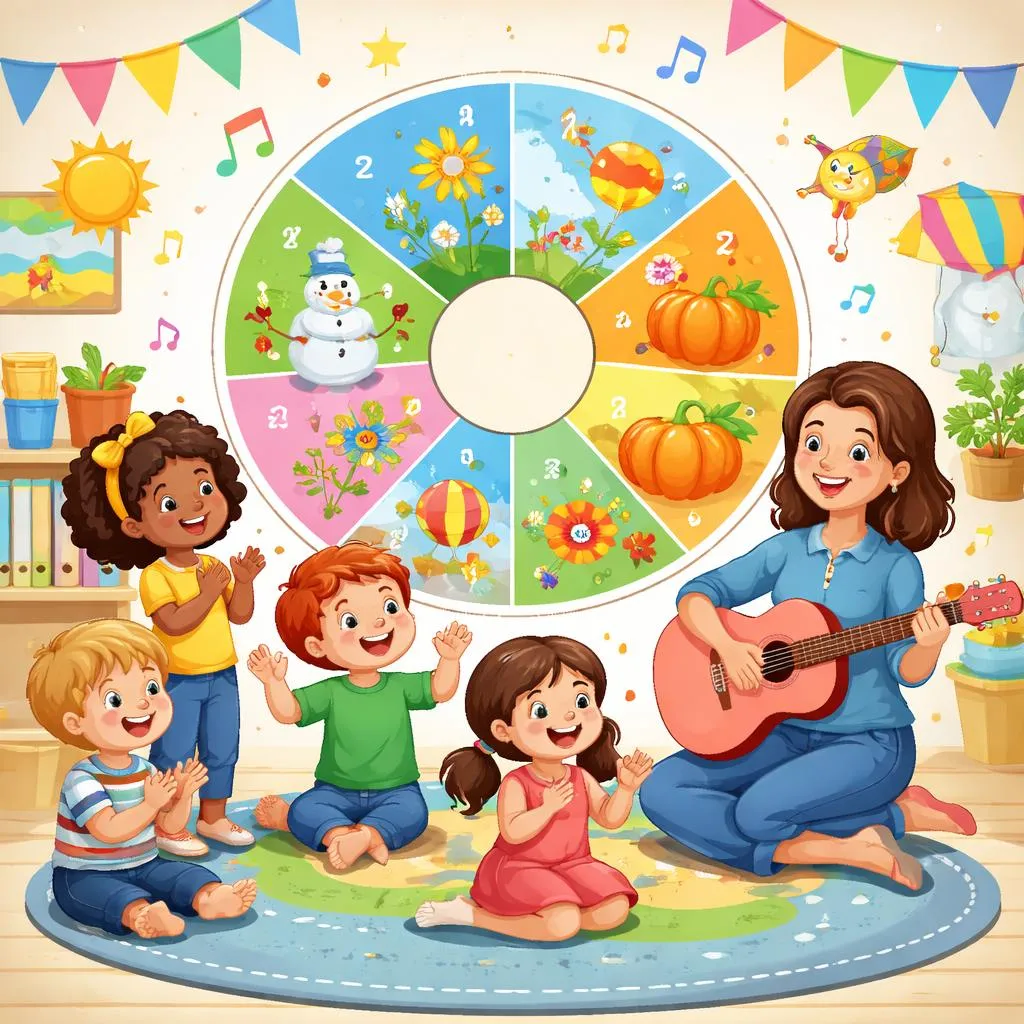
The “month of the year song lyrics” is a cheerful and memorable song that teaches children all twelve months of the year. Each month is introduced in order with a melody that makes learning easy and enjoyable.
Repetition and rhythm help children remember the months naturally. The song also teaches basic time concepts, such as seasons, birthdays, and holidays. Singing the song improves listening, speaking, and memory skills in English.
Because it is short and repetitive, the song is ideal for young learners. It can be sung multiple times without losing attention. It also provides opportunities for acting, movement, and classroom interaction.
The Lyrics of “month of the year song lyrics”
A popular version of the lyrics goes like this:
“January, February, March, and April, May, June, July, and August, September, October, November, December, These are the months of the year.”
The lyrics are simple, clear, and easy to repeat. Singing helps children remember the correct order of months. It also introduces pronunciation patterns and rhythm in English.
Repeating the song daily helps internalize the names of the months and their sequence. Children also gain confidence in speaking English while having fun with music.
Vocabulary Learning
The song introduces important vocabulary:
January, February, March, April, May, June, July, August, September, October, November, December: the twelve months of the year
Month: a division of the year
Year: a full cycle of twelve months
Season: spring, summer, autumn, winter
Repetition makes these words easy to remember. Children also start associating months with events, weather, and holidays. Learning vocabulary through a song helps build long-term memory.
Phonics Points
The rhyme provides excellent phonics practice. Words like January, February, July, November help children notice syllables and stress patterns. Repeating the song emphasizes vowel sounds and consonant blends.
The song also teaches rhythm and intonation. Multisyllable words like September and November have natural stress patterns. Singing makes it easier for children to pronounce these words correctly.
Grammar Patterns
The rhyme also introduces simple sentence patterns. For example:
“These are the months of the year.”
Subject: These
Verb: are
Object: the months of the year
This structure teaches plural nouns, linking verbs, and category labels. Using songs to introduce grammar allows children to learn patterns naturally without formal instruction.
Other grammar patterns include:
Using prepositions with months: “in January,” “in March”
Talking about events: “My birthday is in June”
These structures can be reinforced through discussion and singing.
Learning Activities
Several activities enhance learning with the “month of the year song lyrics”:
Act It Out: Point to each month on a calendar while singing. Moving while singing helps memory and motor skills.
Draw Seasonal Pictures: Children can draw symbols for each month. For example, snow for January, flowers for April, leaves for October. Labeling drawings reinforces vocabulary.
Discuss Real-Life Events: Ask children about birthdays, holidays, or vacations in different months. This connects language learning to everyday experiences.
Sequence Cards: Print cards with months and have children arrange them in order while singing. This strengthens sequencing and comprehension skills.
Printable Materials
Flashcards and worksheets make the song more interactive. Flashcards could show months with images representing seasons, weather, or holidays.
Worksheets can include:
Fill-in-the-blank: “_____ comes after May.”
Match months to seasons: connect “December” to “winter.”
Color by month: draw activities associated with each month.
Printable materials help reinforce vocabulary, sequencing, and comprehension.
Educational Games
Games make learning the months fun and engaging:
Month Relay: Place month cards around the room. Children run to the card while singing that month.
Bingo Game: Create bingo cards with months. Sing the lyrics and mark months as they are heard.
Memory Challenge: Sing line by line, asking children to repeat previous months before adding the next. This improves memory and sequencing.
Guess the Month: Describe a month’s characteristics, such as “It has snow,” or “It’s the month of Halloween,” and children guess the month.
These games reinforce vocabulary, comprehension, pronunciation, and sequencing while keeping children engaged.
Daily Life Examples
Learning the months is useful for daily life. Children can say the month of their birthday, holidays, or special events. Teachers and parents can ask: “Which month comes after March?” or “What season is July in?”
Singing the song while pointing to a calendar or drawing seasonal images links language to daily experiences. Children not only memorize the names of the months but also understand their context and importance.
The song encourages children to notice patterns, such as which months belong to certain seasons or which months contain holidays and birthdays. Connecting songs to daily life makes learning meaningful and memorable.
Tips for Parents and Teachers
Repeat the song regularly to strengthen memory.
Encourage pointing to months on a calendar while singing.
Ask questions: “Which month comes after August?” or “Which month is your birthday?”
Use flashcards, worksheets, and drawings alongside the song.
Record children singing the song to boost confidence and pronunciation.
Why Children Love This Song
The cheerful melody, repetition, and simple lyrics make the “month of the year song lyrics” fun to sing and easy to remember. Children enjoy moving, pointing, and singing together.
The song teaches vocabulary, phonics, grammar, sequencing, and real-life connections naturally. Singing, acting, drawing, and playing games make learning English interactive, memorable, and enjoyable.
Using the “month of the year song lyrics” in classrooms or at home creates an educational experience that combines music, learning, and fun, helping children remember months, understand seasons, and build confidence in English.