
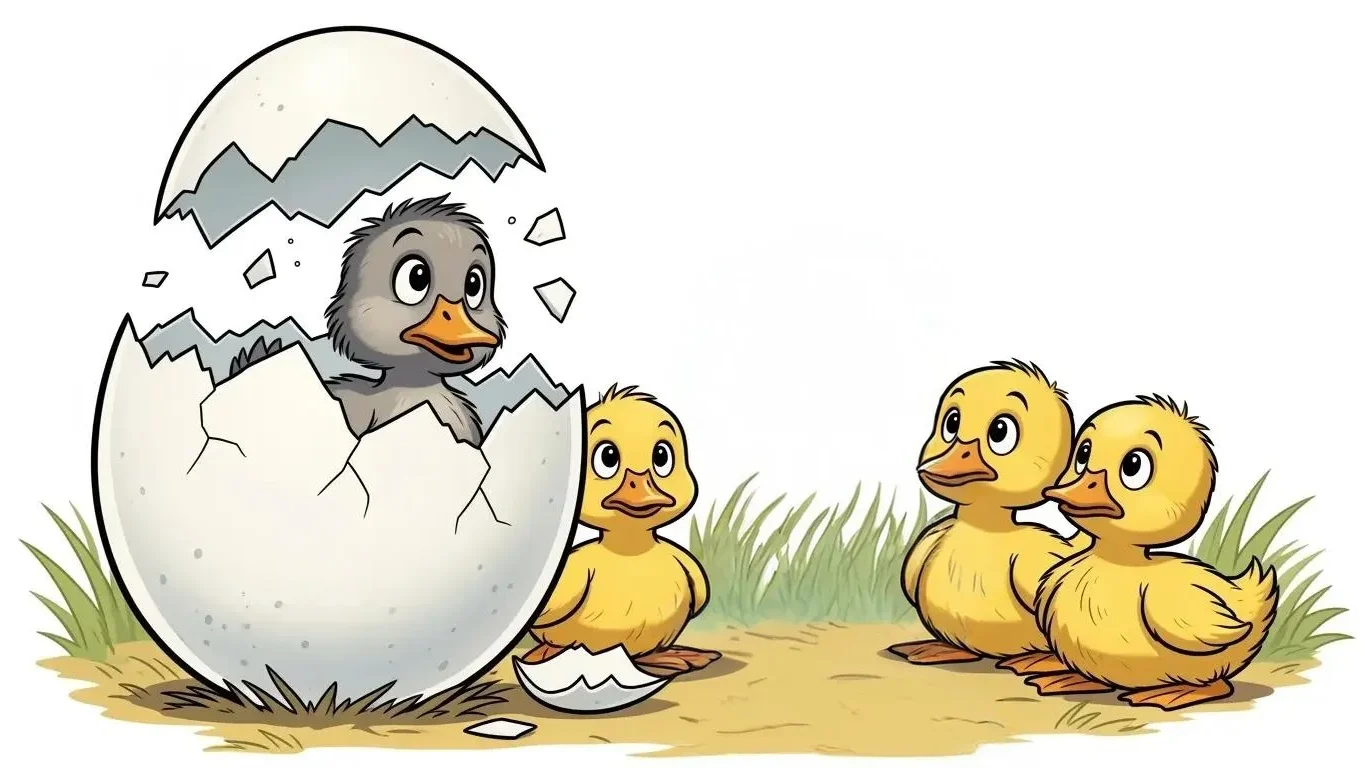
On a warm summer day, in the reeds by a quiet pond, a mother duck was waiting for her eggs to hatch. One by one, the eggs cracked open, and fluffy yellow ducklings popped out, cheeping happily. But the last egg was much larger and slower to hatch. Finally, it cracked, and out came a strange, gray bird—big, awkward, and nothing like his brothers and sisters.
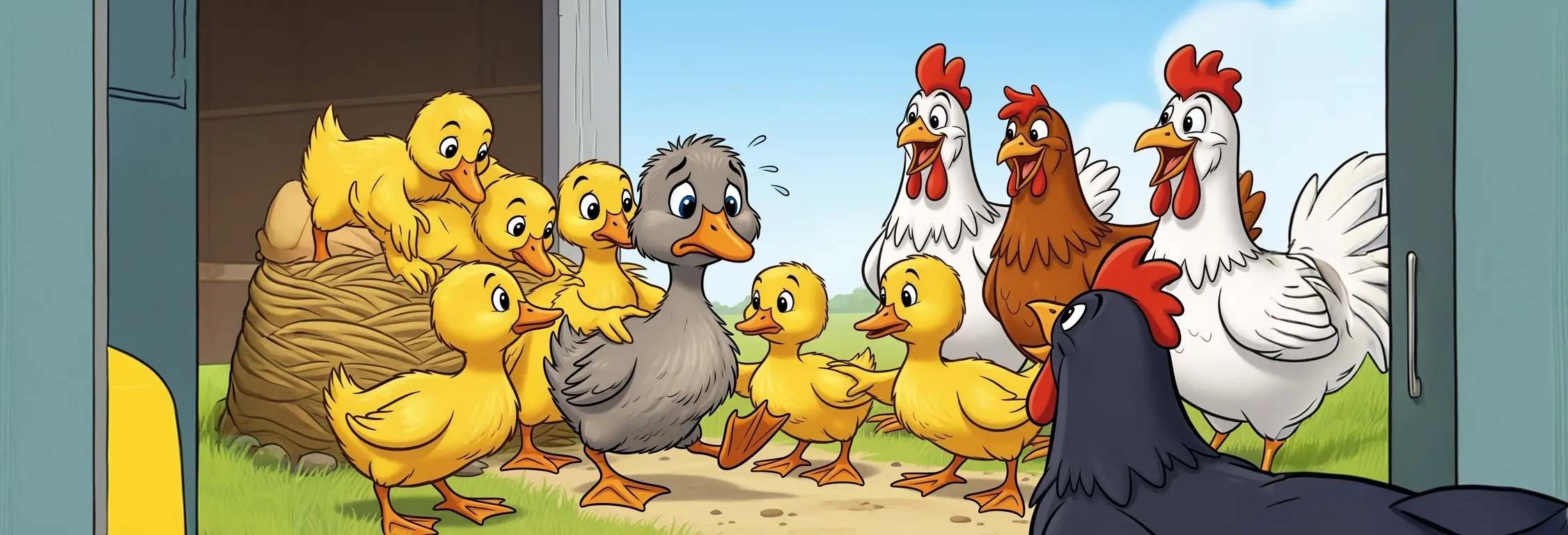
From the very beginning, the other ducklings laughed at him. “You’re so ugly!” they quacked. Even the farm animals teased him. The hens clucked, the dogs barked, and the turkeys gobbled. The poor duckling felt lonely and sad.
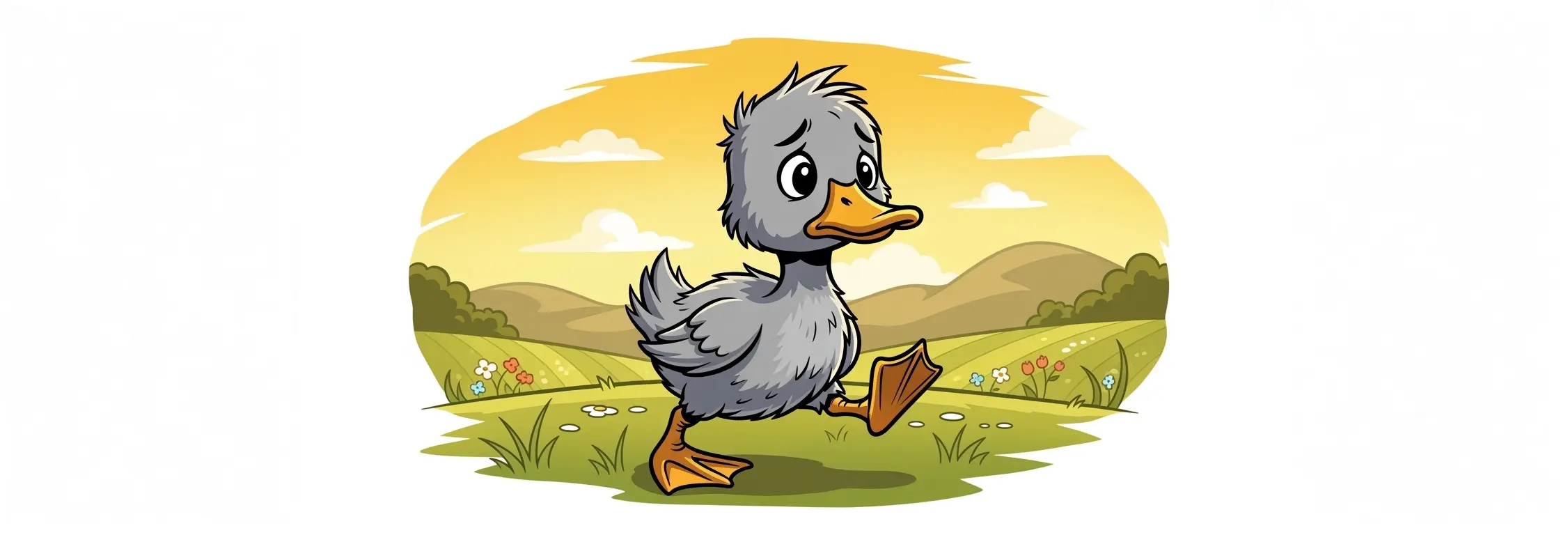
Days turned into weeks. The ugly duckling tried to fit in, but everywhere he went, he was chased away. “Why can’t I be like the others?” he thought. At last, he left the farm and wandered into the wide world, searching for a place where he belonged.
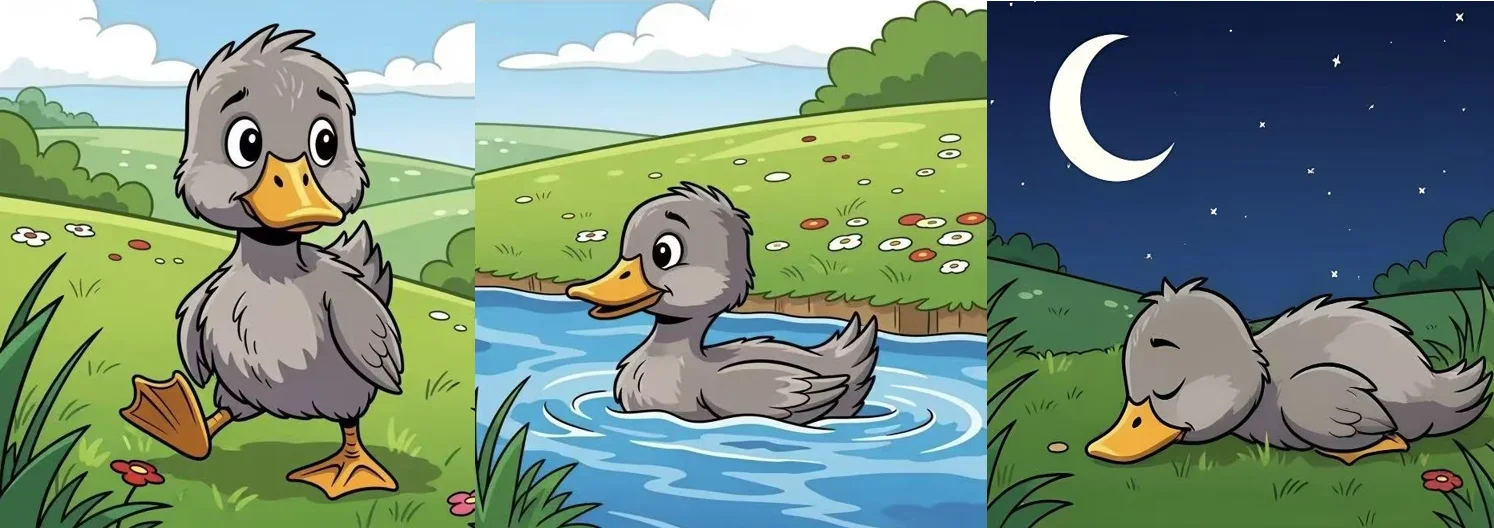
Through summer and autumn, he lived alone in the fields and marshes. Winter came, and the ponds froze. Cold and hungry, he nearly gave up hope. But a kind farmer found him and gave him shelter. When spring arrived, the duckling, now grown, spread his wings and felt them stronger than ever before.

One bright morning, he saw a group of beautiful white swans gliding across the water. Drawn by their beauty, he approached them carefully, expecting to be chased away. But when he looked into the water, he gasped. The reflection showed not an ugly, gray duckling—but a graceful, white swan.
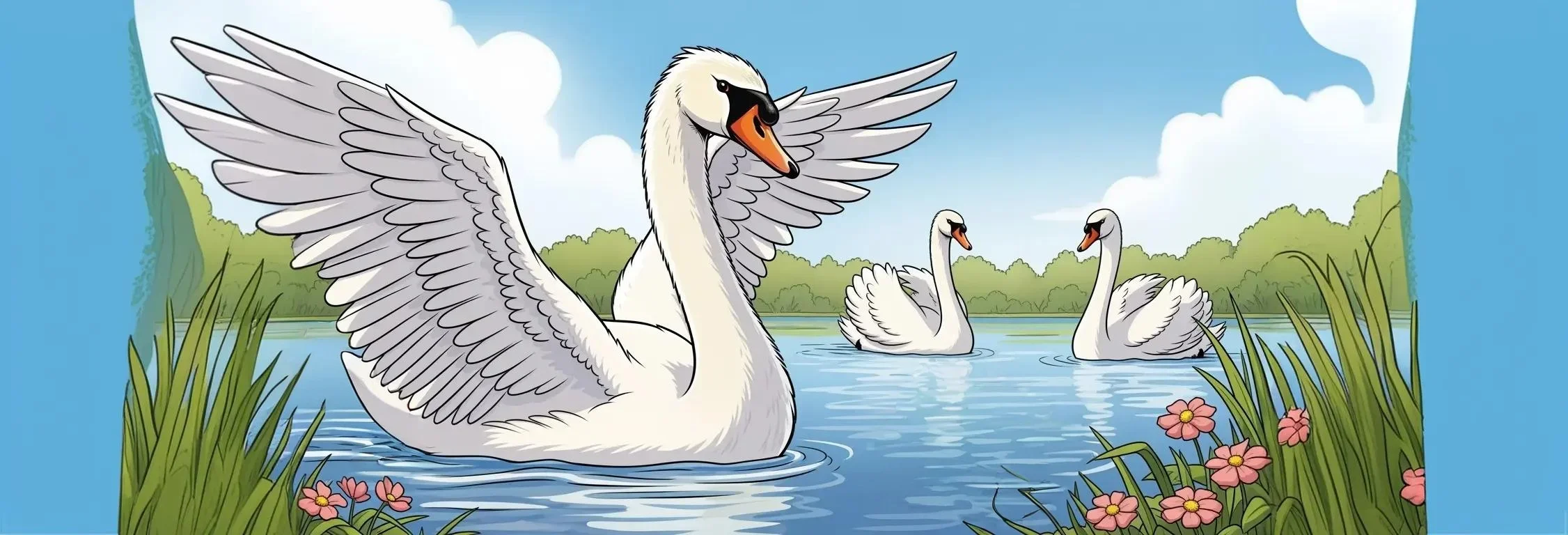
The other swans welcomed him, and the ugly duckling at last understood: he had never been a duck at all. He was a swan, and he had found his true family. His heart filled with joy, and he lifted his wings, proud and free at last.
📖 Introduction
The Ugly Duckling is one of Hans Christian Andersen’s most beloved fairy tales.
It tells the story of a young bird who suffers rejection and hardship before discovering his true identity as a swan.
This story resonates with children and adults alike, teaching about patience, resilience, and self-acceptance.
🎯 Themes / Takeaway
- Everyone has value, even if others cannot see it right away.
- True beauty is revealed in time, not at first glance.
- Growth and change take patience and courage.
🏡 How to Use This Story
🎤 Activity 1: Read Aloud
- Use gentle, sad tones when reading the duckling’s hardships, and a joyful, uplifting tone at the ending.
- Pause to let children react when the duckling is teased.
- Emphasize the transformation moment when the duckling becomes a swan.
❓ Activity 2: Ask Children
- “Why did the other animals make fun of the duckling?”
- “How do you think the duckling felt when he was left out?”
- “What changed when spring came?”
- “What do you think this story tells us about being different?”
🎭 Activity 3: Role-Play
- Assign roles: Mother Duck, Ugly Duckling, other Ducklings, Farm Animals, and Swans.
- Act out the teasing scenes, the lonely winter, and the happy ending.
- Encourage children to express emotions—sadness, hope, and joy.
🎨 Activity 4: Creative Expression
- Drawing: Draw the duckling at three stages—egg, “ugly” duckling, and swan.
- Craft: Make swan wings from paper or fabric for role-play.
- Writing: For older children, ask them to write about a time they felt left out and how they overcame it.
💡 Activity 5: Connect to Real Life
- “Have you ever felt different from others? How did it feel?”
- “Why is it important not to judge someone by how they look?”
- “What makes you special in your own way?”