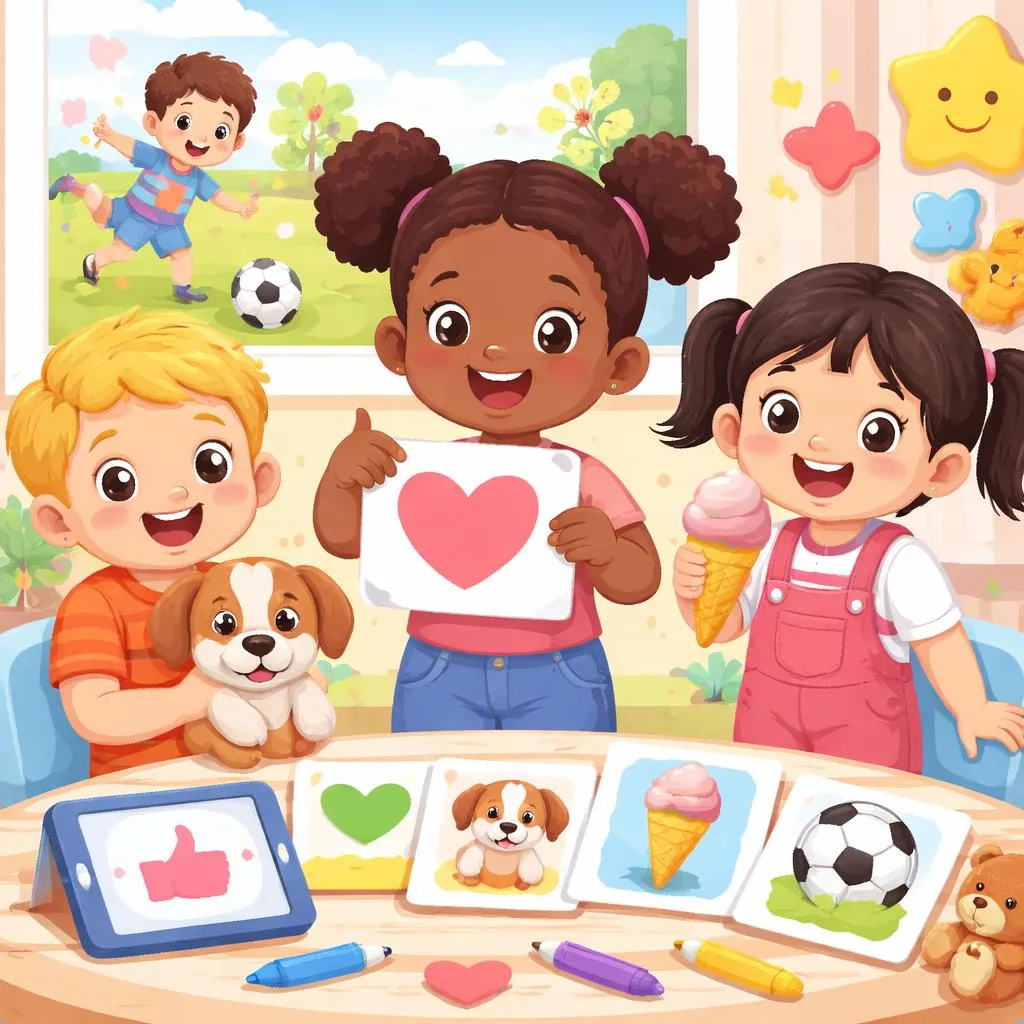

What’s the Meaning of the Verb “Like”? When I teach English, I often start with the verb like. Like means to enjoy something. It also means to feel happy about something. For example, when I say, “I like apples,” I mean apples make me happy. Children use like every day. They like toys, food, and games. So like is an important feeling word.
Conjugation of the Verb “Like” in English Let us look at how like changes. This is called conjugation. In English, like changes with the subject. I like You like He likes She likes It likes We like They like Only he, she, and it use likes.
Present Tense: Like / Likes We use the present tense to talk about now. I like pizza. You like dogs. He likes cars. She likes music. It likes milk. We like books. They like games. When I teach children, I repeat: 👉 He likes, she likes, it likes.
Examples with the Verb “Like” in Present Simple Here are classroom-style examples. I like ice cream. She likes drawing. He likes soccer. We like English class. They like cartoons. Parents and teachers can practice these sentences with children. Say them slowly and clearly.
Past Tense of the Verb “Like”: Liked When we talk about yesterday, we use liked. Yesterday, I liked the movie. She liked the story. He liked the game. Like → liked We add -ed for the past.
Examples with the Verb “Like” in Past Here are simple past examples. I liked the cake. She liked the book. They liked the trip. These sentences help children talk about memories.
Future Tense of the Verb “Like”: Will Like We use will like to talk about the future. I will like the new toy. She will like this song. They will like the park. This helps children talk about hopes and plans.
Examples with the Verb “Like” in Future Let me give classroom examples. I will like English more. He will like his new school. We will like this game. Children enjoy talking about the future.
Questions with the Verb “Like” Questions help children communicate. Do you like apples? Does he like milk? Does she like cats? In the past: Did you like the movie? In the future: Will you like this book? I encourage children to ask and answer these questions in class.
Other Uses of “Like” Like is not only a verb. It can be a preposition and a filler word. Like as a Preposition He runs like a cheetah. She sings like a bird. Like in Speaking Sometimes people say: “I was like, wow!” This is casual spoken English. I teach this only to older children.
Learning Tips for “Like” When I teach like, I use real examples. Children talk about things they enjoy. Ask children: “What do you like?” “What food do you like?” “What games do you like?” This makes learning personal and fun. Encourage full sentences: “I like apples.” “I like playing soccer.”
Educational Games with “Like” Games make grammar fun. Like Survey Game Students ask classmates: “Do you like pizza?” They write yes or no. Like Drawing Game Children draw something they like. Then they say, “I like this.” Like Sentence Race Students make sentences with like. The fastest student wins. These games improve speaking and confidence.
When I teach English, like is one of the first verbs I introduce. It helps children express feelings and opinions. It also builds conversation skills. By practicing like in sentences, questions, and games, children learn to share who they are and what they enjoy. This is why like is one of the most powerful beginner verbs in English.