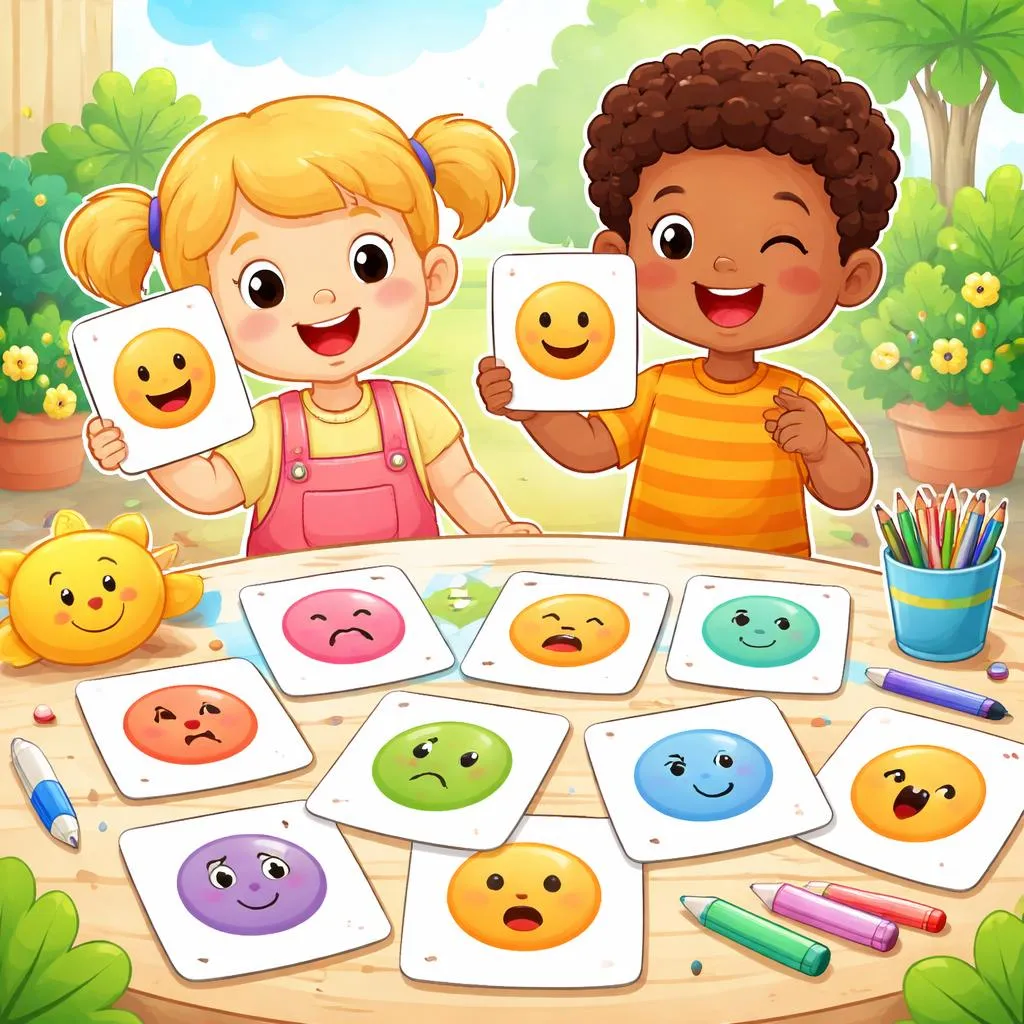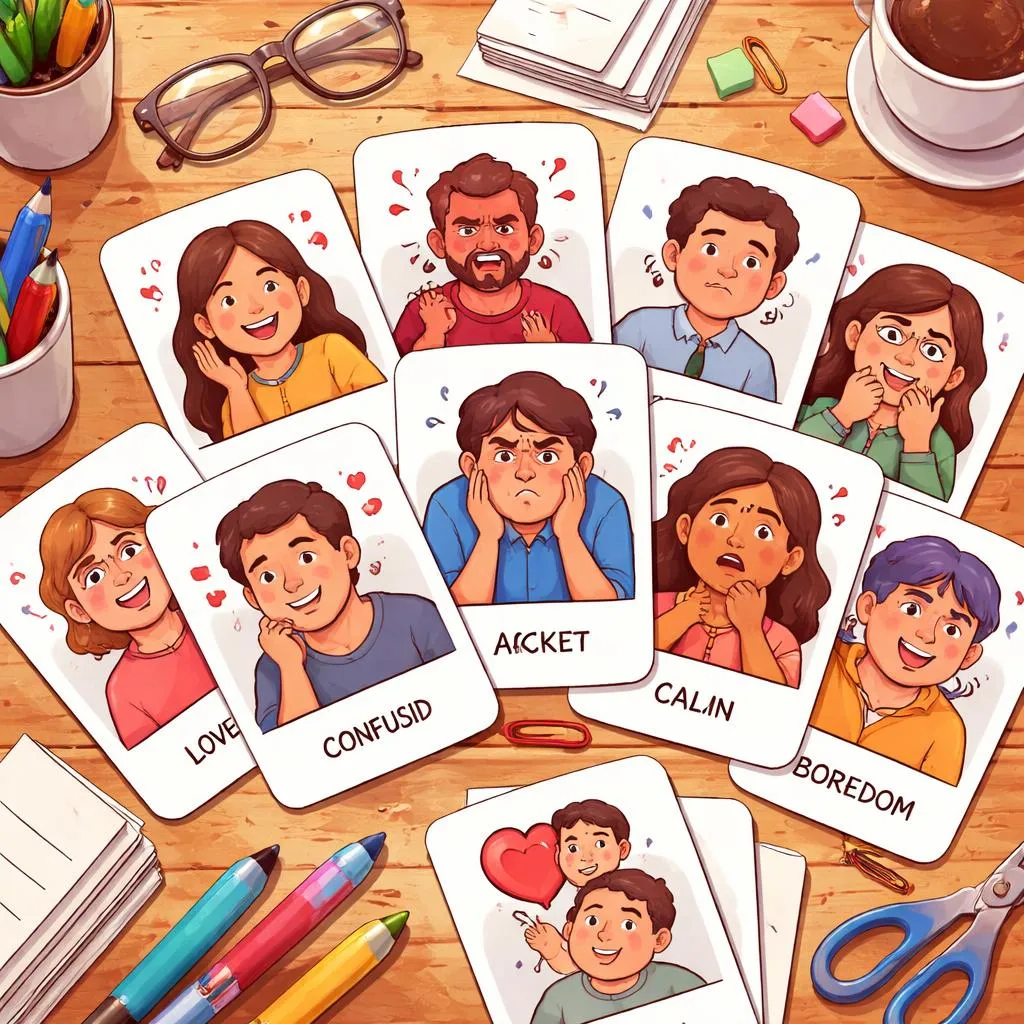

This is one of three sets of emotions flashcards. These pictures use exaggerated facial expressions to teach common feelings vocabulary. Intermediate level or high beginner students who enjoy building their vocabulary will like this set of funny pictures. In this set, the feelings are all depicted on people (as opposed to animals or characters as in the Emotions Flashcards for Preschool ). This makes it easier to prompt for 3rd person singular form with “ How does she/he feel? ” These cards work well with miming games like charades, if you have a class with a sense of humour. Or bring a list of life events to class and try a “How did you feel when…?” conversation activity in pairs or small groups.
Word list: angry, bored, confused, happy, in love, miserable, nervous, sad, scared, shocked, surprised, tired
Click here to download the full Emotions Flashcards for Adults PDF — free
By practicing with emotions flashcards, children can:
- Recognize and name a variety of common feelings, helping to build their emotional vocabulary.
- Understand facial expressions and body language associated with different emotions.
- Improve their communication skills by describing how people feel in different situations.
- Develop empathy by identifying emotions in others.
- Enhance memory and recall through interactive and playful learning.
How to Teach Emotions Flashcards with Flashcards
Parents and educators can use these emotions flashcards to introduce children to different feelings in a fun and engaging way. Start by showing each card and naming the emotion clearly, encouraging the child to repeat the word. Use the exaggerated facial expressions on the cards to help children link the word to the feeling. Ask questions like “How does she feel?” or “Can you show me a happy face?” to promote active participation. Incorporate storytelling by describing scenarios where someone might feel a certain way, helping children connect emotions to real-life experiences.
Fun Emotions Flashcard Games
- Charades: Children take turns acting out an emotion from the flashcards while others guess which feeling it is. This game encourages movement and expression.
- Emotion Matching: Mix the flashcards and ask children to match the word with the correct facial expression.
- Feelings Bingo: Create bingo cards with emotions and call out words for children to mark on their cards. These games make learning emotions interactive and memorable.
Example Sentences with Emotions Vocabulary
- “She feels nervous before her big test.”
- “He looks surprised because he got a gift.”
- “When I’m tired, I want to rest.” Using sentences helps children practice grammar and understand how to use emotion words in context.
Free Emotions Flashcards PDF Download
You can download and print free emotions flashcards from various educational websites. These printable resources are perfect for home or classroom use and allow you to have multiple sets for group activities. Look for PDFs that feature clear images and simple words to support early learners.
FAQ about Emotions Flashcards
Q: At what age are these flashcards suitable? A: They are ideal for children aged 4 and up, especially those beginning to learn about feelings. Q: How often should children practice with flashcards? A: Short daily sessions of 10-15 minutes work best to keep children engaged. Q: Can these flashcards be used for children learning English as a second language? A: Yes, they are excellent tools for ESL learners to build emotional vocabulary and comprehension. Q: Are there activities to extend learning beyond flashcards? A: Yes, parents and teachers can encourage children to draw faces showing different emotions or write simple stories about feelings to deepen understanding.