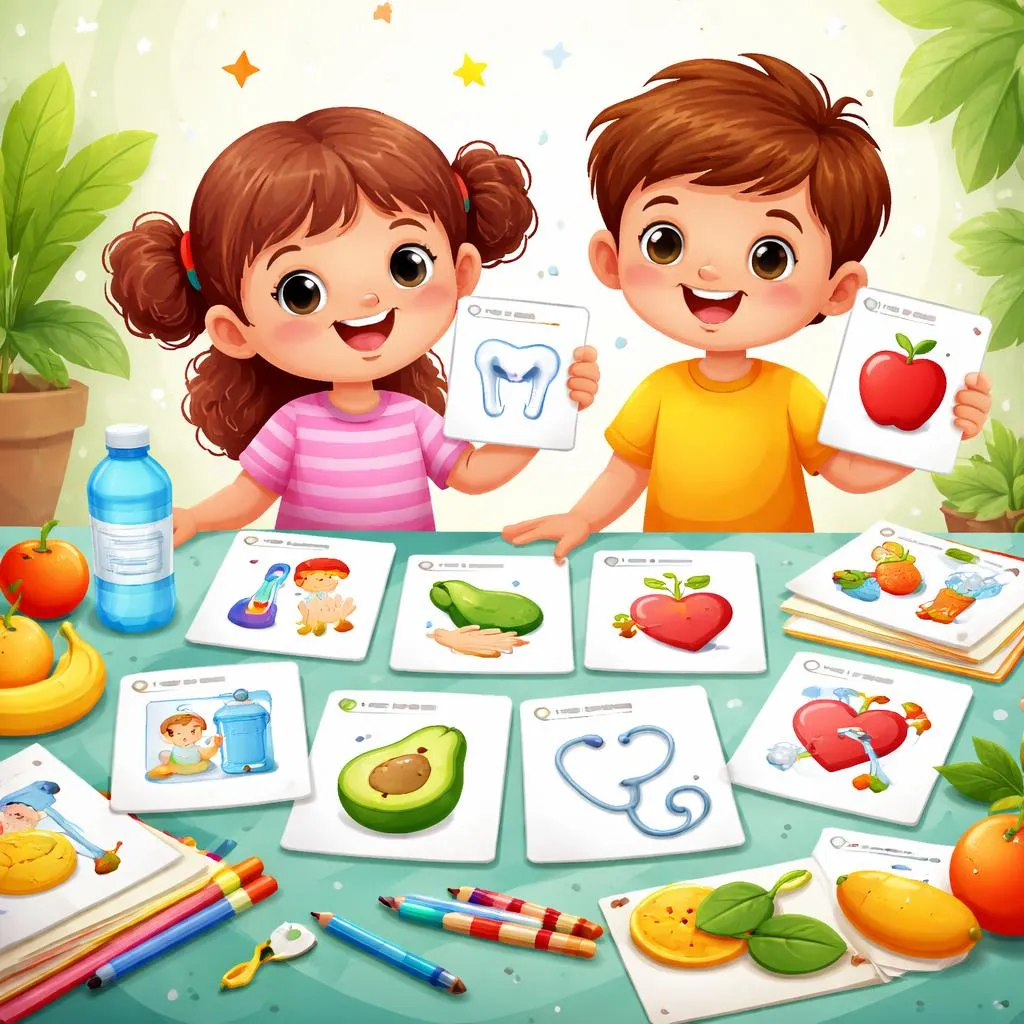

The Health Flashcards set is a great collection of vocabulary for teaching the words for the things you see when you visit the doctor’s office or hospital. The set of 24 pictures contains 21 objects and as well three people ( nurse, doctor, surgeon ). Some of the vocabulary here is more difficult, or less commonly taught. Use these cards to supplement the Injuries and Illnesses flashcards if you have a mixed level or quick-learning class.
Word list: ambulance, bandages, cast, crutches, doctor, dressing, eye chart, first aid kit, hand sanitizer, hospital, mask, medicine, nurse, pills, scale, splint, stretcher, surgeon, syringe, syrup, thermometer, vitamins, wheelchair, X-ray
Click here to download the full Health Flashcards PDF — free
By practicing with Health Flashcards, children can:
- Learn essential vocabulary related to health, hospitals, and medical care in an engaging and visual way.
- Recognize common objects and people they might see during a doctor’s visit, such as nurse, doctor, ambulance, and thermometer.
- Improve their speaking and listening skills by associating words with pictures and practicing pronunciation.
- Develop confidence in discussing health topics and expressing needs related to illness or injury.
- Build a foundation for understanding more complex health-related language as they grow.
How to Teach Health Flashcards with Flashcards
Parents and educators can use Health Flashcards to introduce children to important health-related vocabulary through interactive sessions. Start by showing each card and saying the word clearly, encouraging children to repeat after you. Use simple explanations or stories about going to the doctor or hospital to make the words meaningful. For example, explain what a nurse does or why we use a thermometer. Mixing in questions like “Can you find the bandages card?” helps children stay engaged and practice recognition. Flashcards can also be used during routine health discussions at home, making learning natural and relevant.
(1) Fun Health Flashcards Games
To reinforce learning, play games such as “Memory Match” where children find pairs of cards, or “Flashcard Bingo” using the vocabulary words. Another fun activity is “Simon Says” with actions related to the cards, like pretending to use crutches or a syringe. These games encourage active participation and help children remember the words better. Role-playing doctor visits using the flashcards can also boost language use and confidence by simulating real-life conversations.
(2) Example Sentences with Health Vocabulary
Using the flashcards, children can practice simple sentences like “The doctor helps me feel better,” or “I need a bandage for my cut.” Emotions can be included too, such as “I feel scared at the hospital,” or “The nurse is kind.” These sentences help children connect vocabulary with feelings and situations, supporting both language and emotional development.
Free Health Flashcards PDF Download
You can easily download and print the full set of Health Flashcards for free from the provided link. This makes it convenient for parents and teachers to have a ready resource anytime. The printable cards can be laminated for durability and used repeatedly in classrooms or at home. Having physical cards allows children to touch, sort, and organize the vocabulary, enhancing hands-on learning.
FAQ about Health Flashcards
Q: What age group are these flashcards best for?
A: They are ideal for young children aged 3 to 8 who are beginning to learn health-related words.
Q: How often should children practice with these flashcards?
A: Short daily sessions of 10-15 minutes work best to keep children interested without overwhelming them.
Q: Can these flashcards help children with special needs?
A: Yes, the visual and tactile nature of flashcards supports diverse learning styles and can be adapted for children with different abilities.
Q: Are there activities to do after learning the words?
A: Yes, role-playing, drawing health-related pictures, and simple quizzes can reinforce vocabulary and comprehension.
Using Health Flashcards regularly helps children become familiar with important health terms, making visits to the doctor less intimidating and promoting healthy communication skills.