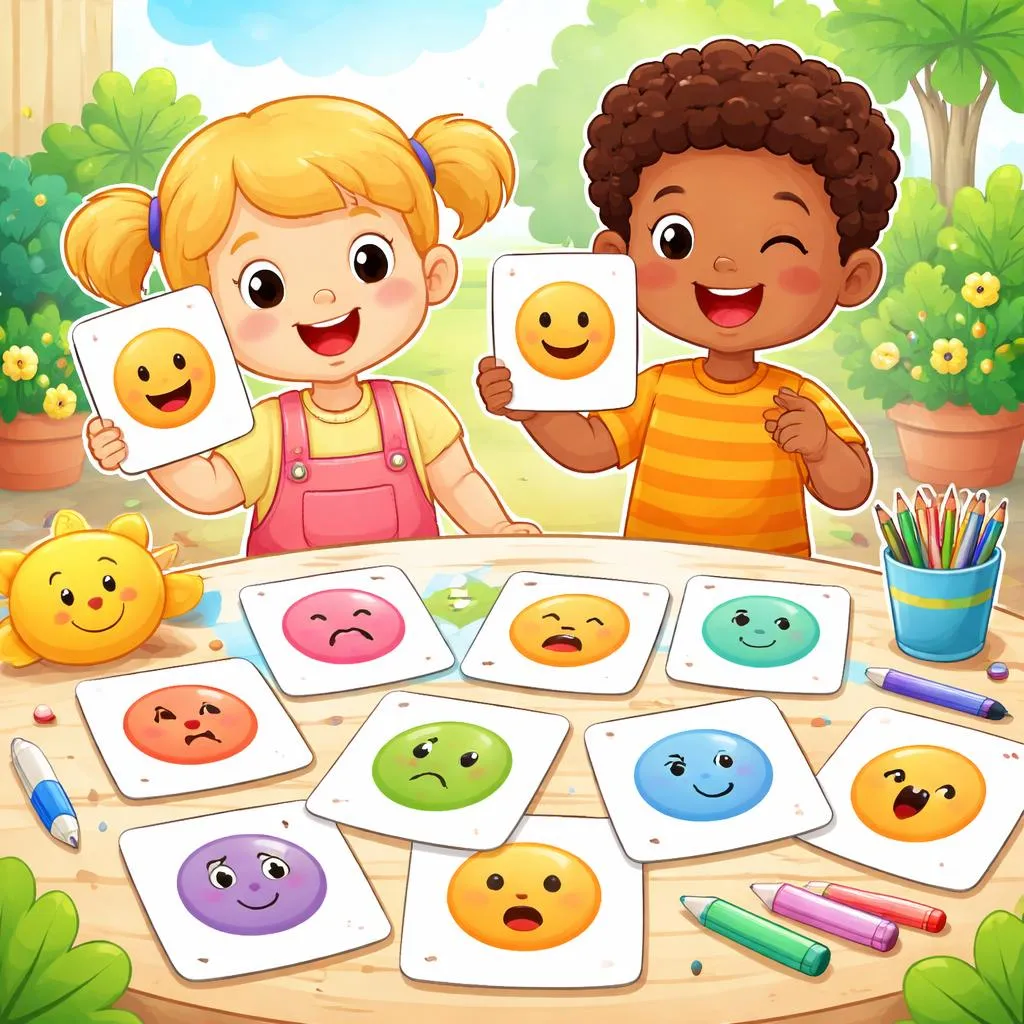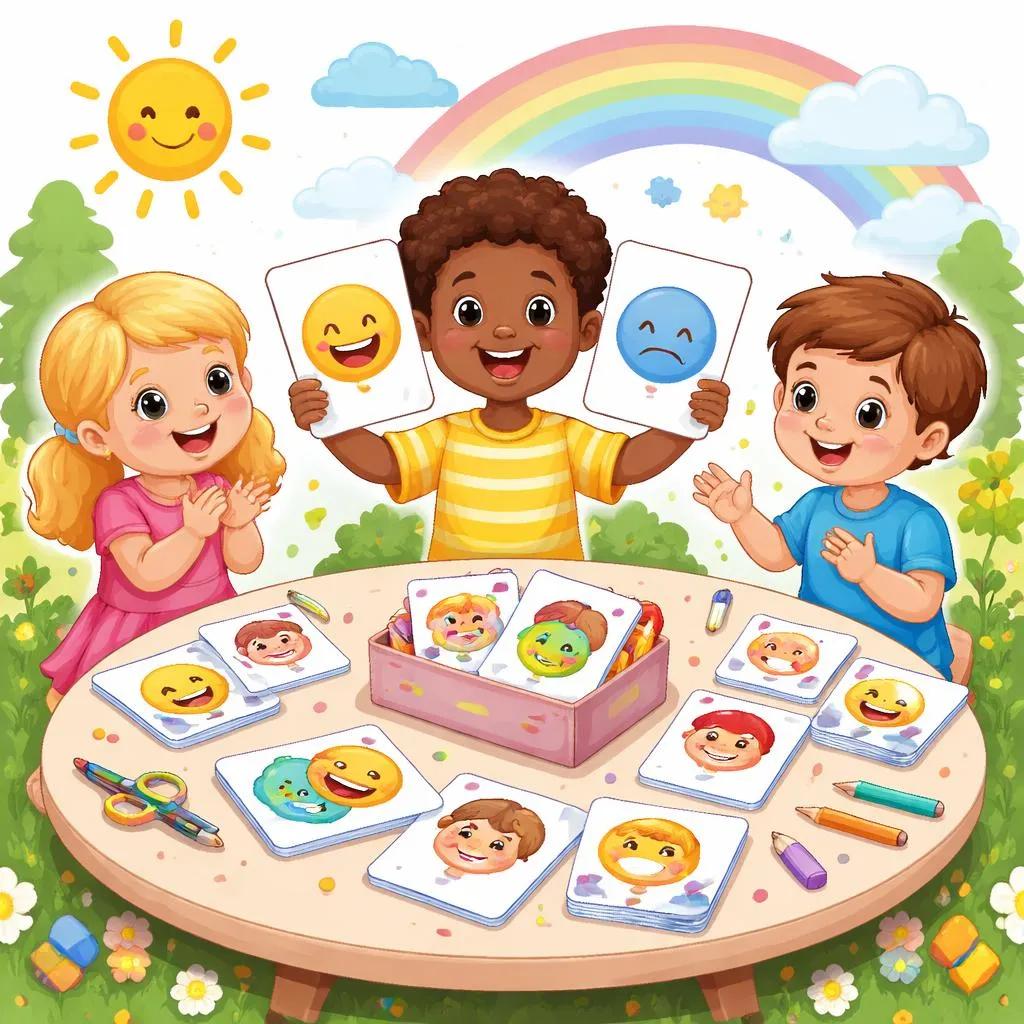

Using these flashcards with our super simple version of “ If You’re Happy ” makes for a great introduction to vocabulary for describing feelings.
Contains 4 Cards : happy, angry, scared, sleepy
Download For best results, we recommend printing with Adobe Acrobat Reader . Related Songs If You’re Happy
Click here to download the full If You’re Happy Flashcards PDF — free
By practicing with flashcards, children can:
Using flashcards featuring basic emotions like happy, angry, scared, and sleepy provides young learners with an engaging and interactive way to build their emotional vocabulary. These flashcards help children recognize and name their feelings, which is a crucial step in developing emotional intelligence and communication skills. By associating words with expressive images and simple songs, children can better understand and remember the vocabulary. This method supports language acquisition, improves memory retention, and encourages children to express themselves clearly and confidently.
How to Teach Emotions Flashcards with Flashcards
Parents and educators can start by introducing one emotion at a time, showing the flashcard and saying the word clearly. Using the simple song “If You’re Happy” alongside the flashcards makes the learning process fun and memorable. Encourage children to mimic facial expressions and actions related to each feeling, reinforcing comprehension through movement and play. Repetition is key: regularly reviewing the flashcards helps solidify the vocabulary. Parents can also ask children to share times when they felt each emotion, fostering personal connection and deeper understanding.
(1) Fun Emotions Flashcard Games
Games like “Emotion Charades” where children act out feelings shown on the flashcards, or “Memory Match” where they find pairs of emotion cards, make learning dynamic and playful. Another fun activity is “Feelings Bingo,” where children mark emotions called out by the teacher. These games not only reinforce vocabulary but also develop social skills like turn-taking and empathy.
(2) Example Sentences with Emotions Vocabulary
Using simple sentences helps children practice language in context. For example: “I am happy when I play,” “She feels angry because of the noise,” “He is scared of the dark,” or “I feel sleepy after lunch.” These sentences encourage children to use new words in everyday conversation, enhancing both speaking and listening skills.
Free Emotions Flashcards PDF Download
To support learning at home or in the classroom, free printable flashcards are available for download. These high-quality cards can be printed using Adobe Acrobat Reader for the best results. The downloadable PDF includes colorful images and clear labels for each emotion, making it easy to create your own flashcard set for ongoing practice.
FAQ about Emotions Flashcards
Q: At what age are these flashcards suitable?
A: These flashcards are ideal for preschool and early elementary children, typically ages 3 to 7.
Q: How often should children practice with the flashcards?
A: Daily short sessions of 5 to 10 minutes are most effective for retention.
Q: Can these flashcards be used for children learning English as a second language?
A: Yes, they are excellent tools for ESL learners to build foundational vocabulary.
Q: Are there additional activities to reinforce learning?
A: Yes, parents and teachers can create drawing activities where children illustrate each emotion or storytelling sessions where children describe feelings of characters in stories.