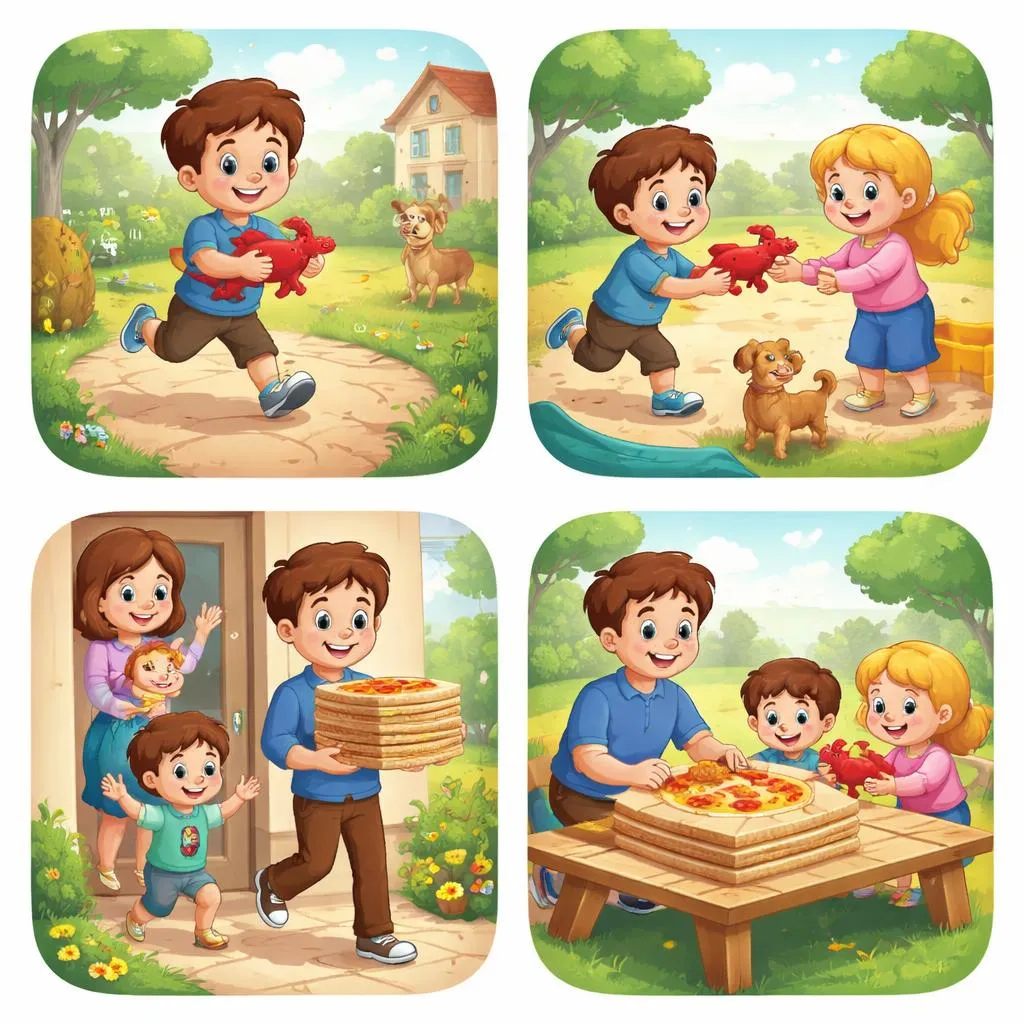

You pick up a toy. You carry it to your friend. You bring it.
That small action has many word forms. Today we learn “bring,” “bringer,” “bringing,” and “brought.”
Each word shares the idea of carrying something to a place.
Parents and children can practice these words every day. They fill our conversations.
What Does “Same Word, Different Forms” Mean?
One action takes different shapes. The action is moving something toward someone.
“Bring” is the verb. “Please bring me a cup of water.” Action.
“Bringer” is a noun. It names the person who brings. “The mail bringer comes at noon.”
“Bringing” is a noun or verb form. “The bringing of gifts made everyone happy.” Activity.
“Brought” is the past tense verb. “Yesterday I brought you a flower.” Action in the past.
Same root. Different endings. Different jobs. The movement stays the same.
Personal Pronouns Change Their Form
Pronouns change for grammar. “I” becomes “me.” “We” becomes “us.”
Our words change for time and role. “I bring lunch today.” Present.
“You are the bringer of good news.” Person. “My bringing of snacks helped the party.” Activity.
“She brought dessert yesterday.” Past.
Pronouns help us speak faster. Word families help us show who brings, what they bring, and when.
When children master these four, they tell clear stories.
From Verb to Noun to Adjective to Adverb – One Family, Many Words
“Bring” is a verb. “Bring your backpack to school.” Action.
“Bringer” is a noun. “The bringer of rain clouds arrived.” Person or thing.
“Bringing” is a noun. “The bringing of water is hard work.” Activity.
“Brought” is a verb in past tense. “We brought cookies to the picnic.” Action finished.
We have no adjective or adverb in this family. “Bringing” can act like an adjective sometimes. “A bringing cart.” But that is rare.
Three main forms. One past tense. Simple and useful.
One Root, Many Roles – How Words Grow from Actions to Qualities
The root “bring” comes from Old English “bringan.” It meant to carry or lead.
Ancient people brought firewood. They brought food. They brought news.
From that root, we add “-er” to name the doer. “Bringer” means one who brings.
We add “-ing” to name the activity. “Bringing” is the process.
“Brought” is the old past form. English kept this irregular shape for over a thousand years.
Help your child see this. Bring today. Brought yesterday. The bringer is the person. Bringing is the doing.
Same Meaning, Different Jobs – Is It a Verb or a Noun?
Look at “bring.” Always a verb. “Bring your smile to the party.”
“Bringer” is always a noun. “The bringer of bad news waited outside.”
“Bringing” is always a noun or part of a verb. “His constant bringing of gifts pleased us.” Noun. “I am bringing cake.” Verb part.
“Brought” is always a past tense verb. “We brought our dog to the park.”
No confusion here. Each form has a clear job.
Teach children to look at the ending. “-er” means person. “-ing” means activity. “-ought” means past.
Adjectives and Adverbs – When Do We Add -ly?
We do not add “-ly” to these words. No “bringly.” No “bringerly.” No “broughtly.”
If you want to describe how someone brings, use a separate adverb. “She brings happily.” “He carefully brought the eggs.”
This family stays simple. No adverbs. No adjectives.
Focus on the verb and the noun forms. Children will use “bring” and “brought” most often.
“Bringer” and “bringing” appear less often. But they are good to know.
Watch Out for Tricky Spelling Changes (Double Letters, y to i, and More)
Spelling has one big change. The vowel changes from “i” to “ou” in the past form.
“Bring” in present. “Brought” in past. No “brang” or “brung.” Those are not correct.
This is an irregular verb. Many common verbs change this way. “Think” becomes “thought.” “Fight” becomes “fought.”
For adding endings: “Bring” adds “-er” to make “bringer.” Keep all letters. Just add.
“Bring” adds “-ing” to make “bringing.” Also just add. No dropping letters.
No double letters. No y to i. Just the vowel change for the past.
Practice this with your child. “Today I bring. Yesterday I brought. I have brought many things.”
Let’s Practice – Can You Choose the Right Form?
Try these sentences. Fill in the blank with bring, bringer, bringing, or brought.
Please _____ your raincoat tomorrow. (action verb, present)
The _____ of spring flowers is the warm sun. (person or thing that brings)
The _____ of toys to the party made the children happy. (activity)
She _____ her favorite book to show and tell. (past tense verb)
Can you _____ me a pencil from the desk? (action verb, present)
He is the _____ of delicious cookies every Friday. (person)
We are _____ snacks for the whole team. (activity with am/are/is)
Mom _____ us hot chocolate after we played in the snow. (past tense)
Answers: 1 bring, 2 bringer, 3 bringing, 4 brought, 5 bring, 6 bringer, 7 bringing, 8 brought.
Number 7 uses “bringing” with “are.” “We are bringing” is present continuous tense.
Number 8 uses “brought” for a finished action in the past.
Tips for Parents – Help Your Child Learn Word Families in a Fun Way
Use real objects every day. “Bring me your cup.” “You brought your cup. Thank you.”
Name the bringer. “You are the bringer of your backpack.” “Daddy is the bringer of pizza.”
Talk about bringing as an activity. “The bringing of laundry upstairs is hard work.”
Play a past tense game. You say “Today I bring.” Your child says “Yesterday I brought.”
Use a toy mailbox. “The mail bringer arrives at two o’clock.”
Pack a picnic together. “We are bringing sandwiches. We brought the blanket yesterday.”
Draw a timeline. Write “bring” on the left. Write “brought” on the right.
Sing a silly song. “Bring, bring, bring today. Brought, brought, brought yesterday.”
Do not correct every mistake. If your child says “I bringed it,” gently say “We say brought.”
Celebrate when your child uses “bringer.” That word is not common. They are advanced.
Read stories with bringing. “The Little Red Hen brought her wheat to the mill.”
Remember that “bring” and “take” are different. Bring means come with something. Take means go with something.
Tomorrow you will hear “Bring your shoes.” You will hear “I brought my lunch.”
Your child might say “You are the bringer of good dreams.” You will smile.
Keep bringing things. Keep naming the bringer. Keep talking about bringing. Keep using brought for yesterday.
Your child will grow in language and in generosity. Bringing is not just a word. It is a kind action.