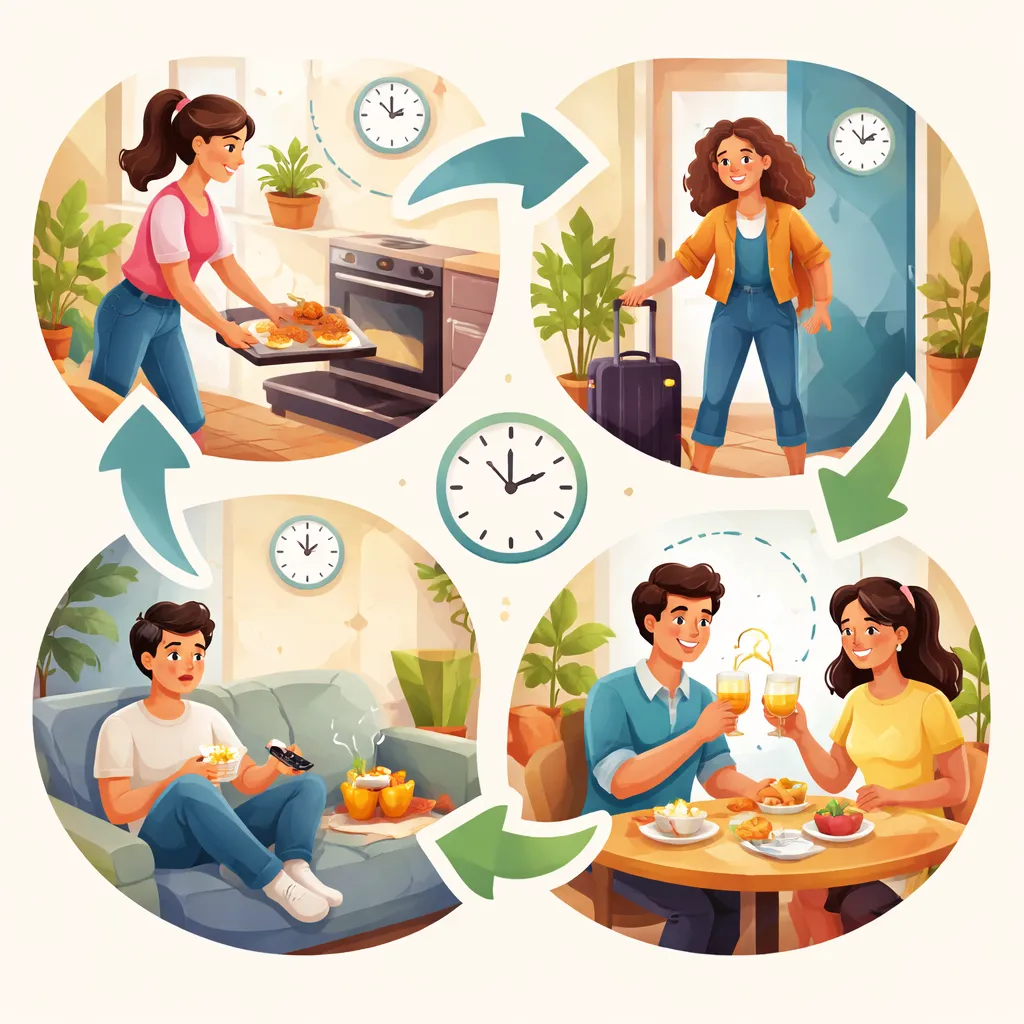

What Is Present Perfect: 'Just', 'Yet', 'Still' and 'Already'?
In English, the present perfect tense helps us talk about actions that have a connection to the present. It links the past with the present in a way that’s different from simple past tense. The present perfect is often used with words like ‘just’, ‘yet’, ‘still’, and ‘already’, which add more detail to the sentence and give us information about time or actions.
‘Just’ refers to something that happened very recently. ‘Yet’ is commonly used in negative sentences and questions to refer to something that has not happened by a certain time. ‘Still’ shows that something continues to happen or has not finished. ‘Already’ indicates that something has happened earlier than expected or before now.
By combining these words with the present perfect tense, we can express these ideas more clearly and add depth to our communication. This tense is important for both children and parents to understand because it allows them to describe events in a more accurate and nuanced way.
Rules of Present Perfect: 'Just', 'Yet', 'Still' and 'Already'
The present perfect tense is formed with two parts: the auxiliary verb ‘have’ (or ‘has’ for singular subjects) and the past participle of the main verb. For example:
I have eaten. (This shows a connection between the past action of eating and the present.) She has finished her homework.
Now, when we add words like ‘just’, ‘yet’, ‘still’, and ‘already’, they modify the meaning of the sentence.
‘Just’ goes between ‘have/has’ and the past participle. Example: “I have just eaten.” ‘Yet’ is typically used in negative sentences or questions. Example: “Has she finished yet?” ‘Still’ goes after ‘have/has’ and is used to indicate that something hasn’t changed or finished. Example: “I have still not received the package.” ‘Already’ comes between ‘have/has’ and the past participle to indicate something has been done sooner than expected. Example: “He has already seen that movie.”
When children and parents are learning English together, understanding these basic rules can be fun and engaging.
How to Use Present Perfect: 'Just', 'Yet', 'Still' and 'Already'
Understanding how and when to use ‘just’, ‘yet’, ‘still’, and ‘already’ makes learning the present perfect tense much easier. Here’s a quick guide on how to incorporate them into daily conversations:
Using ‘Just’
‘Just’ is used when something has recently happened, very close to the present time. This is ideal for expressing actions that occurred moments ago.
Example: “I have just finished my lunch.” When to use: For something that happened right before now. Using ‘Yet’
‘Yet’ is commonly used in questions and negative sentences. It refers to something that is expected to happen but hasn’t yet. It’s usually placed at the end of the sentence.
Example: “Have you eaten yet?” Example: “I haven’t finished my homework yet.” When to use: To show something has not happened up to the present moment. Using ‘Still’
‘Still’ suggests that an action or situation continues up to now or hasn’t changed. It’s placed after the auxiliary verb ‘have/has’.
Example: “I have still not completed the project.” When to use: To indicate a situation is ongoing or hasn’t changed. Using ‘Already’
‘Already’ is used to show that something has happened before now, possibly sooner than expected. It can also be used in affirmative sentences to show that something is completed.
Example: “She has already eaten.” When to use: To indicate something has happened earlier than expected or before now. Examples of Present Perfect: 'Just', 'Yet', 'Still' and 'Already'
To better understand how these words work in the present perfect tense, here are some examples:
‘Just’ “I have just finished my homework.” “They have just arrived at the party.” ‘Yet’ “Has she called you yet?” “I haven’t seen that movie yet.” ‘Still’ “They have still not received the package.” “I have still not read that book.” ‘Already’ “She has already completed the task.” “I have already visited that place.”
Each of these words adds a new layer of meaning to the sentence, helping both children and parents convey more specific ideas and connect the past to the present.
Common Mistakes with Present Perfect: 'Just', 'Yet', 'Still' and 'Already'
Even though using the present perfect tense can seem simple, there are a few common mistakes to watch out for:
Confusing word order: Sometimes children may place ‘just’, ‘yet’, ‘still’, or ‘already’ in the wrong position in a sentence. For example, saying “I have finished already my homework” instead of “I have already finished my homework.” Using the wrong tense: It's common to mix up the present perfect with the simple past. For example, saying “I did already eat lunch” instead of “I have already eaten lunch.” Not using ‘yet’ correctly in questions and negatives: Children might say “Have you finished yet?” in an affirmative sentence, while it should be used in negative and question sentences. For example, “I have not yet finished” is the correct form.
To avoid these mistakes, practice is key. Encouraging children to use these words in real-life situations can help solidify their understanding.
Comparison: Present Perfect with ‘Just’, ‘Yet’, ‘Still’ and ‘Already’ vs Simple Past
The present perfect tense is often confused with the simple past tense. Here’s a quick comparison:
Present Perfect: “I have just eaten.” Simple Past: “I ate lunch.”
While both sentences talk about eating, the present perfect implies that the action is connected to the present (perhaps they are still full or just finished), whereas the simple past only talks about the action that occurred at a specific point in the past.
Using ‘just’, ‘yet’, ‘still’, and ‘already’ makes the present perfect tense more detailed and clear. Understanding these differences can help children improve their grammar and communication skills in English.
Practice Exercises
Let’s practice using ‘just’, ‘yet’, ‘still’, and ‘already’ in present perfect sentences. Try filling in the blanks with the correct word:
I ________ (finish) my homework. (just) She ________ (call) me. (yet) They ________ (leave) the house. (still) I ________ (eat) lunch. (already) Have you ________ (decide) what to do? (yet) Answers and Explanations
Here are the answers to the practice exercises:
I have just finished my homework. (This means the action happened very recently.) She has not called me yet. (We use “yet” in negative sentences to show that something has not happened up to this point.) They have still not left the house. (“Still” shows that the action has not happened up to now.) I have already eaten lunch. (“Already” shows that the action was completed earlier than expected.) Have you decided what to do yet? (We use “yet” in questions to ask if something has happened up until now.) Learning Tips
When practicing the present perfect tense, it can be helpful to:
Use real-life situations: Encourage children to talk about what they’ve done recently or what they have not yet completed. Keep it simple: Start with short sentences and gradually make them more complex as children get more comfortable with the structure. Be patient: The present perfect tense can be tricky for children, especially when learning to use words like ‘just’, ‘yet’, ‘still’, and ‘already’ correctly. Consistent practice will make a big difference.
Learning grammar in a fun and engaging way can help children feel confident using English in their daily lives. Whether it's asking questions or talking about recent actions, the present perfect tense opens up a new world of communication for young learners and their parents.