
You put on a shirt. You button your pants. You zip your jacket.
You get dressed. Today we learn four words.
“Dress,” “dresser,” “dressing,” and “dressed.”
Each word shares the idea of clothing or preparing. Each does a different job.
Parents and children can learn these words together. They help with mornings.
What Does “Same Word, Different Forms” Mean?
One idea takes different shapes. The idea here is putting on clothes or a piece of furniture.
“Dress” is a verb. “Please dress warmly for the snow.” Action.
“Dress” is also a noun. “She wore a red dress to the party.” Garment.
“Dresser” is a noun. “The socks are in the dresser drawer.” Furniture.
“Dressing” is a noun. “Salad dressing makes lettuce taste better.” Sauce.
“Dressing” can also mean bandages. “Change the wound dressing.” Medical.
“Dressed” is an adjective or past verb. “He is dressed in blue.” Describes. “She dressed the baby.” Past action.
Same root. Different endings. Different jobs. The clothing or preparation stays.
Personal Pronouns Change Their Form
Pronouns change for grammar. “I” becomes “me.” “We” becomes “us.”
Our words change for role and time. “I dress myself.” Action.
“The dresser is wooden.” Noun. “Add dressing.” Sauce.
“She is dressed.” Describes.
Pronouns help us speak faster. Word families help us talk about getting ready.
When children know these four words, they handle mornings better.
From Verb to Noun to Adjective to Adverb – One Family, Many Words
“Dress” works as a verb. “Dress the salad with oil.” Action.
“Dress” also works as a noun. “A beautiful dress hung in the closet.” Garment.
“Dresser” is a noun. “The dresser has five drawers.” Furniture.
“Dressing” is a noun. “Ranch dressing is my favorite.” Sauce.
“Dressing” also means bandage. “The nurse changed the dressing.”
“Dressed” is an adjective. “The dressed man left for work.” Wearing clothes.
“Dressed” is also a past verb. “She dressed the child in a warm coat.” Past action.
We have adverbs “dressily” (from dressy) not relevant.
Seven meanings. Very useful for home and health.
One Root, Many Roles – How Words Grow from Actions to Qualities
The root “dress” comes from Latin “directus,” meaning straight or direct. Old French “dresser” meant to arrange.
To arrange clothes on the body.
From that root, we add “-er” to name a piece of furniture for arranging clothes.
We add “-ing” to name a sauce or bandage (something that dresses a salad or wound).
We add “-ed” for past tense or to make an adjective meaning “clothed.”
Help your child see this pattern. Dress is the action or garment. Dresser is the furniture. Dressing is the sauce or bandage. Dressed means wearing clothes.
Same Meaning, Different Jobs – Is It a Verb or a Noun?
Look at “dress” in a sentence. Ask: Is it a garment? Or is it an action?
“Her dress is pretty.” Garment. Noun.
“Please dress your little brother.” Action. Verb.
Look at “dresser.” Always a noun. “The dresser is heavy.”
“Dressing” is always a noun (sauce or bandage). “Add dressing to the salad.”
“Dressed” is an adjective or past verb. “Get dressed quickly.” Adjective. “She dressed the turkey yesterday.” Past verb.
Teach children to look at the endings. “-er” noun (furniture). “-ing” noun (sauce). “-ed” adjective or past verb.
“Dress” alone can be noun (garment) or verb.
Adjectives and Adverbs – When Do We Add -ly?
We do not add “-ly” to these words. No “dressly.” No “dresserly.” No “dressingly.”
If you want to describe how someone dresses, use a separate adverb. “She dressed quickly.” “He dressed elegantly.”
This family stays simple. Focus on the nouns and verbs.
Watch Out for Tricky Spelling Changes (Double Letters, y to i, and More)
Spelling here is very regular. No double letters. No y to i changes.
“Dress” adds “-er” to make “dresser.” Keep the “ss.” Dress + er = dresser.
“Dress” adds “-ing” to make “dressing.” Keep the “ss.” Dressing.
“Dress” adds “-ed” to make “dressed.” Keep the “ss.” Dressed.
No dropping. Very clean.
Practice with your child. Write “dress.” Add “er.” You get “dresser.” Add “ing.” You get “dressing.” Add “ed.” You get “dressed.”
Double “s” in all forms.
Let’s Practice – Can You Choose the Right Form?
Try these sentences. Fill in the blank with dress, dresser, dressing, or dressed.
Please _____ warmly; it is cold outside. (action verb)
The socks are in the top _____. (furniture)
I like ranch _____ on my salad. (sauce)
She got _____ in five minutes. (adjective)
Her wedding _____ was white and long. (garment)
The nurse changed the wound _____. (bandage)
He _____ the baby in a cozy sleeper. (past tense verb)
The _____ has a mirror on top. (furniture)
Answers: 1 dress, 2 dresser, 3 dressing, 4 dressed, 5 dress, 6 dressing, 7 dressed, 8 dresser.
Number 5 uses “dress” as a noun meaning a garment.
Number 6 uses “dressing” as a noun meaning a medical bandage.
Tips for Parents – Help Your Child Learn Word Families in a Fun Way
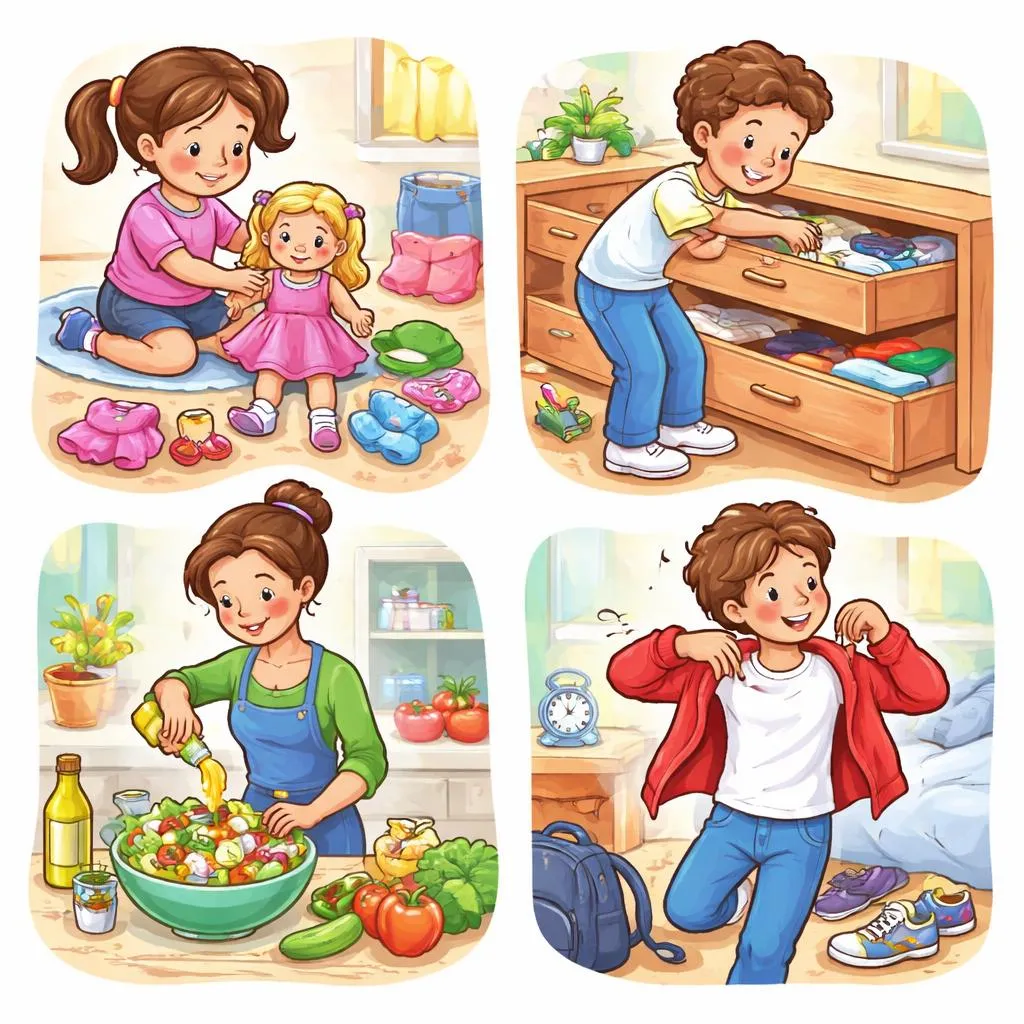
Dress a doll together. “Let us dress this doll in a red shirt.”
Open the dresser. “Put your pajamas in the bottom drawer.”
Use salad dressing. “This dressing is for the lettuce.”
Get dressed each morning. “Get dressed for school.”
Play a game. You name an item of clothing. Your child pretends to dress.
Draw a dresser with labeled drawers: “shirts, socks, pants.”
Read a book about morning routines. “Llama Llama Red Pajama” has dressing.
Do not correct every mistake. If your child says “dressed” for “dress,” gently say “You get dressed. The action is dress.”
Celebrate when your child uses “dressing” for salad and for bandages. That shows range.
Explain that “dress” can mean a special outfit for girls or women, but boys can wear a dress too if they choose.
Tomorrow you will dress for the weather. You will open a dresser for clean clothes. You will pour dressing on your salad. You will feel dressed and ready.
Your child might say “I got dressed all by myself!” You will cheer.
Keep dressing. Keep using the dresser. Keep enjoying dressing. Keep celebrating being dressed.
Your child will grow in language and in independence. Dressing is a daily skill. Words help us talk about it.