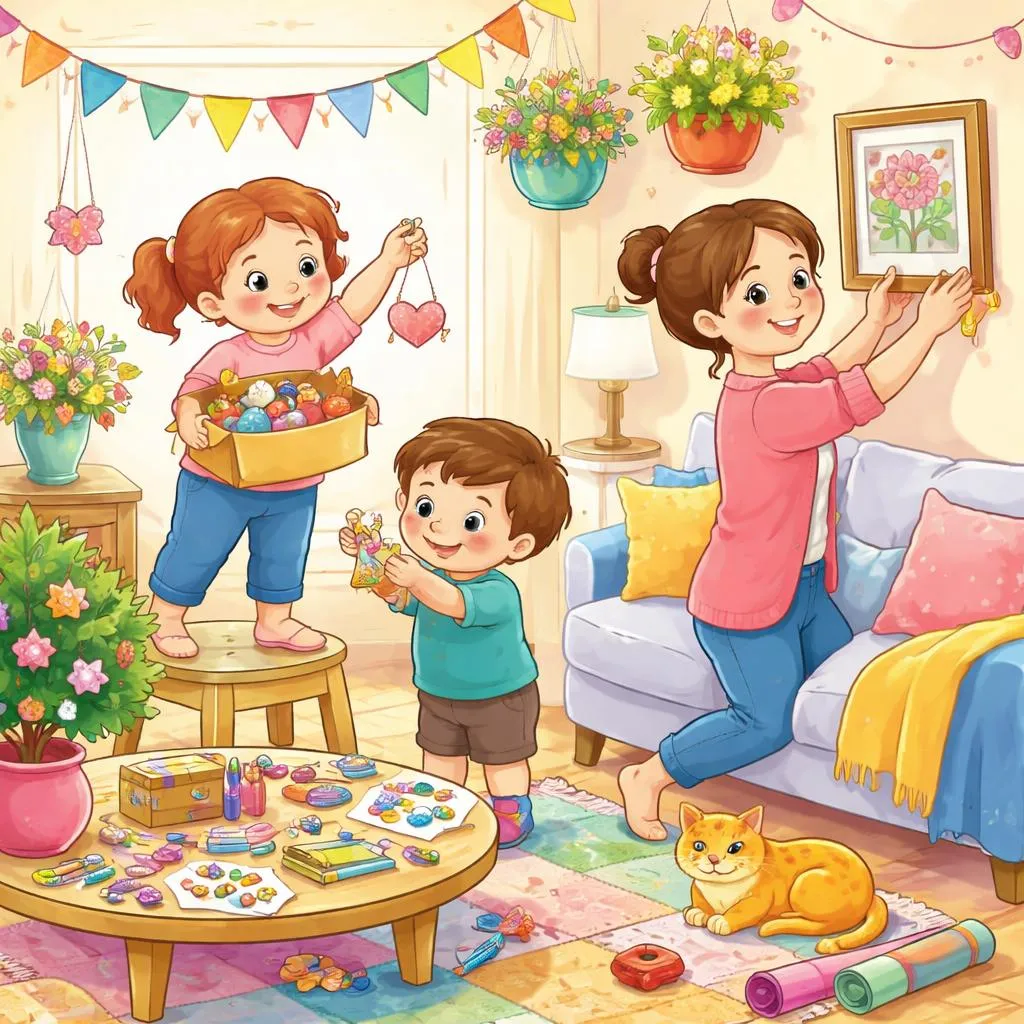

What Does “Same Word, Different Forms” Mean? One root word can grow into four beautifying forms. “Decorate, decoration, decorative, decorator” share one meaning. That meaning is “to add beauty to something.” Each form has a different job in a sentence. One word shows an action. One word names an item that adds beauty. One word describes something pretty. One word names a person who beautifies. Learning these four forms builds art and home vocabulary.
Personal Pronouns Change Their Form This rule applies to pronouns like “we, us, our.” But word families work the same way for other words. “Decorate” is a verb. “Decoration” is a noun. “Decorative” is an adjective. “Decorator” is a noun. Each form answers a different question. What action? Decorate. What thing? Decoration. What kind of item or style? Decorative. What person? Decorator.
From Verb to Noun to Adjective to Adverb – One Family, Many Words This family starts with the verb “decorate.” You decorate a birthday cake. You decorate a room for a party. From “decorate,” we make the noun “decoration.” “Decoration” names an item used to make something pretty. Example: “We hung decorations on the tree.” From “decorate,” we make the adjective “decorative.” “Decorative” describes something that is pretty but not necessary. Example: “The pillows are decorative, not for sleeping.” From “decorate,” we make another noun “decorator.” “Decorator” names a person who decorates professionally. Example: “The decorator chose the wall color.”
One Root, Many Roles – How Words Grow from Actions to Qualities Think of a child making a birthday card. The child will “decorate” the card with stickers. That is the verb. The stickers themselves are “decorations.” That is the thing noun. The shiny, colorful stickers are “decorative.” That is the adjective. The child is the “decorator” of the card. That is the person noun. The root meaning stays “to add beauty.” The role changes with each sentence.
Same Meaning, Different Jobs – Is It a Verb or a Noun? “Decorate” is always a verb. It shows the action of adding beauty. Example: “Let’s decorate the cookies with sprinkles.” “Decoration” is always a noun. It names an item or the act of decorating. Example: “The decoration on the wall is a painting.” “Decorative” is always an adjective. It describes something that looks nice. Example: “The vase is purely decorative.” “Decorator” is always a noun. It names a person who decorates. Example: “The interior decorator picked the curtains.” Same family. Different jobs. Two nouns share the same root but mean different things.
Adjectives and Adverbs – When Do We Add -ly? This family does not have a common adverb. You could say “decoratively,” but it is rare. Example: “The napkins were folded decoratively.” That is the adverb from “decorative.” But this lesson focuses on “decorate, decoration, decorative, decorator.” The -ly rule applies to “decorative” becoming “decoratively.” That is a bonus form for later learning. Focus on these four main forms for now.
Watch Out for Tricky Spelling Changes (Double Letters, y to i, and More) “Decorate” has no double letters. It ends with a silent “e.” When we add “-ion,” we drop the “e.” Decorate – drop “e” – add ion = decoration. When we add “-ive,” we drop the “e.” Decorate – drop “e” – add ive = decorative. When we add “-or,” we drop the “e.” Decorate – drop “e” – add or = decorator. A common mistake is writing “decoration” with one “r” (decoation). The correct spelling has “cor” – decoration. Another mistake is writing “decorative” with an “a” after the “t” (decoratative). The correct spelling has one “t” then “ive” – decorative. Another mistake is writing “decorator” with an “e” (decorater). The correct spelling ends with “or” – decorator. Write slowly at first. Remember: decorate, decoration, decorative, decorator.
Let’s Practice – Can You Choose the Right Form? Try these sentences with your child. Fill in the blank with decorate, decoration, decorative, or decorator.
Let’s _______ the cupcakes with colorful icing.
The _______ on the wall was a string of lights.
The little bow is just _______ and not needed.
The _______ helped us choose the furniture.
Please _______ your name tag with stickers.
We put Christmas _______ all over the house.
The _______ pillow does not match the couch.
A good _______ listens to what you like.
Answers:
decorate
decoration
decorative
decorator
decorate
decorations
decorative
decorator
Go through each answer slowly. Ask your child why the word fits. Praise effort and creative eye. Keep practice short and pretty.
Tips for Parents – Help Your Child Learn Word Families in a Fun Way You can teach “decorate, decoration, decorative, decorator” through daily life. Use holidays, crafts, and room arranging.
At home, say “Let’s decorate the living room for the party.” Ask “What action are we doing?”
When you hang a picture, say “This is a decoration.” Ask “What is a decoration?”
Point to a pretty but not useful item. Say “That is decorative.” Ask “What does decorative mean?”
If you rearrange furniture, say “We are being decorators today.” Ask “What does a decorator do?”
Play a “make it pretty” game. Write the four words on sticky notes. Say a sentence. Let your child hold up the correct word. Example: “Decorate the tree.” Child holds “decorate.” “The decoration is shiny.” Child holds “decoration.” “This bowl is decorative.” Child holds “decorative.” “The decorator chose blue.” Child holds “decorator.”
Draw a four-part poster. Write “decorate” with a picture of hands hanging a garland. Write “decoration” with a picture of a star or ornament. Write “decorative” with a picture of a pretty vase. Write “decorator” with a picture of a person holding paint samples. Hang it on the wall.
Use a “room makeover” game. Ask “If you were the decorator, what decoration would you add?” Let your child draw it. Say “That is decorative!”
Keep each session under five minutes. Repeat games on different days. Children learn through playful beautifying and design talk.
When your child makes a mistake, smile. Say “Good try. Let me show you again.” Use the correct word in a simple sentence. Then continue.
No need for grammar drills. No need for tests. Just warm examples and real decorating every day. Soon your child will master “decorate, decoration, decorative, decorator.” That skill will help them talk about art, parties, and making spaces beautiful.