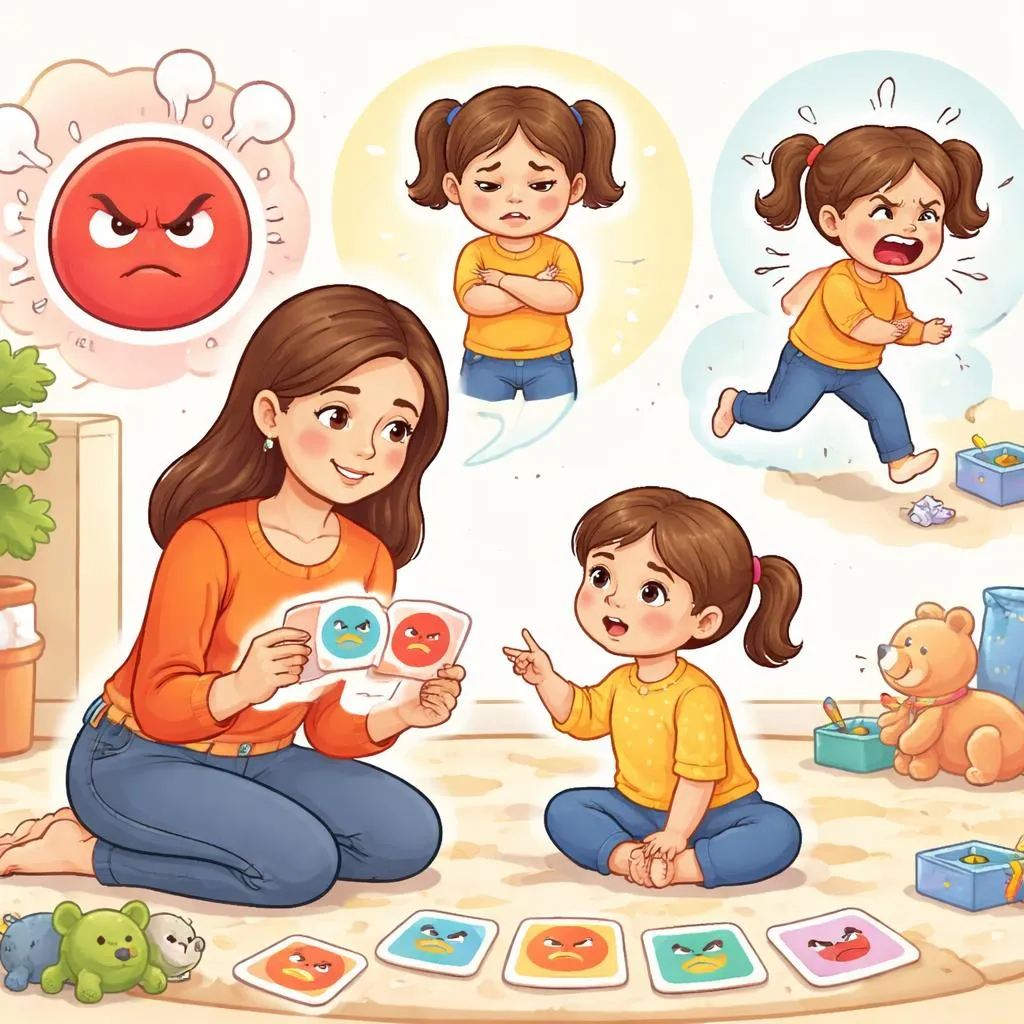

What Does “Same Word, Different Forms” Mean? One root word can grow into three related forms. “Anger, angry, angrily” share one meaning. That meaning is “a strong feeling of being upset or annoyed.” Each form has a different job in a sentence. Some words name the feeling itself. Some words describe a person or situation. Some words tell how someone acts. Learning these three forms builds emotional vocabulary.
Personal Pronouns Change Their Form This rule applies to pronouns like “he, his, him.” But word families work the same way for other words. “Anger” is a noun. “Angry” is an adjective. “Angrily” is an adverb. Each form answers a different question. What feeling? Anger. What kind of person or face? Angry. How does someone act? Angrily.
From Verb to Noun to Adjective to Adverb – One Family, Many Words This family starts with the noun “anger.” Anger is a normal human emotion. Example: “He felt anger when someone took his toy.” From “anger,” we make the adjective “angry.” “Angry” describes a person or a look. Example: “She had an angry face.” From “angry,” we make the adverb “angrily.” “Angrily” tells how someone does something. Example: “He stomped his feet angrily.” There is also a verb “to anger,” but this lesson focuses on these three forms.
One Root, Many Roles – How Words Grow from Actions to Qualities Think of a child who loses a game. The hot feeling inside is “anger.” That is the noun. The child’s crossed arms and frown are “angry.” That is the adjective. The child slams a book down “angrily.” That is the adverb. The root meaning stays “strong upset feeling.” The role changes with each sentence. Naming these forms helps children understand their own emotions.
Same Meaning, Different Jobs – Is It a Verb or a Noun? “Anger” is usually a noun. It names a feeling. Example: “Anger is a normal emotion.” “Anger” can also be a verb, but that is less common. Example: “Loud noises anger the baby.” “Angry” is always an adjective. It describes a person, voice, or expression. Example: “The angry dog growled.” “Angrily” is always an adverb. It describes how someone acts or speaks. Example: “She shut the door angrily.” Same family. Different jobs.
Adjectives and Adverbs – When Do We Add -ly? “Angry” becomes “angrily” by changing the “y” to “i” and adding “ly.” This follows a very common spelling rule. Happy becomes happily. Easy becomes easily. Lucky becomes luckily. “Angry” follows the same pattern. Change the “y” to “i,” then add “ly.” Angry – change y to i – add ly – angrily. The adverb describes actions done with anger.
Watch Out for Tricky Spelling Changes (Double Letters, y to i, and More) “Anger” has no double letters. But note the “g” before the “e.” “Angry” changes the “e” to “y.” Anger – drop “er” – add “y” – angry. That is a common shift. “Angrily” follows the “y to i” rule. Angry – change y to i – add ly – angrily. A common mistake is writing “angrily” with the “y” still there (angrily). The correct spelling changes the “y” to “i.” Another mistake is writing “anger” with a double “g” (angger). Only one “g” is correct. Write slowly at first. The spelling will feel natural with practice.
Let’s Practice – Can You Choose the Right Form? Try these sentences with your child. Fill in the blank with anger, angry, or angrily.
She felt a wave of _______ when her tower fell down.
He had an _______ look on his face.
“That is not fair!” she shouted _______.
Learning to calm _______ is an important skill.
The dog barked _______ at the stranger.
Why are you so _______ today?
He kicked the ball _______ across the yard.
She took a deep breath to let go of her _______.
Answers:
anger
angry
angrily
anger
angrily
angry
angrily
anger
Go through each answer slowly. Ask your child why the word fits. Praise effort and honest answers. Keep practice short and gentle.
Tips for Parents – Help Your Child Learn Word Families in a Fun Way You can teach “anger, angry, angrily” through daily emotions. Use stories, faces, and calm conversations.
At breakfast, draw three faces on a napkin. A calm face, an angry face, and a very angry face. Say “This face shows anger. This face is angry.” Ask “Which face looks angrily?” (harder to draw, but talk about actions)
During play, notice a frustrating moment. Say “I see you feel anger. That is okay.” Name the feeling: “You are angry because the block fell.” Then say “You stomped angrily. Let’s try a deep breath.”
While reading a book, pause at an upset character. Say “The bear feels anger. Look at his angry eyes.” Ask “How does he act? Does he speak angrily?”
Use a feelings thermometer. Draw a thermometer from 1 to 10. Say “At 5, you feel anger. At 8, you look angry.” Ask “How do you act angrily at 10?”
Play a “how do they act” game. Say a sentence. Let your child act it out. “You feel anger.” Child shows a frown. “You are angry.” Child crosses arms. “You stomp angrily.” Child stomps gently.
Draw a three-branch tree. Write “anger” on the trunk. Write “angry” and “angrily” on the branches. Color it together. Hang it on the wall.
Use role-play with stuffed animals. Bear takes Rabbit’s toy. Rabbit says “I feel anger.” Bear says “I see your angry face.” Rabbit says “I am not speaking angrily. I am using my words.”
Keep each session under five minutes. Repeat games on different days. Children learn through playful emotion talk.
When your child makes a mistake, smile. Say “Good try. Let me show you again.” Use the correct word in a simple sentence. Then continue.
No need for grammar drills. No need for tests. Just warm examples and gentle naming of feelings every day. Soon your child will master “anger, angry, angrily.” That skill will help them name big feelings and calm down more easily.