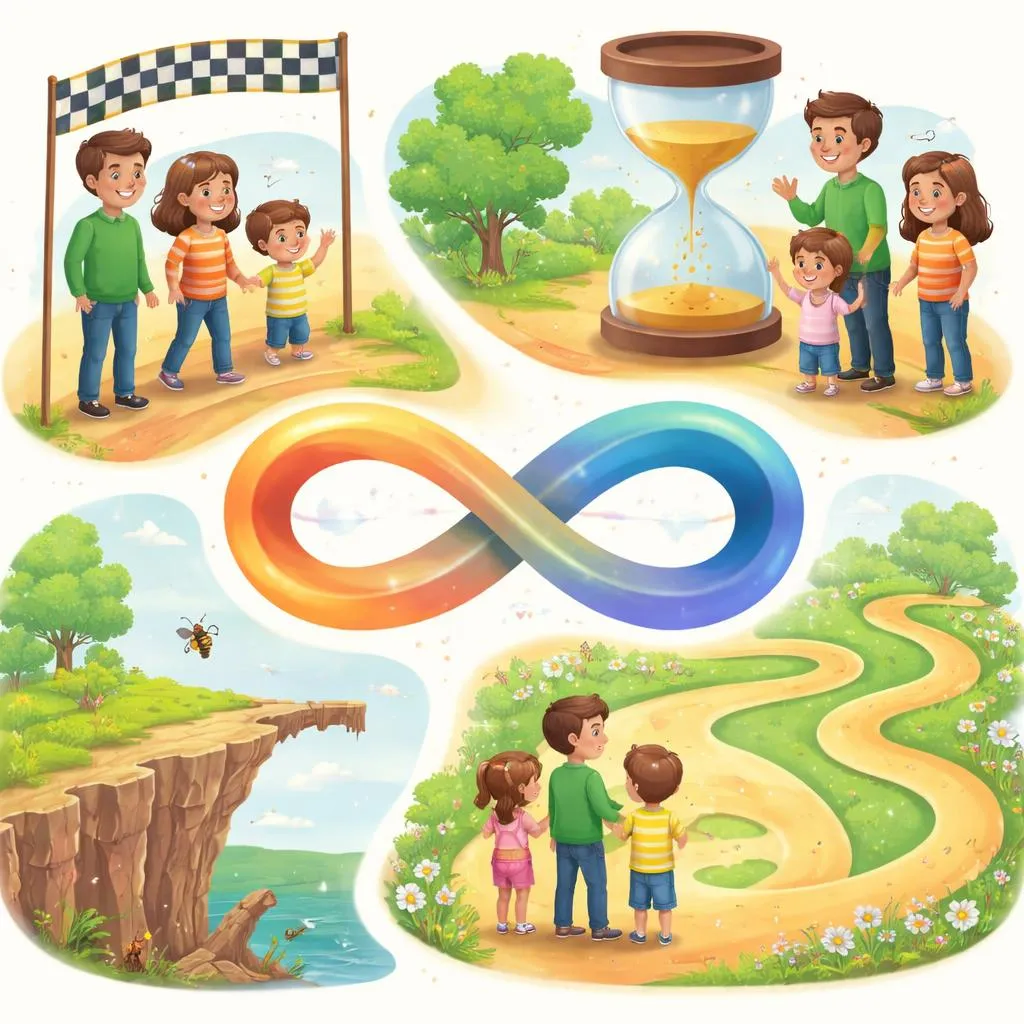

What Does “Same Word, Different Forms” Mean? One root word can grow into four time-related forms. “End, ending, endless, endlessly” share one meaning. That meaning is “the final part or without limit.” Each form has a different job in a sentence. One word names the final point. One word names the final part of a story. One word describes something without stop. One word tells how something goes on forever. Learning these four forms builds story and time vocabulary.
Personal Pronouns Change Their Form This rule applies to pronouns like “it and its.” But word families work the same way for other words. “End” is a noun or a verb. “Ending” is a noun. “Endless” is an adjective. “Endlessly” is an adverb. Each form answers a different question. What final point or action? End. What final part? Ending. What kind of time or space? Endless. How does something continue? Endlessly.
From Verb to Noun to Adjective to Adverb – One Family, Many Words This family starts with the noun “end.” The end is the last part of something. Example: “The end of the movie was happy.” “End” can also be a verb. Example: “Please end the phone call.” From “end,” we make the noun “ending.” “Ending” names the final part, especially in stories. Example: “The book had a surprising ending.” From “end,” we make the adjective “endless.” “Endless” describes something that seems to have no end. Example: “The desert looked endless.” From “endless,” we make the adverb “endlessly.” “Endlessly” tells how something continues without stopping. Example: “The child talked endlessly about dinosaurs.”
One Root, Many Roles – How Words Grow from Actions to Qualities Think of a long car trip. The trip will “end” when you arrive home. That is the verb. The final moment is the “end.” That is the noun. The last chapter of a book is the “ending.” That is the story noun. The road that goes forever seems “endless.” That is the adjective. The road stretches “endlessly” across the plain. That is the adverb. The root meaning stays “final or without limit.” The role changes with each sentence.
Same Meaning, Different Jobs – Is It a Verb or a Noun? “End” can be a noun or a verb. As a noun: “The end of the line is here.” As a verb: “Let’s end the meeting now.” “Ending” is always a noun. It names the final part. Example: “The ending made me cry.” “Endless” is always an adjective. It describes something without stop. Example: “The endless hallway seemed to go on forever.” “Endlessly” is always an adverb. It describes how an action continues. Example: “The clock ticked endlessly through the night.” Same family. Different jobs.
Adjectives and Adverbs – When Do We Add -ly? “Endless” becomes “endlessly” by adding -ly. This is a simple and common pattern. Hopeless becomes hopelessly. Restless becomes restlessly. Timeless becomes timelessly. “Endlessly” follows the same rule. The adverb describes actions that continue without stopping. Example: “The waves crashed endlessly against the shore.”
Watch Out for Tricky Spelling Changes (Double Letters, y to i, and More) “End” has no double letters. It is short and simple. When we add “-ing,” we keep the word. End + ing = ending. When we add “-less,” we keep the word. End + less = endless. When we add “-ly,” we keep “endless” and add “ly.” Endless + ly = endlessly. A common mistake is writing “ending” with one “d” (ening). The correct spelling has “end” – ending. Another mistake is writing “endless” with one “s” (endles). The correct spelling has “less” – endless (double s). Another mistake is writing “endlessly” with one “s” (endlesly). The correct spelling has double “s” – endlessly. Write slowly at first. Remember: end, ending, endless, endlessly.
Let’s Practice – Can You Choose the Right Form? Try these sentences with your child. Fill in the blank with end, ending, endless, or endlessly.
The movie will _______ at 8 pm.
The _______ of the story was happy.
The line at the store seemed _______.
The puppy ran _______ around the yard.
Let’s _______ this game and start a new one.
I love the _______ of this song.
The desert has _______ sand dunes.
She _______ practiced the piano for hours.
Answers:
end
ending
endless
endlessly
end
ending
endless
endlessly
Go through each answer slowly. Ask your child why the word fits. Praise effort and patience. Keep practice short and thoughtful.
Tips for Parents – Help Your Child Learn Word Families in a Fun Way You can teach “end, ending, endless, endlessly” through daily life. Use stories, time, and observations.
At bedtime, say “The day will end soon.” Ask “What action does end show?”
When you finish a book, say “The ending was exciting.” Ask “What is an ending?”
When you wait in a long line, say “This feels endless.” Ask “What does endless mean?”
When a song repeats, say “It goes on endlessly.” Ask “What does endlessly mean?”
Play a “finish line” game. Write the four words on sticky notes. Say a sentence. Let your child hold up the correct word. Example: “The race will end.” Child holds “end.” “The ending was sad.” Child holds “ending.” “The road is endless.” Child holds “endless.” “The rain fell endlessly.” Child holds “endlessly.”
Draw a four-part poster. Write “end” with a picture of a finish line. Write “ending” with a picture of the last page of a book. Write “endless” with a picture of a long road. Write “endlessly” with a picture of a ticking clock. Hang it on the wall.
Use a “story time” game. Tell a short story. Ask “What was the ending?” Let your child answer. Say “The story ended happily.”
Keep each session under five minutes. Repeat games on different days. Children learn through playful stories and time talk.
When your child makes a mistake, smile. Say “Good try. Let me show you again.” Use the correct word in a simple sentence. Then continue.
No need for grammar drills. No need for tests. Just warm examples and real endings every day. Soon your child will master “end, ending, endless, endlessly.” That skill will help them talk about stories, time, and things that seem to go on forever.