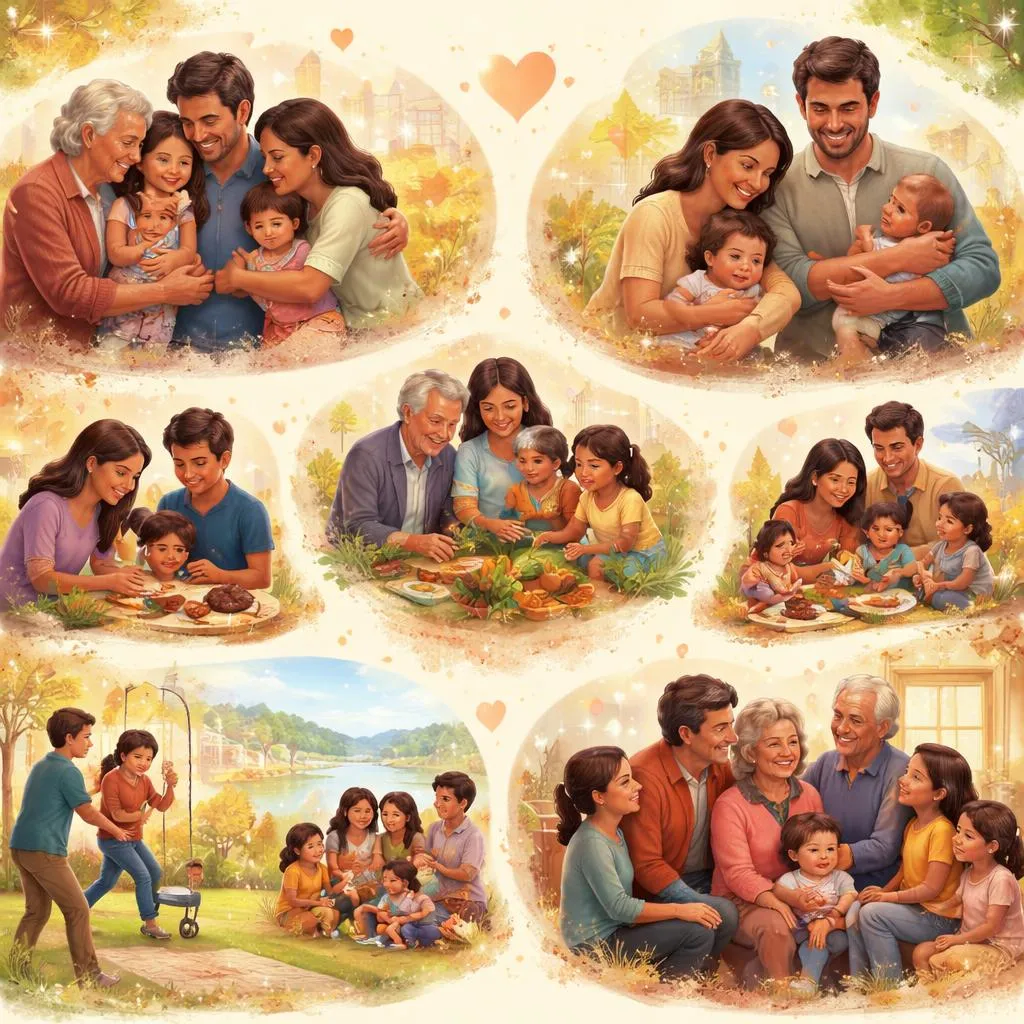

Family means many things. A mother and father. A grandparent. A brother or sister. Even close friends can feel like family. The words "family, familial, familiar, families" help us talk about these special connections.
Children know their own family best. They see the same faces every day. They feel the love. This word family gives them language to describe those bonds.
This article helps parents and children explore these important words together. No classroom tone. No pressure. Just warm talk about the people we love.
Let us see how one noun grows into an adjective and shows us its plural form. These words describe the heart of home.
What Does "Same Word, Different Forms" Mean?
The root means a group of people connected by blood, love, or home. The word comes from Latin "familia," meaning household.
Each form does a different job. "Family" is a noun (singular). "Familial" is an adjective. "Familiar" is a different adjective meaning "known or comfortable." "Families" is the plural noun.
Note that "familiar" shares roots with "family." Something familiar feels like family. That connection helps children remember both words.
Personal Pronouns Change Their Form
Pronouns do not change "family." "My family. Your family. Her family." The word stays the same. But it changes for number. One family. Many families.
"Familial" stays the same. "My familial ties. Your familial bonds. Their familial home."
"Familiar" stays the same. "The face looks familiar to me. It looks familiar to her."
"Families" is plural. It works with plural pronouns. "These families. Their families. Our families."
This makes learning easier. Your child only needs the word itself. No extra endings for I, you, or they.
From Verb to Noun to Adjective to Adverb – One Family, Many Words
This family has no verb. But we can see the growth.
"Family" – noun (singular). Names one group of relatives. "My family eats dinner together."
"Familial" – adjective. Describes something related to family. "Familial love is strong."
"Familiar" – adjective. Describes something known or comfortable. "This house feels familiar."
"Families" – noun (plural). Names more than one family. "Both families went on vacation."
See how one root gives us different tools? "Family" and "families" differ only in number. "Familial" adds an adjective ending. "Familiar" takes a slightly different path.
One Root, Many Roles – How Words Grow from Actions to Qualities
From "family" we get "familial" by changing the ending. "Family" becomes "familial." We drop the "y" and add "ial." This turns a noun into an adjective.
"Families" is simply the plural of "family." We change the "y" to "i" and add "es." One family. Two families.
"Familiar" comes from the same Latin root but took a different route. It means "like a family member" or "well known."
Focus first on "family" and "families." Children need to talk about one family and many families. Then add "familiar" for everyday feelings. Save "familial" for older children.
Same Meaning, Different Jobs – Is It a Verb or a Noun?
Let us check each word's job in a sentence.
"Family" – noun. "My family lives nearby." Ask: Can I name a group? Yes. So it is a noun.
"Familial" – adjective. "Familial traditions matter." Ask: Does it describe traditions? Yes. So it is an adjective.
"Familiar" – adjective. "The face was familiar." Ask: Does it describe the face? Yes. So it is an adjective.
"Families" – noun (plural). "Several families attended the picnic." Ask: Can I name multiple groups? Yes. So it is a noun.
Teach your child to ask "Can I count it or name it?" If yes, noun. "Does it describe a noun?" If yes, adjective.
Adjectives and Adverbs – When Do We Add -ly?
We can add -ly to "familial" to make "familially." That is an adverb. It means in a way related to family. "They are familially connected."
We can add -ly to "familiar" to make "familiarly." That means in a known or comfortable way. "She spoke familiarly, as if we were old friends."
These words are rare for young children. Do not teach them now. Focus on "family, families, familial, familiar."
For older children, you can mention "familiarly" as a useful word. But daily conversation does not need it often.
Watch Out for Tricky Spelling Changes (Double Letters, y to i, and More)
"Family" – F A M I L Y. Ends with Y.
"Families" – change Y to I, add ES. "Family" becomes "families." The Y changes to I. This is the most common plural rule for words ending in Y. "Baby, babies." "Party, parties."
"Familial" – take "family," drop the Y, add "ial." "Famil" + "ial" = "familial." The Y disappears. The "i" from "ial" takes its place.
"Familiar" – F A M I L I A R. Note the second "i" after the L. Do not confuse with "familial." "Familiar" has "iar" at the end. "Familial" has "ial." They look similar but differ.
The main tricks: "families" changes Y to I. "Familial" drops Y and adds "ial." "Familiar" keeps its own spelling. Practice each one separately.
Let's Practice – Can You Choose the Right Form?
Try these sentences with your child. Fill in each blank. Use family, familial, familiar, or families.
My _____ eats breakfast together every Sunday.
Two _____ from our street went to the same park.
That song sounds _____. I think I heard it at Grandma's house.
_____ traditions include holiday dinners and birthday songs.
Answers:
family (singular noun – one group)
families (plural noun – more than one group)
familiar (adjective – describes something known)
familial (adjective – describes something related to family)
Read the sentences aloud. Ask why each answer fits. Let your child explain. That builds understanding.
Now play a simple game. Draw your family. Then draw a friend's family. Say "This is my family. This is another family. Together they are families." Point to the drawing. "This feels familiar because I see you every day."
Tips for Parents – Help Your Child Learn Word Families in a Fun Way
Start with a family photo. Point to each person. Say "This is our family." Then point to a friend's photo. Say "That is another family. Both are families."
Draw a family tree together. Label "My family" at the top. Then draw branches. Use the word "familial" for connections. "These lines show familial bonds."
Talk about familiar things. "This blanket feels familiar. You have had it since you were a baby." Connect the word to comfort and memory.
Read books about different kinds of families. Some have one parent. Some have two. Some have grandparents. Say "All families are special."
Play the "Familiar or New?" game. Point to objects. "Toothbrush? Familiar." "New book? Not familiar yet." Use the word daily.
Create a "Family Traditions" list. Write down what your family does together. Movie nights. Pancake Sundays. Bedtime stories. Say "These are our familial traditions."
Celebrate when your child uses any form correctly. If they say "That is my family," nod. If they say "Those are two families," praise the plural. If they say "This feels familiar," smile.
Use "familial" in grown-up talk around your child. "Familial love is important." "We have familial responsibilities." Your child will absorb the word.
One evening, ask "What makes our family special?" Your child might say "We laugh together" or "You read me stories." Those are the bonds. Name them as familial love.
Remember that every family looks different. Some are big. Some are small. Some live together. Some live apart. All are real. All are valuable.
Keep the tone warm. Family words carry big feelings. Use them with care. Celebrate your unique family.
Soon your child will say "I love my family" with pride. They will notice other families and say "Those are families too." They will feel the familiar comfort of home. You gave them words for belonging. And that is the greatest gift of all.