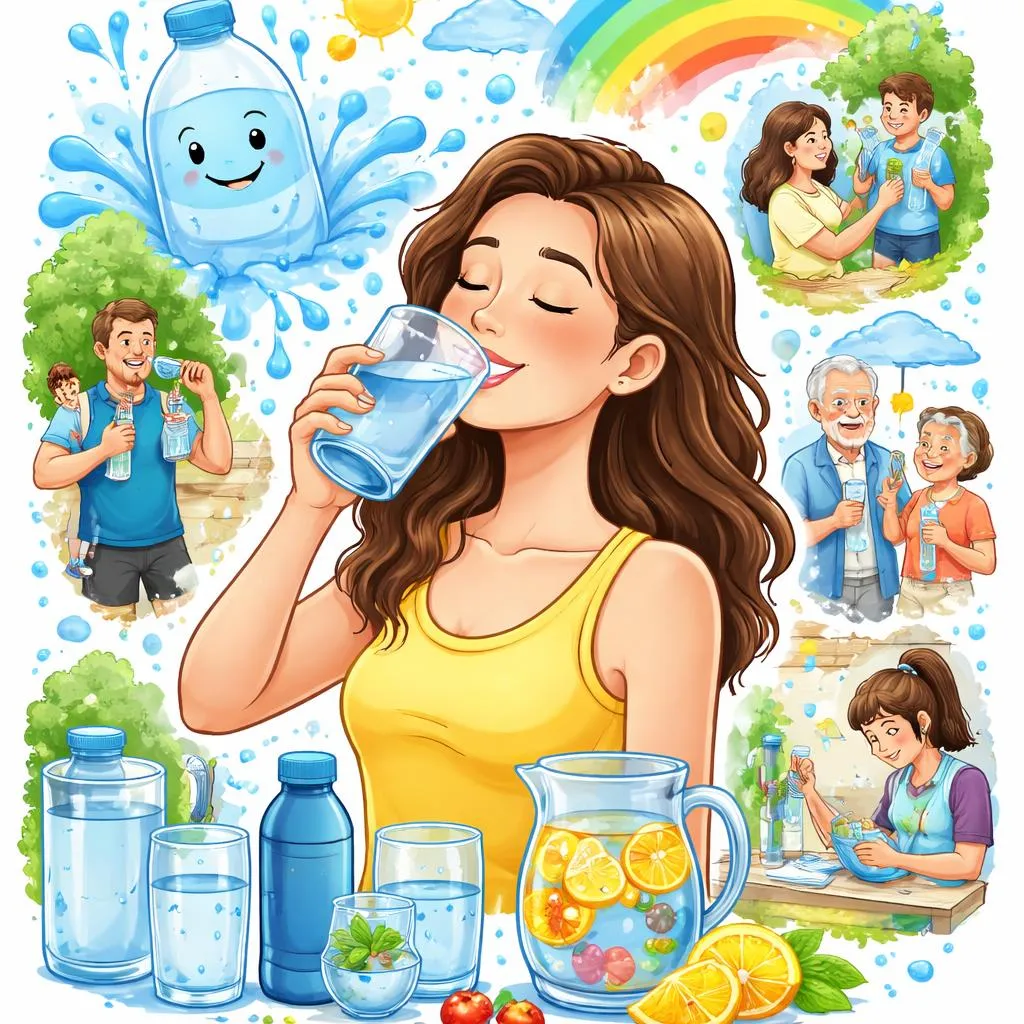

You pour a glass of water. You take a sip. You swallow. You drink.
Today we learn four words. “Drink,” “drinker,” “drinking,” and “drunk.”
Each word shares the idea of taking liquid into your body. Each does a different job.
Parents and children can learn these words together. They help with health.
What Does “Same Word, Different Forms” Mean?
One action takes different shapes. The action here is taking in liquid.
“Drink” is a verb. “Please drink your milk.” Action.
“Drink” is also a noun. “Water is a healthy drink.” Beverage.
“Drinker” is a noun. “A water drinker stays hydrated.” Person.
“Drinking” is a noun or verb part. “Drinking water is good for you.” Activity. “I am drinking juice.” Verb part.
“Drunk” is an adjective or past participle. “He has drunk his tea.” Past action. “The drunk man.” Over-intoxicated (slang).
Same root. Different endings. Different jobs. The liquid intake stays.
Personal Pronouns Change Their Form
Pronouns change for grammar. “I” becomes “me.” “We” becomes “us.”
Our words change for role and time. “I drink water daily.” Present.
“The drinker chooses juice.” Person. “Drinking is essential.” Activity.
“She has drunk enough.” Past.
Pronouns help us speak faster. Word families help us talk about hydration.
When children know these four words, they understand why water matters.
From Verb to Noun to Adjective to Adverb – One Family, Many Words
“Drink” works as a verb. “Drink slowly to avoid hiccups.” Action.
“Drink” also works as a noun. “A cold drink feels good on a hot day.” Beverage.
“Drinker” is a noun. “A coffee drinker needs caffeine.” Person.
“Drinking” is a noun. “Drinking eight glasses of water is a goal.” Activity.
“Drunk” is a past participle. “He has drunk his fill.” Completed.
“Drunk” is also an adjective meaning intoxicated. “The man was drunk.” Not for children’s positive use.
We have no common adverbs.
Five positive meanings (avoid the negative drunk). Focus on “have drunk.”
One Root, Many Roles – How Words Grow from Actions to Qualities
The root “drink” comes from Old English “drincan,” meaning to take in liquid.
From that root, we add “-er” to name the person. “Drinker” means one who drinks.
We add “-ing” to name the activity.
“Drunk” is the past participle (irregular). Drink → drank → drunk.
Help your child see this pattern. Drink is the action or beverage. Drinker is the person. Drinking is the activity. Drunk (past participle) means have taken liquid.
Same Meaning, Different Jobs – Is It a Verb or a Noun?
Look at “drink” in a sentence. Ask: Is it a beverage? Or is it an action?
“Juice is my favorite drink.” Beverage. Noun.
“Please drink your water.” Action. Verb.
Same word. Two jobs. Context tells you.
Now look at “drinker.” Always a noun. “A healthy drinker chooses water.”
“Drinking” is a noun or verb part. “Drinking is necessary.” Noun. “I am drinking.” Verb part.
“Drunk” is a past participle or adjective. “She has drunk her juice.” Past. Avoid the negative meaning for kids.
Teach children to use “have drunk” for past action.
Adjectives and Adverbs – When Do We Add -ly?
We do not add “-ly” to these words. No “drinkly.” No “drinkerly.” No “drinkingly.”
If you want to describe how someone drinks, use a separate adverb. “She drinks quickly.” “He drank thirstily.”
Use “have drunk” correctly.
Watch Out for Tricky Spelling Changes (Double Letters, y to i, and More)
Spelling has irregular past forms. Drink → drank → drunk.
“Drink” adds “-er” to make “drinker.” Just add.
“Drink” adds “-ing” to make “drinking.” Just add.
“Drunk” is the past participle. Memorize: I drink, I drank yesterday, I have drunk.
No double letters.
Practice with your child. Write “drink.” Add “er.” You get “drinker.” Add “ing.” You get “drinking.” Memorize “drunk” as the past participle.
Let’s Practice – Can You Choose the Right Form?
Try these sentences. Fill in the blank with drink, drinker, drinking, or drunk.
Please _____ your juice before it gets warm. (action verb)
A water _____ is a healthy person. (person)
_____ enough water helps your brain work well. (activity)
She has _____ all her milk. (past participle)
What is your favorite _____ at breakfast? (beverage)
The coffee _____ needed a refill. (person)
They are _____ lemonade on the porch. (verb part with are)
We have _____ our fill at the water fountain. (past participle)
Answers: 1 drink, 2 drinker, 3 Drinking, 4 drunk, 5 drink, 6 drinker, 7 drinking, 8 drunk.
Number 3 starts with a capital letter because it begins the sentence.
Number 4 and 8 use “drunk” as the past participle (not the negative meaning).
Tips for Parents – Help Your Child Learn Word Families in a Fun Way
Drink water together. “Let us drink a glass of water now.”
Name the drinker. “You are a good water drinker.”
Talk about drinking as a habit. “Drinking water keeps you healthy.”
Use past participle. “You have drunk your milk. Great job!”
Play a game. You name a beverage. Your child says “drink” or “not drink.”
“Lemonade.” “Drink.” “Soup?” “You drink soup? No, you eat soup.”
Draw a glass of water. Label “drink.”
Read a book about health. “Why Should I Drink Water?” by Claire Llewellyn.
Do not correct every mistake. If your child says “drinked” for past, gently say “We say drank for yesterday and have drunk for now.”
Celebrate when your child uses “drunk” correctly as the past participle. That is a tricky form.
Explain that “drunk” has another meaning for adults, but for kids, “have drunk” is the correct grammar.
Tomorrow you will drink orange juice. You will be a mindful drinker. You will practice drinking slowly. You will have drunk two glasses of water by lunch.
Your child might say “I have drunk all my water!” You will give a high five.
Keep drinking healthy liquids. Keep being a good drinker. Keep practicing drinking. Keep using “have drunk” correctly.
Your child will grow in language and in healthy habits. Drinking water is simple. Words make it memorable.