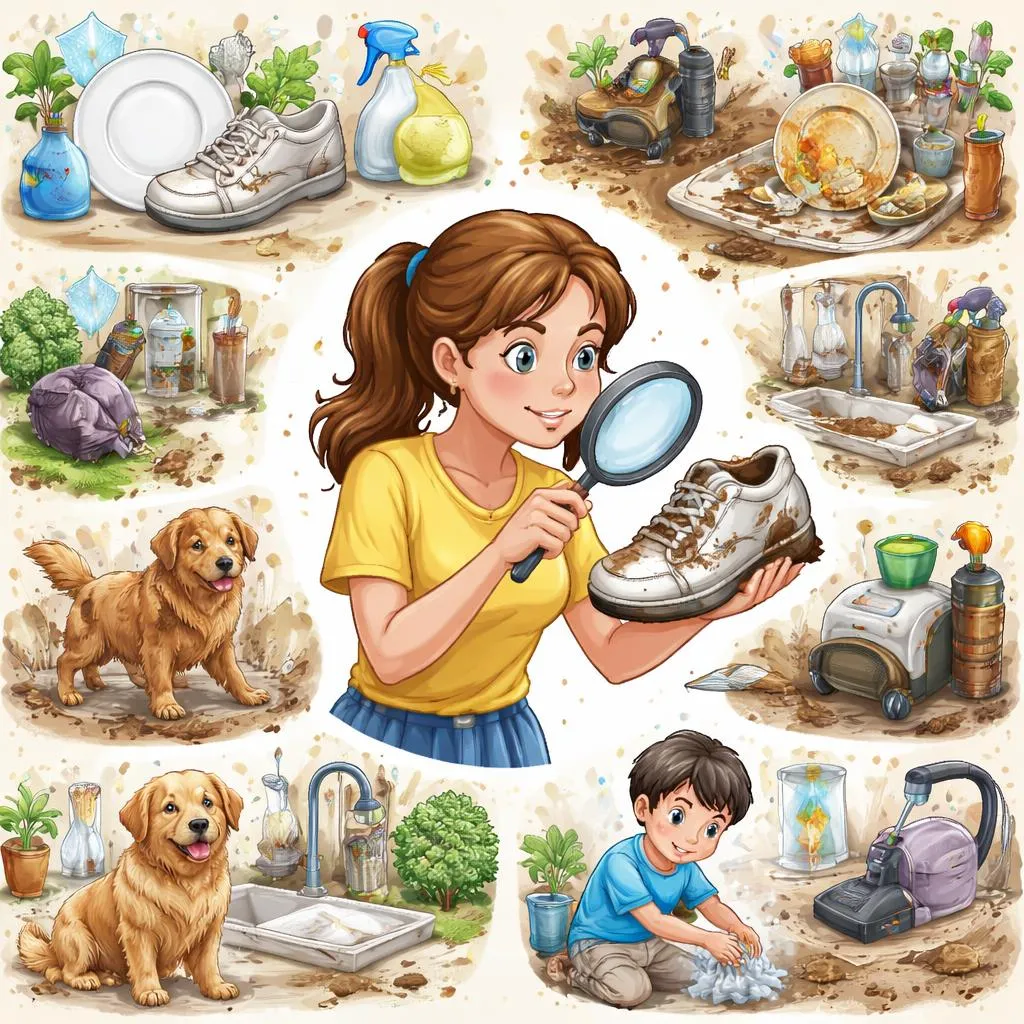

Soil on the ground. Mud on your shoes. Dust on a shelf.
That is dirt. Today we learn four words.
“Dirt,” “dirty,” “dirtiness,” and “dirtied.”
Each word shares the idea of unclean soil or mess. Each does a different job.
Parents and children can learn these words together. They help with chores.
What Does “Same Word, Different Forms” Mean?
One idea takes different shapes. The idea here is unclean matter or the state of being unclean.
“Dirt” is a noun. “The plant grows in dirt.” Soil.
“Dirty” is an adjective. “The floor is dirty.” Describes.
“Dirtiness” is a noun. “The dirtiness of the room bothered me.” State.
“Dirtied” is a past tense verb or adjective. “He dirtied his shirt.” Past action. “The dirtied towel.” Describes.
Same root. Different endings. Different jobs. The mess stays.
Personal Pronouns Change Their Form
Pronouns change for grammar. “I” becomes “me.” “We” becomes “us.”
Our words change for role and time. “Dirt is everywhere.” Noun.
“This cup is dirty.” Describes. “The dirtiness shows.” State.
“She dirtied the rug.” Past.
Pronouns help us speak faster. Word families help us talk about cleaning.
When children know these four words, they describe messes.
From Verb to Noun to Adjective to Adverb – One Family, Many Words
“Dirt” is a noun. “Wipe the dirt off the table.” Soil.
“Dirty” is an adjective. “Dirty hands need soap.” Unclean.
“Dirtiness” is a noun. “The dirtiness of the windows was clear.” Quality.
“Dirtied” is a past verb. “The puppy dirtied the floor.” Past action.
“Dirtied” is also an adjective. “The dirtied clothes went into the wash.” Soiled.
We have an adverb “dirtily” (from dirty). “He dressed dirtily.” Rare.
Four members. Very useful for housekeeping.
One Root, Many Roles – How Words Grow from Actions to Qualities
The root “dirt” comes from Old Norse “drit,” meaning excrement. Later it meant any soil.
From that root, we add “-y” to make an adjective. “Dirty” means covered with dirt.
We add “-iness” to make a noun. “Dirtiness” means the state of being dirty.
We add “-ed” to make a past verb or adjective meaning “made dirty.”
Help your child see this pattern. Dirt is the substance. Dirty describes it. Dirtiness is the degree. Dirtied means made unclean.
Same Meaning, Different Jobs – Is It a Verb or a Noun?
Look at “dirt.” Always a noun. “There is dirt under my nails.”
“Dirty” is always an adjective. “These socks are dirty.”
“Dirtiness” is always a noun. “The dirtiness of the car showed it had been off-road.”
“Dirtied” can be a past verb or adjective. “He dirtied his new shoes.” Past verb. “The dirtied shirt.” Adjective.
Teach children to look at the endings. “-y” adjective. “-iness” noun. “-ed” past verb or adjective.
“Dirt” alone is the noun.
Adjectives and Adverbs – When Do We Add -ly?
We add “-ly” to “dirty” to make “dirtily.” This is rare. “He plays dirtily.” Means unfairly (slang).
We do not add “-ly” to “dirt,” “dirtiness,” or “dirtied.”
For children, skip this adverb. Focus on the main words.
Watch Out for Tricky Spelling Changes (Double Letters, y to i, and More)
Spelling has one change. For “dirtiness,” change the “y” to “i” before adding “-ness.”
“Dirty” + “ness.” Change “y” to “i.” Dirti + ness = dirtiness.
For “dirtied,” change “y” to “i” and add “ed.” Dirti + ed = dirtied.
For “dirty” itself, no change.
The rule: When adding a suffix that starts with a vowel or “ness,” change “y” to “i.”
Practice with your child. Write “dirty.” Change “y” to “i,” add “ness.” You get “dirtiness.” Add “ed.” You get “dirtied.”
No double letters. Very clean.
Let’s Practice – Can You Choose the Right Form?
Try these sentences. Fill in the blank with dirt, dirty, dirtiness, or dirtied.
The garden is full of _____. (noun)
Please do not wear _____ shoes inside. (adjective)
The _____ of the kitchen floor was shocking. (noun)
He _____ his hands while gardening. (past tense verb)
The _____ plates need to be washed. (adjective from past)
A layer of _____ covered the old books. (noun)
The _____ of the air in the city is a problem. (noun)
She _____ her new dress with chocolate ice cream. (past tense verb)
Answers: 1 dirt, 2 dirty, 3 dirtiness, 4 dirtied, 5 dirty (or dirtied? “The dirty plates” is better. “The dirtied plates” is also possible. For keyword, “dirty” is fine. Let us keep “dirty” for number 5. Actually number 5 uses “dirtied” as adjective. “The dirtied plates” means plates that were made dirty. Use “dirtied”: 5. The _____ plates were left in the sink. → dirtied.)
Let us adjust: 5. The _____ plates were left in the sink. (adjective, made dirty) → dirtied
A layer of _____ covered the old books. (noun) → dirt
The _____ of the air in the city is a problem. (noun) → dirtiness
She _____ her new dress with chocolate ice cream. (past tense) → dirtied
Answers final: 1 dirt, 2 dirty, 3 dirtiness, 4 dirtied, 5 dirtied, 6 dirt, 7 dirtiness, 8 dirtied.
Tips for Parents – Help Your Child Learn Word Families in a Fun Way
Point to dirt. “Look at the dirt on this shovel.”
Call things dirty. “Your hands are dirty after playing.”
Notice dirtiness. “The dirtiness of the bathtub means we need to clean.”
Use past tense. “You dirtied your shirt with mud.”
Play a game. You show a picture. Your child says “clean” or “dirty.”
Make mud pies. Get happily dirty.
Draw a scale from “clean” to “dirtiest.”
Read a book about messy play. “Mud Puddle” by Robert Munsch.
Do not correct every mistake. If your child says “dirty” for “dirt,” gently say “Dirt is the stuff. Dirty describes it.”
Celebrate when your child uses “dirtiness.” That is a precise noun.
Explain that not all dirt is bad. “Dirt helps plants grow.”
Tomorrow you will see dirt in the garden. You will wear dirty shoes. You will notice the dirtiness of the car. You will have dirtied your clothes with paint.
Your child might say “I love playing in dirt!” You will smile.
Keep playing in dirt. Keep getting dirty. Keep noticing dirtiness. Keep washing what you dirtied.
Your child will grow in language and in comfort with nature. Dirt is not just mess. It is earth. Words help us love it.