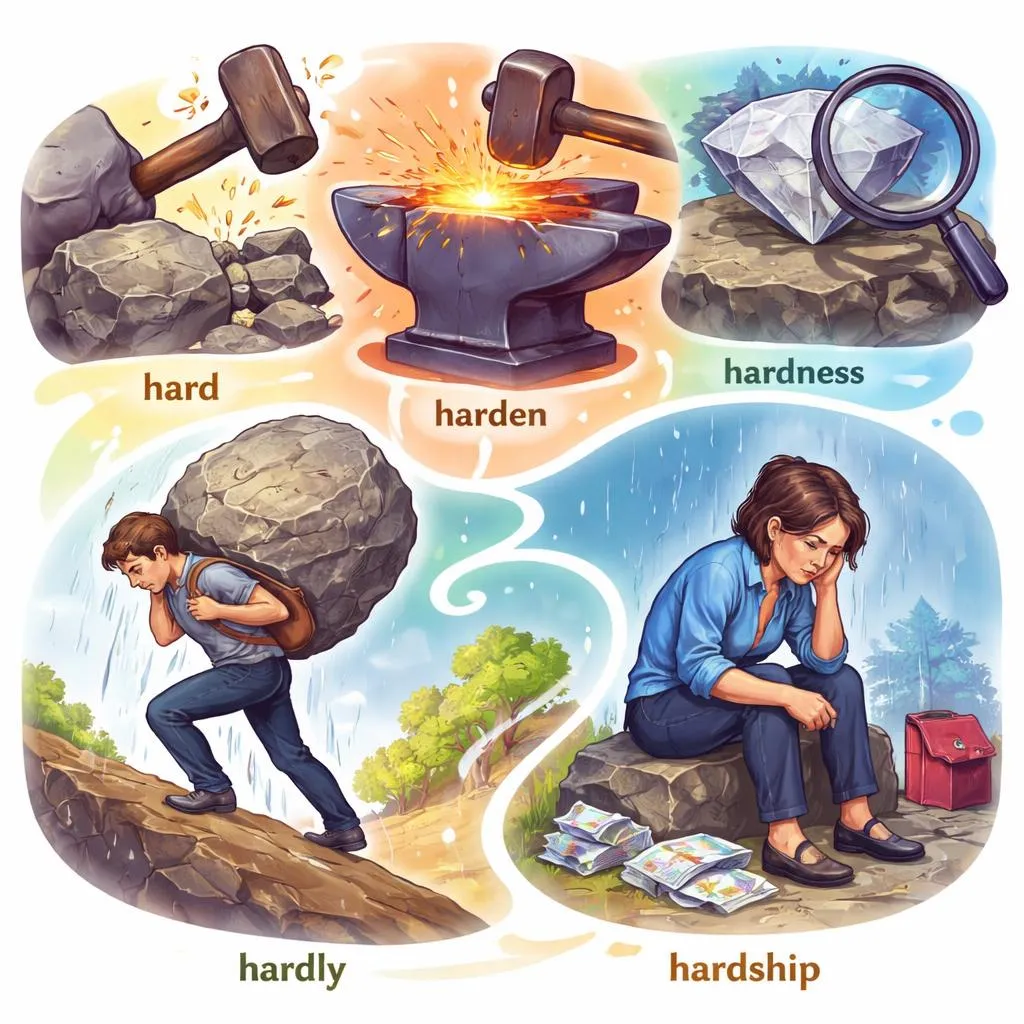

What Does “Same Word, Different Forms” Mean? One root word can grow into five difficulty forms. “Hard, harden, hardness, hardly, hardship” share one meaning. That meaning is “firm, difficult, or not soft.” Each form has a different job in a sentence. One word describes something firm or difficult. One word shows the action of making something firm. One word names the quality of being firm. One word tells how little something happens. One word names a difficult situation. Learning these five forms builds strength and resilience vocabulary.
Personal Pronouns Change Their Form This rule applies to pronouns like “it and its.” But word families work the same way for other words. “Hard” is an adjective or an adverb. “Harden” is a verb. “Hardness” is a noun. “Hardly” is an adverb. “Hardship” is a noun. Each form answers a different question. What kind of object or task? Hard. What action? Harden. What quality? Hardness. How much? Hardly. What difficult situation? Hardship.
From Verb to Noun to Adjective to Adverb – One Family, Many Words This family starts with the adjective “hard.” Hard means firm, solid, or difficult. Example: “The rock is hard.” Example: “The test was hard.” From “hard,” we make the verb “harden.” “Harden” means to make something firm or solid. Example: “The clay will harden in the sun.” From “hard,” we make the noun “hardness.” “Hardness” names the quality of being firm. Example: “The hardness of the diamond made it strong.” From “hard,” we make the adverb “hardly.” “Hardly” means almost not or barely. Example: “I could hardly hear the whisper.” From “hard,” we make the noun “hardship.” “Hardship” names a difficult or painful situation. Example: “Losing a job is a hardship.”
One Root, Many Roles – How Words Grow from Actions to Qualities Think of a piece of clay. The clay is “hard” after it dries. That is the adjective. The sun will “harden” the soft clay. That is the verb. The firmness of the clay is its “hardness.” That is the quality noun. You can “hardly” bend it at all. That is the adverb. If the clay breaks, that is a “hardship” for the artist. That is the situation noun. The root meaning stays “firm or difficult.” The role changes with each sentence.
Same Meaning, Different Jobs – Is It a Verb or a Noun? “Hard” can be an adjective or an adverb. As an adjective: “The floor is hard.” As an adverb: “Work hard to succeed.” “Harden” is always a verb. It shows the action of making firm. Example: “The glue will harden in an hour.” “Hardness” is always a noun. It names the quality of being hard. Example: “The hardness of the wood made it durable.” “Hardly” is always an adverb. It means almost not. Example: “She hardly ate any dinner.” “Hardship” is always a noun. It names a difficult condition. Example: “The family faced many hardships.” Same family. Different jobs.
Adjectives and Adverbs – When Do We Add -ly? “Hard” as an adverb does not add -ly. It is an irregular adverb. Example: “He works hard” (not “hardly”). “Hardly” has a different meaning (barely). So “hard” and “hardly” are not the same. The -ly rule gives us “hardly” from “hard” but with a different meaning. This is a special case. Example: “The test was so hard that I hardly finished.”
Watch Out for Tricky Spelling Changes (Double Letters, y to i, and More) “Hard” has no double letters. It is short and simple. When we add “-en,” we keep the word. Hard + en = harden. When we add “-ness,” we keep the word. Hard + ness = hardness. When we add “-ly,” we keep the word. Hard + ly = hardly. When we add “-ship,” we keep the word. Hard + ship = hardship. A common mistake is writing “harden” with a “t” (hardten). The correct spelling is harden. Another mistake is writing “hardness” with one “s” (hardnes). The correct spelling has “ness” – hardness (double s). Another mistake is writing “hardly” with one “l” (hardy – different word). The correct spelling is hardly. Write slowly at first. Remember: hard, harden, hardness, hardly, hardship.
Let’s Practice – Can You Choose the Right Form? Try these sentences with your child. Fill in the blank with hard, harden, hardness, hardly, or hardship.
The diamond is very _______.
The cement will _______ in a few hours.
The _______ of the rock made it hard to break.
I could _______ see through the fog.
Losing a home is a terrible _______.
This math problem is _______.
The clay needs time to _______.
The _______ of the exam surprised everyone.
She _______ ever complains about anything.
The family faced many _______ during the war.
Answers:
hard
harden
hardness
hardly
hardship
hard
harden
hardness
hardly
hardships
Go through each answer slowly. Ask your child why the word fits. Praise effort and resilience. Keep practice short and steady.
Tips for Parents – Help Your Child Learn Word Families in a Fun Way You can teach “hard, harden, hardness, hardly, hardship” through daily life. Use rocks, clay, and real struggles.
In the yard, pick up a rock. Say “This rock is hard.” Ask “What does hard mean?”
When you bake bread, say “The crust will harden.” Ask “What does harden mean?”
Tap a table. Say “The hardness of the wood keeps it strong.” Ask “What is hardness?”
When you whisper, say “You can hardly hear me.” Ask “What does hardly mean?”
When something is tough, say “That is a hardship.” Ask “What is hardship?”
Play a “firm or soft” game. Write the five words on sticky notes. Say a sentence. Let your child hold up the correct word. Example: “The stone is hard.” Child holds “hard.” “The glue will harden.” Child holds “harden.” “The hardness is high.” Child holds “hardness.” “I hardly slept.” Child holds “hardly.” “That was a hardship.” Child holds “hardship.”
Draw a five-part poster. Write “hard” with a picture of a rock. Write “harden” with a picture of drying clay. Write “hardness” with a picture of a hammer on metal. Write “hardly” with a picture of a nearly empty glass. Write “hardship” with a picture of a storm. Hang it on the wall.
Use a “strength test” game. Press on a pillow. Say “This is not hard.” Press on a table. Say “This is hard. That is hardness.”
Keep each session under five minutes. Repeat games on different days. Children learn through playful touching and comparing.
When your child makes a mistake, smile. Say “Good try. Let me show you again.” Use the correct word in a simple sentence. Then continue.
No need for grammar drills. No need for tests. Just warm examples and real hardness every day. Soon your child will master “hard, harden, hardness, hardly, hardship.” That skill will help them describe objects, understand struggles, and use “hard” in all its meanings.