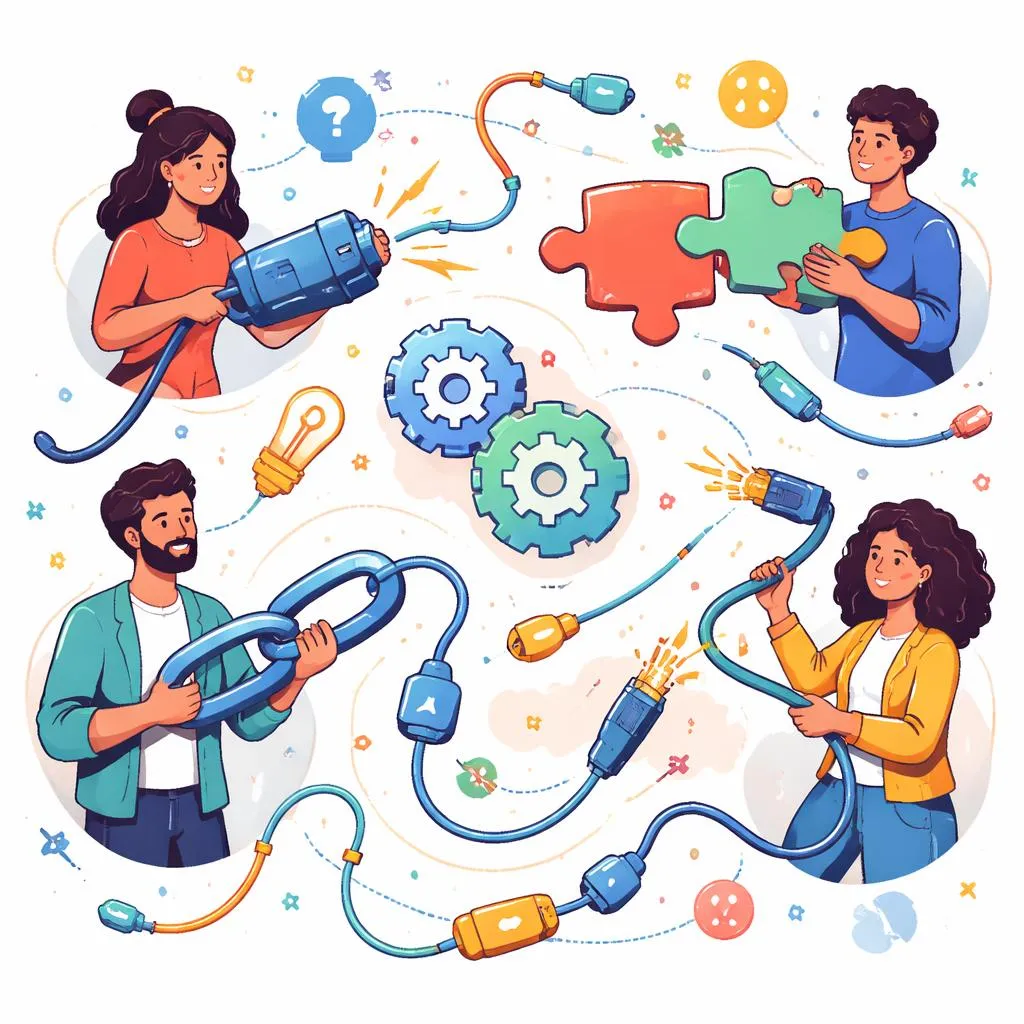

What Does “Same Word, Different Forms” Mean? One root word can grow into four linking forms. “Connect, connection, connective, connector” share one meaning. That meaning is “to join or link things together.” Each form has a different job in a sentence. One word shows an action. One word names a link or relationship. One word describes something that joins. One word names a thing that joins. Learning these four forms builds understanding of how things relate.
Personal Pronouns Change Their Form This rule applies to pronouns like “they, them, their.” But word families work the same way for other words. “Connect” is a verb. “Connection” is a noun. “Connective” is an adjective or a noun. “Connector” is a noun. Each form answers a different question. What action? Connect. What thing or relationship? Connection. What kind of tissue or word? Connective. What thing that joins? Connector.
From Verb to Noun to Adjective to Adverb – One Family, Many Words This family starts with the verb “connect.” You connect two LEGO bricks. You connect a tablet to Wi-Fi. From “connect,” we make the noun “connection.” “Connection” names a link between things or people. Example: “There is a strong connection between practice and improvement.” From “connect,” we make the adjective “connective.” “Connective” describes something that joins. Example: “Connective tissue holds muscles to bones.” From “connect,” we make another noun “connector.” “Connector” names a thing that joins two parts. Example: “The cable connector fits into the phone.”
One Root, Many Roles – How Words Grow from Actions to Qualities Think of a train and a track. The train cars “connect” to each other. That is the verb. The link between the cars is a “connection.” That is the noun. The metal piece joining them is a “connector.” That is the thing noun. The word “and” in a sentence is a “connective” word. That is the describing adjective. The root meaning stays “to join together.” The role changes with each sentence.
Same Meaning, Different Jobs – Is It a Verb or a Noun? “Connect” is always a verb. It shows the action of joining. Example: “Connect the dots to see the picture.” “Connection” is always a noun. It names a link or relationship. Example: “The connection between the two stories was clear.” “Connective” can be an adjective or a noun. As an adjective: “Connective words like ‘and’ join sentences.” As a noun: “In grammar, ‘but’ is a connective.” “Connector” is always a noun. It names a device or piece that joins. Example: “The USB connector fits into the computer.” Same family. Different jobs. Two nouns share the same root but mean different things.
Adjectives and Adverbs – When Do We Add -ly? This family does not have a common adverb. You could say “connectively,” but it is very rare. Example: “The two parts function connectively.” The -ly rule does not apply directly to these four forms. That is fine. Many word families have gaps. The important part is learning these four linking forms.
Watch Out for Tricky Spelling Changes (Double Letters, y to i, and More) “Connect” has no double letters. It starts with “con” and ends with “nect.” When we add “-ion,” we keep the word. Connect + ion = connection. When we add “-ive,” we keep the word. Connect + ive = connective. When we add “-or,” we keep the word. Connect + or = connector. A common mistake is writing “connection” with one “n” (conection). The correct spelling has “nn” – connect has one “n” after “co”? Connect – C o n n e c t? Let us check: connect – c o n n e c t. Yes, it has double “n.” So connection also has double “n.” Another mistake is writing “connector” with an “e” (connecter). The correct spelling ends with “or” – connector. Write slowly at first. Remember: connect, connection, connective, connector.
Let’s Practice – Can You Choose the Right Form? Try these sentences with your child. Fill in the blank with connect, connection, connective, or connector.
Please _______ the tablet to the charger.
The _______ between sleep and good grades is strong.
The word “because” is a _______ word.
The cable _______ was loose and fell out.
Can you _______ the two puzzle pieces?
My internet _______ keeps dropping.
_______ tissue helps hold our bodies together.
The phone _______ is broken, so it won’t charge.
Answers:
connect
connection
connective
connector
connect
connection
Connective
connector
Go through each answer slowly. Ask your child why the word fits. Praise effort and linking thinking. Keep practice short and connected.
Tips for Parents – Help Your Child Learn Word Families in a Fun Way You can teach “connect, connection, connective, connector” through daily life. Use toys, devices, and relationships.
At home, hold up two blocks. Say “Let’s connect these.” Ask “What action will we do?”
When you talk about family, say “There is a connection between us.” Ask “What is a connection?”
While charging a phone, say “This plug is a connector.” Ask “What does a connector do?”
When your child uses “and” or “but,” say “That is a connective word.” Ask “What other connective words do you know?”
Play a “link it” game. Write the four words on sticky notes. Say a sentence. Let your child hold up the correct word. Example: “Connect the wires.” Child holds “connect.” “We have a strong connection.” Child holds “connection.” “‘And’ is a connective.” Child holds “connective.” “The plug is a connector.” Child holds “connector.”
Draw a four-part poster. Write “connect” with a picture of two puzzle pieces joining. Write “connection” with a picture of a bridge. Write “connective” with a picture of the word “and” in a bubble. Write “connector” with a picture of a plug and cable. Hang it on the wall.
Use a “find the connector” game. Look around the room. Ask “What connectors do you see?” Let your child point to a plug, a string, or a link.
Keep each session under five minutes. Repeat games on different days. Children learn through playful linking and naming.
When your child makes a mistake, smile. Say “Good try. Let me show you again.” Use the correct word in a simple sentence. Then continue.
No need for grammar drills. No need for tests. Just warm examples and real connections every day. Soon your child will master “connect, connection, connective, connector.” That skill will help them understand how things work together, from sentences to devices to friendships.