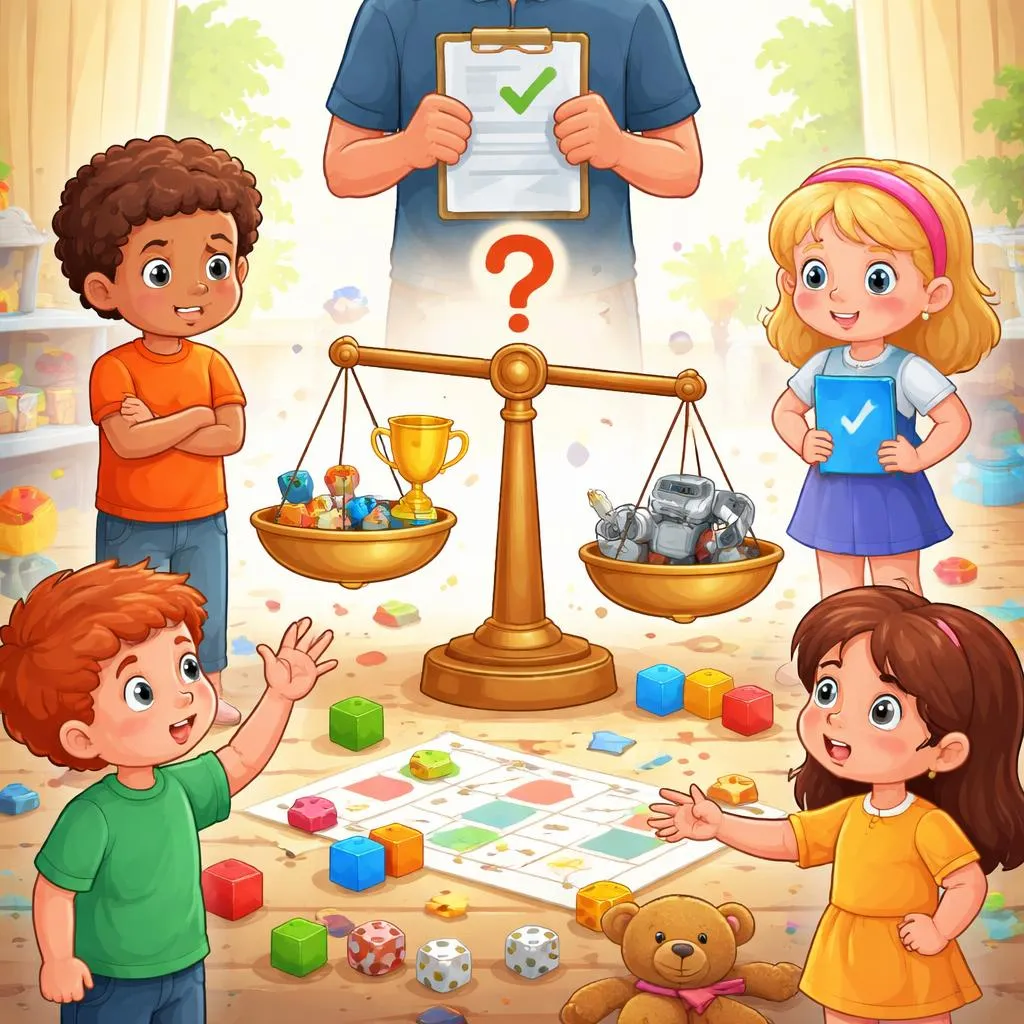

Every child knows the word "fair." They use it at the playground. They say "That is not fair!" when a friend gets more turns. This word carries big feelings.
The family of "fair, fairly, fairness, unfair" helps children talk about justice, rules, and kindness. These words appear in arguments, stories, and family talks.
This article helps parents and children explore these important words together. No classroom tone. No drills. Just honest conversation about right and wrong.
Let us see how one small adjective grows into an adverb, a noun, and its opposite. These words shape how children see the world.
What Does "Same Word, Different Forms" Mean?
The root "fair" means just, equal, or following the rules. It can also mean light in color or pleasant weather. But here we focus on justice.
Each form does a different job. "Fair" is an adjective. "Fairly" is an adverb. "Fairness" is a noun. "Unfair" is the opposite adjective.
Your child already uses "fair" and "unfair" every day. Now we add "fairly" and "fairness." These words give them more tools to express feelings and ideas.
Personal Pronouns Change Their Form
Pronouns do not change these words much. "Fair" stays the same. "The rule is fair. It is fair to me. It is fair to her."
"Fairly" also stays. "I shared fairly. You shared fairly. They shared fairly."
"Fairness" stays. "My sense of fairness. Your sense of fairness. Her sense of fairness."
"Unfair" stays. "That feels unfair to me. That feels unfair to him."
This makes learning easier. Your child only needs the word itself. No extra endings for I, you, or they.
From Verb to Noun to Adjective to Adverb – One Family, Many Words
This family has no verb. But we can still see the growth.
"Fair" – adjective. Describes something just or equal. "The teacher gave a fair test."
"Fairly" – adverb. Describes how someone acts in a just way. "She divided the candy fairly."
"Fairness" – noun. Names the quality of being just. "Fairness matters in every game."
"Unfair" – adjective. Describes something not just or equal. "Taking two turns in a row is unfair."
See how one root grows? "Fair" carries the core meaning. Add -ly for an adverb. Add -ness for a noun. Add un- for the opposite.
One Root, Many Roles – How Words Grow from Actions to Qualities
From "fair" we add "-ly" to make "fairly." This turns an adjective into an adverb. It tells how an action happens.
We add "-ness" to make "fairness." This turns an adjective into a noun. It names a quality or state.
We add "un-" to make "unfair." This prefix means "not." So "unfair" means "not fair."
This pattern works for many words. "Kind, kindly, kindness, unkind." "Happy, happily, happiness, unhappy." Teach your child the pattern. They will learn whole families at once.
Focus first on "fair" and "unfair." Children use these most. Then add "fairly" for daily actions. Save "fairness" for deeper talks about rules and feelings.
Same Meaning, Different Jobs – Is It a Verb or a Noun?
None of these words are verbs. But we can still ask questions.
"Fair" – adjective. "The referee was fair." Ask: Does it describe the referee? Yes. So it is an adjective.
"Fairly" – adverb. "He played fairly." Ask: Does it describe how he played? Yes. So it is an adverb.
"Fairness" – noun. "Fairness guides good teams." Ask: Can I name it as a thing or idea? Yes. So it is a noun.
"Unfair" – adjective. "The rule felt unfair." Ask: Does it describe the rule? Yes. So it is an adjective.
Teach your child to ask "Does it describe a noun?" If yes, adjective. "Does it describe a verb?" If yes, adverb. "Does it name a quality?" If yes, noun.
Adjectives and Adverbs – When Do We Add -ly?
We add -ly to turn an adjective into an adverb. "Fair" becomes "fairly." No spelling change. Just add -ly.
When do we use it? When we want to say someone does something in a just way. "The judge spoke fairly. The sister shared fairly."
For young children, use "fairly" in daily conversation. "You fairly divided the blocks." "We fairly took turns." Your child will copy you.
Do not confuse "fairly" meaning "justly" with "fairly" meaning "somewhat." "The movie was fairly good" means moderately good. That is different. Teach the justice meaning first.
Watch Out for Tricky Spelling Changes (Double Letters, y to i, and More)
"Fair" – simple. F A I R.
"Fairly" – add -ly. Keep everything. "Fair" + "ly" = "fairly." No double letters. No dropping.
"Fairness" – add -ness. Keep everything. "Fair" + "ness" = "fairness." No change.
"Unfair" – add un- to fair. Keep everything. "Un" + "fair" = "unfair." No change.
The main trick: no tricky changes at all. All forms keep the full word "fair." That makes this family very easy to spell.
Let's Practice – Can You Choose the Right Form?
Try these sentences with your child. Fill in each blank. Use fair, fairly, fairness, or unfair.
The teacher made a _____ rule. Everyone got the same time to answer.
Please share your toys _____.
_____ means everyone gets what they need, not always the same thing.
Giving one child two cookies and another none is _____.
Answers:
fair (adjective – describes the rule)
fairly (adverb – describes how to share)
fairness (noun – names the quality)
unfair (adjective – opposite of fair)
Read the sentences aloud. Ask why each answer fits. Let your child explain. That builds understanding.
Now play a simple game. Take turns sharing snacks. After each turn, ask "Was that fair? Did I share fairly? Did I show fairness? Or was that unfair?" Use all the words.
Tips for Parents – Help Your Child Learn Word Families in a Fun Way
Start at snack time. Cut an apple into pieces. Count the pieces. Give each child the same number. Say "This is fair. I divided the apple fairly."
When someone complains "That is unfair," stop. Ask "Why do you feel it is unfair?" Listen. Then ask "What would be fair?" This builds problem-solving.
Play board games together. Before starting, say "Let us agree to play fairly." During the game, praise fairness. "You waited for your turn. That was fair."
Read stories about fairness. Many children's books tackle sharing, taking turns, and justice. Pause and ask "Was that fair? Was that unfair?" Use the words.
Create a "Fairness Chart." Draw two columns. "Fair" and "Unfair." Write examples together. "Sharing is fair. Hiding toys is unfair." Post it on the fridge.
Use "fairly" during chores. "You fairly divided the work. You each cleaned one room." This teaches that fairness applies to tasks too.
Talk about fairness versus sameness. Explain that fair does not always mean equal. A smaller child might need more help. That is fair. A taller child might reach a high shelf. That is fair. Fairness means giving what each person needs.
Celebrate when your child uses any form correctly. If they say "That is unfair," validate the feeling. "Yes, you are right. That felt unfair. What can we do?"
When your child acts fairly, name it. "You shared fairly. I am proud of your fairness." Specific praise teaches more than "good job."
One evening, ask "Was anything unfair today?" Your child might share a playground moment. Listen without fixing. Say "That sounds hard. How did you handle it?"
Remember that fairness is a learned skill. Children need many examples. They need to practice. They need to make mistakes and try again.
Keep the tone calm. Fairness talks can become heated. Stay gentle. Say "Let us think together. What is the fair thing here?"
Soon your child will say "That is not fair" with reason. They will ask "Are we doing this fairly?" They will value fairness in themselves and others. You gave them the words for justice. And that is a beautiful foundation for life.