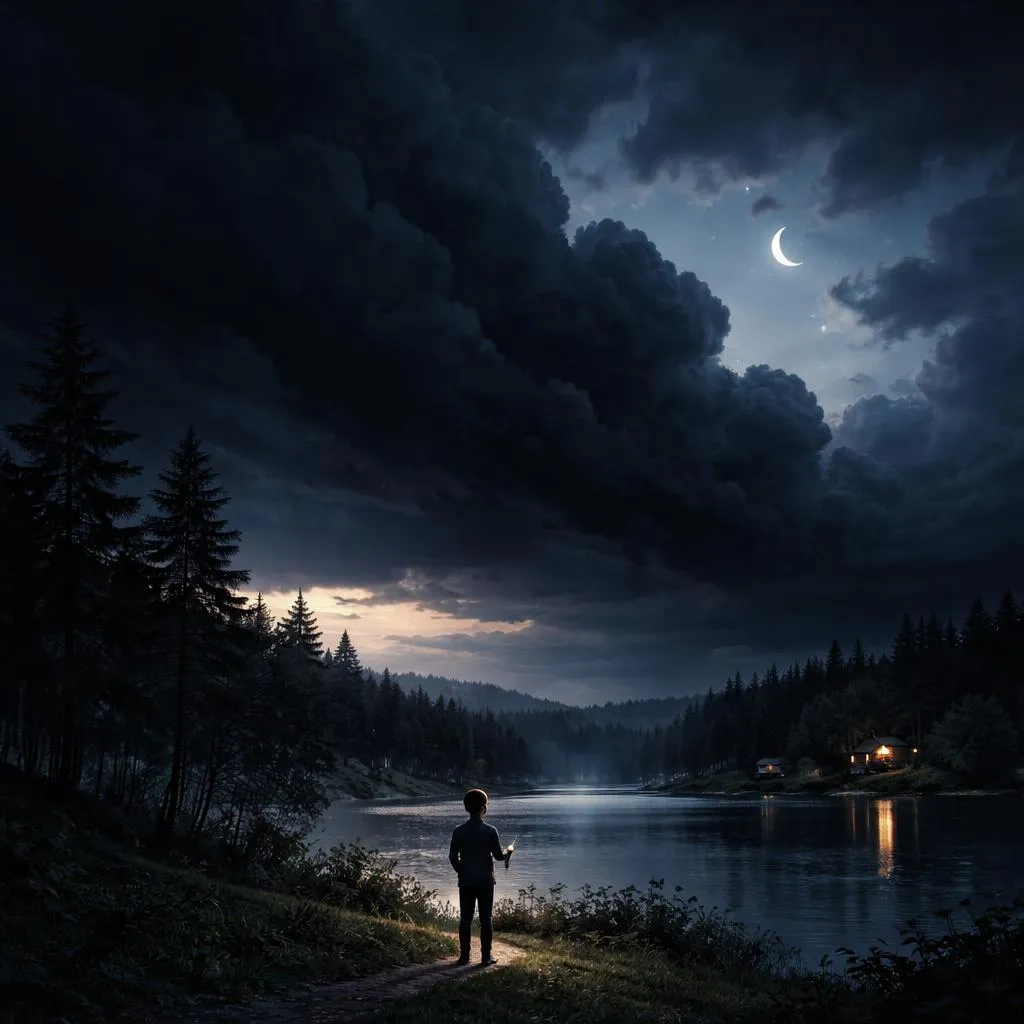

The sun goes down. The room becomes black. You turn on a lamp.
That is darkness. Today we learn four words.
“Dark,” “darken,” “darkness,” and “darkly.”
Each word shares the idea of little or no light. Each does a different job.
Parents and children can learn these words together. They help with bedtime and feelings.
What Does “Same Word, Different Forms” Mean?
One idea takes different shapes. The idea here is absence of light.
“Dark” is an adjective. “The night is dark.” Describes.
“Dark” is also a noun. “Cats can see in the dark.” Absence of light.
“Darken” is a verb. “Clouds darken the sky before rain.” Action.
“Darkness” is a noun. “Darkness fell early in winter.” State.
“Darkly” is an adverb. “The room was darkly lit.” Describes a verb.
Same root. Different endings. Different jobs. The lack of light stays.
Personal Pronouns Change Their Form
Pronouns change for grammar. “I” becomes “me.” “We” becomes “us.”
Our words change for role and description. “The sky is dark.” Describes.
“Darken the paint.” Action. “Darkness scares some people.” State.
“He spoke darkly.” How he spoke.
Pronouns help us speak faster. Word families help us talk about night and mood.
When children know these four words, they describe lighting and emotions.
From Verb to Noun to Adjective to Adverb – One Family, Many Words
“Dark” works as an adjective. “A dark room needs a light.” Describes.
“Dark” also works as a noun. “The dark is not scary.” Absence of light.
“Darken” is a verb. “The smoke will darken the walls.” Action.
“Darkness” is a noun. “Darkness comes early in December.” State.
“Darkly” is an adverb. “The clouds loomed darkly overhead.” Describes.
We have no other forms.
Five members. Very useful for storytelling.
One Root, Many Roles – How Words Grow from Actions to Qualities
The root “dark” comes from Old English “deorc,” meaning lacking light.
From that root, we add “-en” to make a verb. “Darken” means to become or make dark.
We add “-ness” to make a noun. “Darkness” means the state of being dark.
We add “-ly” to make an adverb. “Darkly” means in a dark way.
Help your child see this pattern. Dark is the quality. Darken is the action. Darkness is the state. Darkly tells how.
Same Meaning, Different Jobs – Is It a Verb or a Noun?
Look at “dark” in a sentence. Ask: Is it describing? Or is it a place?
“The room is dark.” Describing. Adjective.
“I cannot see in the dark.” Place/absence. Noun.
Same word. Two jobs. Context tells you.
Now look at “darken.” Always a verb. “Storms darken the horizon.”
“Darkness” is always a noun. “Darkness can be peaceful.”
“Darkly” is always an adverb. “She stared darkly into the distance.”
Teach children to look at the endings. “-en” verb. “-ness” noun. “-ly” adverb.
“Dark” alone can be adjective or noun.
Adjectives and Adverbs – When Do We Add -ly?
We add “-ly” to “dark” to make “darkly.” This is the rule.
Adjective + ly = adverb. “Dark” + “ly” = “darkly.”
Example: “The room is dark.” Adjective. “The room was darkly painted.” Adverb.
We do not add “-ly” to “darken” or “darkness.”
For children, “darkly” is useful for spooky stories.
Watch Out for Tricky Spelling Changes (Double Letters, y to i, and More)
Spelling here is very regular. No double letters. No y to i changes.
“Dark” adds “-en” to make “darken.” Just add.
“Dark” adds “-ness” to make “darkness.” Just add.
“Dark” adds “-ly” to make “darkly.” Just add.
No dropping. No vowel changes. Very clean.
Practice with your child. Write “dark.” Add “en.” You get “darken.” Add “ness.” You get “darkness.” Add “ly.” You get “darkly.”
No tricks.
Let’s Practice – Can You Choose the Right Form?
Try these sentences. Fill in the blank with dark, darken, darkness, or darkly.
The alley was very _____ at night. (adjective)
The clouds began to _____ the afternoon sky. (action verb)
_____ makes it hard to see without a flashlight. (noun)
He muttered _____ about his bad day. (adverb)
She prefers to sleep in complete _____. (noun)
Please do not _____ the living room curtains yet. (verb)
The _____ forest felt mysterious. (adjective)
The villain laughed _____ in the movie. (adverb)
Answers: 1 dark, 2 darken, 3 Darkness, 4 darkly, 5 darkness, 6 darken, 7 dark, 8 darkly.
Number 3 starts with a capital letter because it begins the sentence.
Number 8 uses “darkly” to describe the laugh.
Tips for Parents – Help Your Child Learn Word Families in a Fun Way
Point out a dark room. “This room is dark. Let us turn on the light.”
Darken a picture together. “Add more blue to darken the sky.”
Talk about darkness at bedtime. “Darkness means it is time to sleep.”
Use “darkly” for stories. “The wolf looked darkly at the woods.”
Play a game. You close the curtains a little. “Did I darken the room?”
Draw a dark scene. Use black crayon. Write “dark.”
Read a gentle book about night. “Owl Moon” by Jane Yolen.
Do not correct every mistake. If your child says “darkened” for “darken,” gently say “Darken is the action. Darkened is past tense.”
Celebrate when your child uses “darkness” as a noun. That word feels poetic.
Explain that “dark” can describe mood. “A dark mood means sad or angry.”
Tomorrow you will wake up when it is dark. You will see clouds darken the sky. You will feel comfortable with darkness. You might draw a darkly colored mountain.
Your child might say “I am not afraid of the dark.” You will feel proud.
Keep noticing dark places. Keep darkening colors in art. Keep talking about darkness as natural. Keep using darkly in stories.
Your child will grow in language and in comfort with night. Darkness is not scary. It is just a different kind of light. Words help us see it.