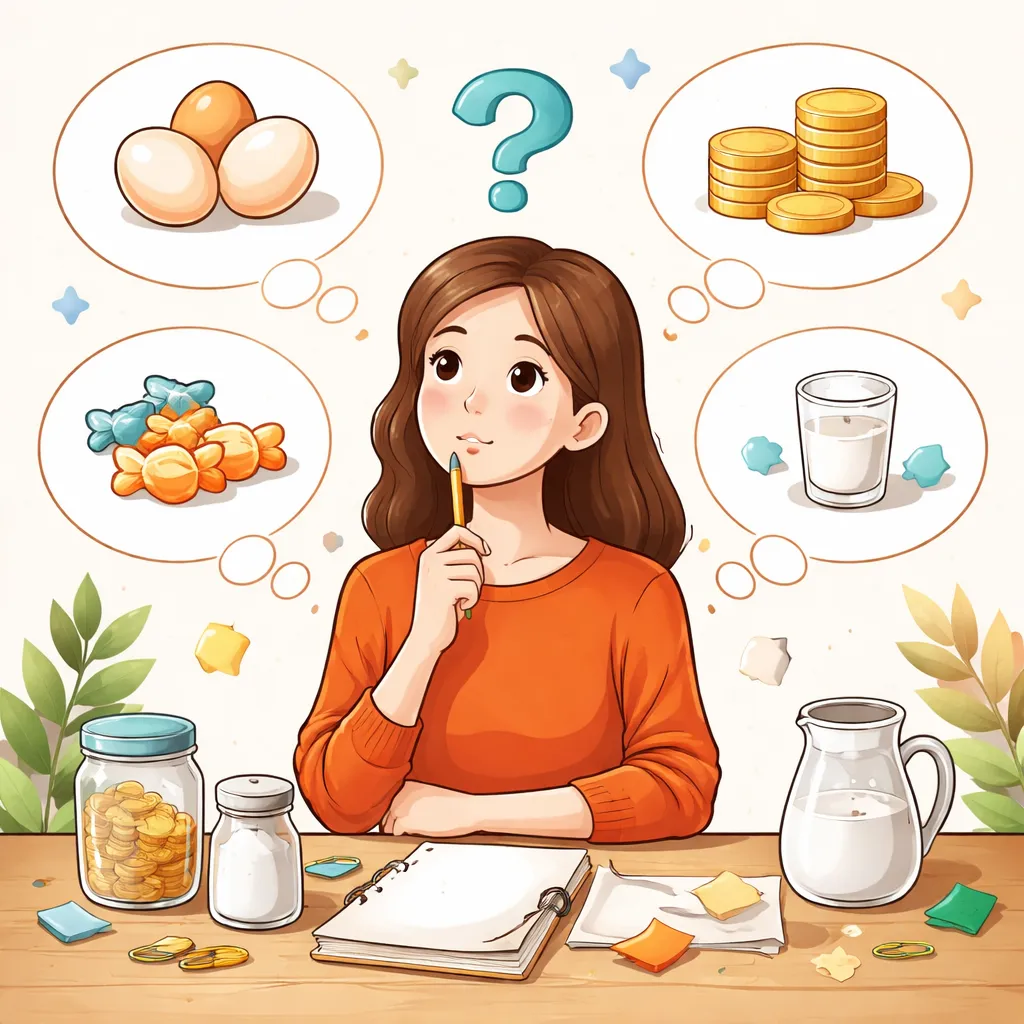

Sometimes you have a small amount of something. Sometimes you have almost nothing. English uses special words to show these small amounts.
These words are quantifiers. They answer the question “how much?” or “how many?” The most confusing ones are 'few', 'a few', 'little', and 'a bit of'.
Children hear these words often. “I have a few friends.” “There is little time left.” “Add a bit of sugar.” Each sentence has a different feeling.
Parents might wonder about the difference. 'Few' and 'a few' sound similar. But they mean different things. One is negative. One is positive. 'Little' and 'a bit of' work with different types of nouns.
Getting these quantifiers right makes your English more precise. You will say exactly what you mean. No confusion. No guessing.
Let us explore these small but powerful words together.
What Are Quantifiers: 'Few', 'A Few', 'Little' and 'A Bit Of'? Quantifiers tell us an amount. They come before nouns. They answer “how many?” for countable nouns. They answer “how much?” for uncountable nouns.
'Few' and 'a few' work with countable nouns. Countable nouns have a plural form. One apple, two apples. One friend, many friends.
'Few' means “not many” and feels negative. It emphasizes a small number. Almost none. “He has few friends” means he has almost no friends. This sounds sad.
'A few' means “some” and feels positive. It emphasizes that a small number exists. “He has a few friends” means he has some friends. This sounds fine.
'Little' and 'a bit of' work with uncountable nouns. Uncountable nouns have no plural form. Water, time, sugar, money.
'Little' means “not much” and feels negative. “We have little time” means almost no time. This sounds urgent.
'A bit of' means “some” and feels positive. “We have a bit of time” means we have some time. This sounds relaxed.
The tiny word 'a' changes everything. 'A few' and 'a bit of' include the article 'a'. That 'a' turns a negative into a positive. Remember this trick.
Children understand quantifiers through examples. “I have few toys” sounds unhappy. “I have a few toys” sounds okay. One letter changes the feeling.
Parents can demonstrate with real objects. Put three cookies on a plate. Say “I have a few cookies.” Take away two cookies. Say “Now I have few cookies.” The meaning becomes clear.
Rules of Quantifiers: 'Few', 'A Few', 'Little' and 'A Bit Of' Learn these four rules. They separate the quantifiers clearly.
Rule one: Use 'few' and 'a few' with countable plural nouns Countable nouns need a plural form. Friends, books, apples, days. Few friends (almost none, negative). A few friends (some, positive).
Rule two: Use 'little' and 'a bit of' with uncountable nouns Uncountable nouns have no plural. Water, time, sugar, money, advice. Little water (almost none, negative). A bit of water (some, positive).
Rule three: 'A bit of' is slightly more informal than 'a little' Both mean the same. “A bit of sugar” and “a little sugar” are the same. But 'a bit of' sounds more conversational. Use it in speaking. Use 'a little' in writing.
Rule four: The word 'a' changes meaning completely Few = negative, almost none. A few = positive, some. Little = negative, almost none. A little = positive, some. (Note: 'a bit of' already has 'a'.)
These rules are simple. The only challenge is knowing countable vs. uncountable nouns. That takes practice.
Parents can help by making two lists. Countable nouns: apple, chair, dog, friend, toy. Uncountable nouns: water, rice, air, love, information. Review the lists together.
Children can play sorting games. Put nouns into two boxes. Countable box. Uncountable box. This builds the foundation for quantifiers.
How to Use Quantifiers: 'Few', 'A Few', 'Little' and 'A Bit Of' Use these quantifiers in four common situations. Each situation shows a different amount.
Situation one: Expressing disappointment with 'few' Say 'few' when you wish you had more. “I have few opportunities to travel.” “She has few close friends.” “There are few good movies this month.” The feeling is sad or disappointed.
Situation two: Expressing satisfaction with 'a few' Say 'a few' when a small number is enough. “I have a few good friends.” “We need a few more minutes.” “She bought a few books at the sale.” The feeling is content or neutral.
Situation three: Expressing urgency with 'little' Say 'little' when time or amount is running out. “We have little time before the store closes.” “There is little hope left.” “He showed little interest in the game.” The feeling is worried or serious.
Situation four: Expressing comfort with 'a bit of' Say 'a bit of' when a small amount helps. “I have a bit of good news.” “Add a bit of salt to the soup.” “She needs a bit of rest.” The feeling is calm or helpful.
Special situation: Offering food In the kitchen, use 'a bit of' for ingredients. “Add a bit of milk.” “Use a bit of butter.” Use 'a few' for countable items. “Add a few olives.” “Use a few berries.”
Parents can model these quantifiers during daily activities. “We have a few eggs left. But we have little milk. Could you buy a bit of milk?”
Children can practice by describing their day. “I have few stickers left. I got a few new ones yesterday. I have little energy for homework. But I have a bit of time to play.”
Examples of Quantifiers: 'Few', 'A Few', 'Little' and 'A Bit Of' Read these examples aloud. Notice the feeling of each sentence.
Examples with 'few' (countable, negative)
Few people came to the party. It was almost empty.
She has few options left. She feels stuck.
He made few mistakes on the test. That is good! Wait. 'Few mistakes' means almost no mistakes. That is actually positive. Yes, 'few' can be positive when the noun is negative. Few mistakes = good. Few friends = sad. The meaning depends on the noun.
Examples with 'a few' (countable, positive)
I have a few minutes to talk before my meeting.
She invited a few friends over for dinner.
We saw a few birds in the garden this morning.
Can you buy a few apples at the store?
Examples with 'little' (uncountable, negative)
There is little water left in the bottle.
He has little patience for loud noises.
We had little hope of winning the game.
She showed little interest in the movie.
Examples with 'a bit of' (uncountable, positive)
I need a bit of help with my homework.
Add a bit of honey to your tea.
She has a bit of experience with computers.
We have a bit of time before dinner.
Mixed examples showing contrast
Few students finished the exam. (Almost none)
A few students finished early. (Some)
Little rain fell last month. (Almost none)
A bit of rain fell this morning. (Some)
Read each pair twice. Ask your child which sentence sounds happier. 'A few' and 'a bit of' usually sound happier than 'few' and 'little'.
Common Mistakes These five mistakes happen often. Recognize them. Fix them gently.
Mistake one: Using 'few' with uncountable nouns Wrong: “I have few water.” Right: “I have little water.” or “I have a bit of water.” 'Few' only works with countable nouns. Water is uncountable. Use 'little' or 'a bit of'.
Mistake two: Using 'little' with countable nouns Wrong: “She has little apples.” Right: “She has few apples.” or “She has a few apples.” 'Little' only works with uncountable nouns. Apples are countable. Use 'few' or 'a few'.
Mistake three: Forgetting that 'a few' is positive Wrong: Using 'a few' when you mean 'almost none'. “I have a few friends” means some friends. If you mean almost none, say “I have few friends.” The 'a' changes everything.
Mistake four: Using 'a bit of' with countable nouns Wrong: “I need a bit of chairs.” Right: “I need a few chairs.” Chairs are countable. Use 'a few'. 'A bit of' is for uncountable nouns only.
Mistake five: Confusing 'little' and 'a little' Wrong: “We have a little time” when you mean almost no time. “A little time” means some time. It is positive. If you mean almost none, say “little time” without 'a'.
Write these mistakes on index cards. Shuffle them. Read each wrong sentence aloud. Ask your child to say the correct version. This active correction builds strong habits.
Comparison: 'Few' vs. 'A Few' and 'Little' vs. 'A Bit Of' Compare these quantifiers side by side. See the small but important differences.
'Few' vs. 'A few'
Few friends = almost no friends. Feeling: lonely.
A few friends = some friends. Feeling: content.
Few cookies = almost no cookies. Feeling: hungry.
A few cookies = some cookies. Feeling: satisfied.
'Little' vs. 'A bit of'
Little water = almost no water. Feeling: thirsty, worried.
A bit of water = some water. Feeling: okay.
Little time = almost no time. Feeling: rushed, stressed.
A bit of time = some time. Feeling: relaxed.
'A bit of' vs. 'A little' Both mean the same. “A bit of sugar” = “a little sugar.” “A bit of help” = “a little help.” The only difference is style. 'A bit of' is more informal. Use it when speaking. Use 'a little' when writing.
Countable vs. Uncountable summary Countable nouns (friends, apples, days): use few or a few. Uncountable nouns (water, time, sugar): use little or a bit of.
A simple memory trick for children: Countable = count the number. Uncountable = cannot count. You can count friends (one friend, two friends). You cannot count water (one water? no).
Parents can play the “Can you count it?” game. Say a noun. “Milk.” Can you count milk? No. “Bottles of milk.” Yes, you can count bottles. The noun itself tells you. Milk is uncountable. Bottle is countable.
Practice Exercises Complete these exercises together. Write answers on paper.
Exercise one: Choose the correct quantifier Fill in the blank with 'few', 'a few', 'little', or 'a bit of'.
I have ______ good friends. I am lucky. (positive, countable)
There is ______ milk left. We need to buy more. (negative, uncountable)
She needs ______ help with her project. (positive, uncountable)
______ people understood the joke. Almost no one laughed. (negative, countable)
Add ______ salt to the soup. (positive, uncountable)
He has ______ patience for games. He gets angry fast. (negative, uncountable)
We saw ______ deer in the forest. (positive, countable)
There are ______ cookies in the jar. Almost none. (negative, countable)
Exercise two: Correct the mistakes Each sentence has one error. Rewrite correctly.
I have few water left in my bottle.
She has a little apples in her bag.
He showed a few interest in the activity.
Add a few salt to the recipe.
We have a bit of chairs for the guests.
Exercise three: Choose positive or negative Decide if the sentence needs a positive quantifier (a few / a bit of) or a negative quantifier (few / little).
I have ______ money. I can't buy anything.
She has ______ ideas. She is ready to start.
There is ______ hope. The situation is bad.
We have ______ time. Let's play for a while.
He made ______ mistakes. His work is excellent. (Wait. Few mistakes = good. So 'few' is positive here? Yes! The feeling depends on the noun.)
Exercise four: Fill in the blank with your own answer Complete each sentence. Use the correct quantifier.
Before school, I eat ______ cereal.
My best friend has ______ toys at home.
There is ______ space in my backpack.
I know ______ songs by heart.
Answers and Explanations Check your answers together. Read each explanation.
Exercise one answers:
a few (positive, countable friends)
little (negative, uncountable milk)
a bit of (positive, uncountable help)
few (negative, countable people)
a bit of (positive, uncountable salt)
little (negative, uncountable patience)
a few (positive, countable deer)
few (negative, countable cookies)
Exercise two answers: 9. I have little water left in my bottle. (Water uncountable = little) 10. She has a few apples in her bag. (Apples countable = a few) 11. He showed little interest in the activity. (Interest uncountable, negative) 12. Add a bit of salt to the recipe. (Salt uncountable = a bit of) 13. We have a few chairs for the guests. (Chairs countable = a few)
Exercise three answers: 14. little (negative, cannot buy anything) 15. a few (positive, ready to start) 16. little (negative, situation is bad) 17. a bit of (positive, let's play) 18. few (Here 'few' is positive because mistakes are bad. Few mistakes = good!)
Exercise four answers (sample answers): 19. a bit of (cereal is uncountable) 20. a few (toys are countable) 21. little (space is uncountable, negative) 22. a few (songs are countable)
Key explanations: Question 18 is tricky. 'Few' usually feels negative. But when the noun is negative (mistakes, problems, errors), 'few' becomes positive. Few mistakes = good. Few problems = good. Few worries = good.
Question 20 uses 'a few' for toys. Toys are countable. The answer shows possession but uses a positive quantifier.
Celebrate correct answers. Review mistakes without pressure. These quantifiers take time to master.
Learning Tips Make quantifiers part of your family's daily talk. These seven tips work for busy families.
Tip one: Use food for practice In the kitchen, use quantifiers naturally. “Add a bit of cheese.” “Use a few olives.” “There is little milk left.” “I have a few eggs.” Food is countable or uncountable. Perfect for practice.
Tip two: Play the “Positive or negative?” game Say a sentence with a quantifier. “I have a few stickers.” Positive or negative? Positive. “I have few stickers.” Negative. “There is a bit of juice.” Positive. “There is little juice.” Negative. This game takes two minutes.
Tip three: Create a quantifier chart Draw three columns. Column one: Countable nouns. Column two: Uncountable nouns. Column three: Quantifiers. List nouns you know. Add the correct quantifiers next to each noun.
Tip four: Use hand gestures For 'few' and 'little', make a small pinch with your fingers. Show almost nothing. For 'a few' and 'a bit of', open your hand slightly. Show a small but comfortable amount. Gestures help memory.
Tip five: Read stories and find quantifiers Choose a picture book. Look for 'few', 'a few', 'little', or 'a bit of'. Count how many times each appears. Talk about why the author chose that quantifier.
Tip six: Describe your day with quantifiers At dinner, each person says one sentence. “I had a few good moments today.” “I had little energy after school.” “I made few mistakes on my test.” Real feelings use real quantifiers.
Tip seven: Correct with comparison When your child says “I have few apples” but means “a few,” say “Do you mean almost none or some? Few = almost none. A few = some. Which one do you want?” Let them choose. Then repeat the correct sentence.
Quantifiers add precision to English. They show not just how many, but how you feel about that number. Mastering them makes your child a careful, thoughtful speaker.
Practice for five minutes each day. Use food, toys, and feelings. Your child will learn to choose the right quantifier automatically.
Now look around your room. Say one sentence with 'a few'. One sentence with 'little'. “I see a few books. I have little space on my shelf.” You just practiced quantifiers. Keep going. You are building excellent skills.