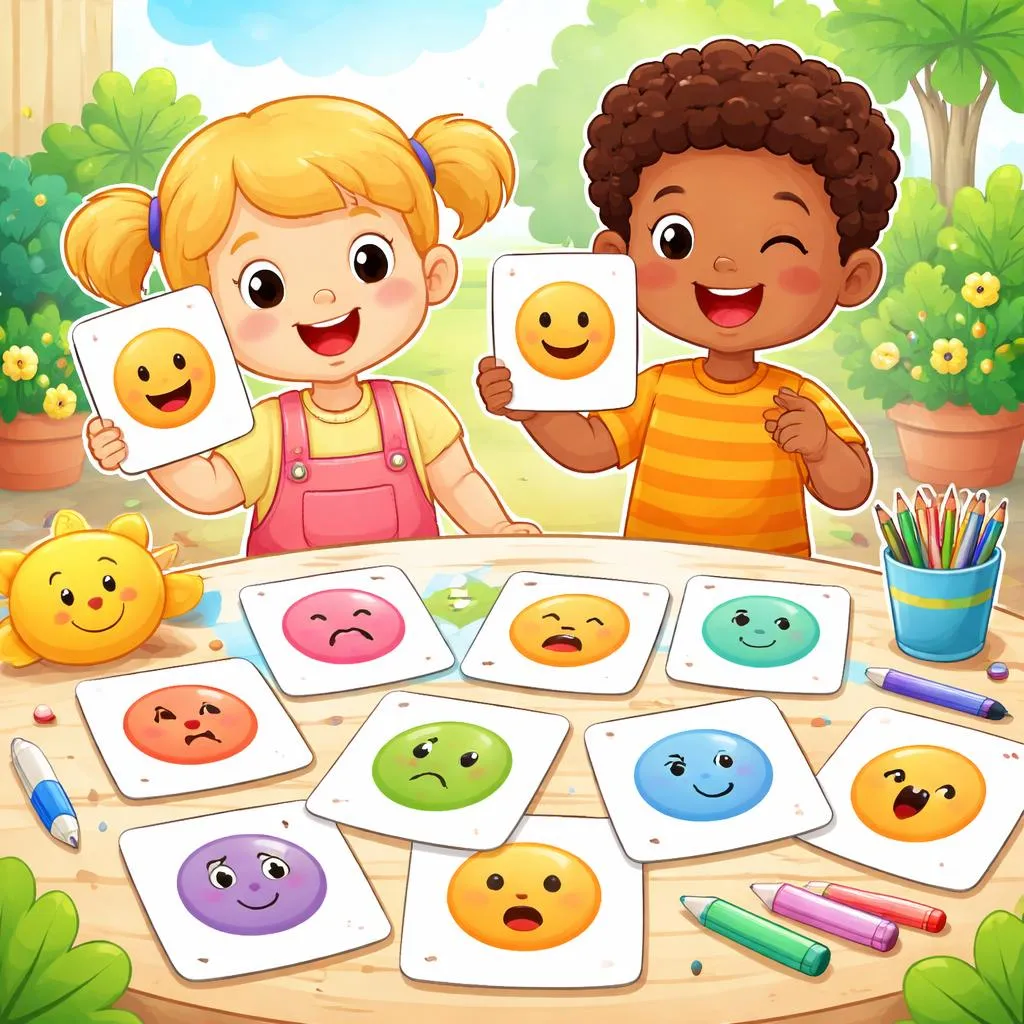

You see two similar words. You cannot tell them apart. Your brain feels mixed up.
That is confusion. Today we learn four words.
“Confuse,” “confusion,” “confused,” and “confusing.”
Each word shares the idea of not understanding. Each does a different job.
Parents and children can learn these words together. They help with learning struggles.
What Does “Same Word, Different Forms” Mean?
One idea takes different shapes. The idea here is being mixed up or not clear.
“Confuse” is a verb. “The tricky puzzle will confuse you.” Action.
“Confusion” is a noun. “There was confusion about the meeting time.” State.
“Confused” is an adjective. “I am confused by these instructions.” Describes a person.
“Confusing” is an adjective. “This map is confusing.” Describes the thing.
Same root. Different endings. Different jobs. The mix-up stays.
Personal Pronouns Change Their Form
Pronouns change for grammar. “I” becomes “me.” “They” becomes “them.”
Our words change for role and description. “The rules confuse me.” Action.
“Confusion filled the room.” State. “I feel confused.” Describes person.
“The test is confusing.” Describes thing.
Pronouns help us speak faster. Word families help us talk about learning difficulties.
When children know these four words, they explain when something is hard.
From Verb to Noun to Adjective to Adverb – One Family, Many Words
“Confuse” is a verb. “Don’t confuse salt with sugar.” Action.
“Confusion” is a noun. “The confusion ended when the teacher explained.” State.
“Confused” is an adjective. “The student looked confused.” Describes a person.
“Confusing” is an adjective. “The directions are confusing.” Describes a thing.
We have an adverb “confusingly” (not in keywords). “The sign was confusingly written.”
Five members. One verb, one noun, two adjectives.
One Root, Many Roles – How Words Grow from Actions to Qualities
The root “confuse” comes from Latin “confundere.” “Con-” means together. “Fundere” means to pour.
To pour together means to mix up. Like pouring two liquids into one cup.
From that root, we add “-ion” to make a noun. “Confusion” means the state of being mixed up.
We add “-ed” to make an adjective for people. “Confused” means feeling mixed up.
We add “-ing” to make an adjective for things. “Confusing” means causing mixed-up feelings.
Help your child see this pattern. Confuse is the action. Confusion is the state. Confused is how you feel. Confusing is how the thing is.
Same Meaning, Different Jobs – Is It a Verb or a Noun?
Look at “confuse.” Always a verb. “These buttons confuse me.” Action.
“Confusion” is always a noun. “The confusion cleared after the explanation.” State.
“Confused” is always an adjective for people. “He looked confused during the test.”
“Confusing” is always an adjective for things. “The movie plot was confusing.”
Teach children the key difference. “Confused” describes a person’s feeling. “Confusing” describes the thing that causes the feeling.
“I am confused because this game is confusing.”
Adjectives and Adverbs – When Do We Add -ly?
We add “-ly” to “confusing” to make “confusingly.” This is an adverb.
“The speaker confusingly mixed up the two topics.” Means in a confusing way.
We add “-ly” to “confused” to make “confusedly.” Also an adverb. “He looked at the map confusedly.”
For children, these are advanced. Stick to the main words.
“Confuse” for action. “Confusion” for the state. “Confused” for the person’s feeling. “Confusing” for the thing’s quality.
That is plenty.
Watch Out for Tricky Spelling Changes (Double Letters, y to i, and More)
Spelling has one small note. “Confuse” ends with “se.” No double letters.
When adding “-ion,” drop the “e.” Confus + ion = confusion.
When adding “-ed,” keep the “e”? No, drop the “e.” Confus + ed = confused. One “s” only.
When adding “-ing,” drop the “e.” Confus + ing = confusing.
So the rule: Drop the final “e” for all endings.
No double letters. No y to i.
Practice with your child. Write “confuse.” Drop the “e.” Add “ion.” You get “confusion.” Add “ed.” You get “confused.” Add “ing.” You get “confusing.”
Very clean.
Let’s Practice – Can You Choose the Right Form?
Try these sentences. Fill in the blank with confuse, confusion, confused, or confusing.
The two twins _____ everyone because they look identical. (action verb)
There was _____ about where to meet after school. (noun, state)
I am _____ by the math problem. (adjective for person)
The instructions are _____. Please help me. (adjective for thing)
The road signs _____ the driver. (action verb, third person)
The _____ on her face showed she did not understand. (noun)
He felt _____ during the long lecture. (adjective for person)
The _____, messy map made us take the wrong turn. (adjective for thing)
Answers: 1 confuse, 2 confusion, 3 confused, 4 confusing, 5 confuse, 6 confusion, 7 confused, 8 confusing.
Number 5 uses “confuse” with “the road signs” (third person plural) — correct.
Number 8 uses “confusing” to describe the map.
Tips for Parents – Help Your Child Learn Word Families in a Fun Way
Use the word “confuse” when things are mixed up. “These socks confuse me. Which pair is which?”
Name the state. “There is confusion about who goes first.”
Show your confused face. “I look confused. I need help.”
Point to a confusing thing. “This puzzle is confusing. Let us look at the box.”
Play a game. You act confused. Your child explains the thing.
“I am confused about this game.” “It is confusing because there are many rules.”
Draw two similar animals. “Which is which? This might confuse you.”
Read a book with a twist. “The mystery was confusing until the end.”
Do not correct every mistake. If your child says “I am confusing” when they mean “confused,” gently say “You feel confused. The thing is confusing.”
Celebrate when your child uses both “confused” and “confusing” in one sentence. That shows deep understanding.
Explain the difference with examples. “When I do not understand, I am confused. When something is hard to understand, it is confusing.”
Tomorrow you might confuse two names. There might be confusion about the schedule. You will feel confused by a new game. The game itself will be confusing.
Your child might say “I am not confused anymore. You helped me.” You will smile.
Keep noticing confusion. Keep naming the feeling. Keep separating “confused” for people and “confusing” for things.
Your child will grow in language and in patience with learning. Confusion is the first step to understanding.