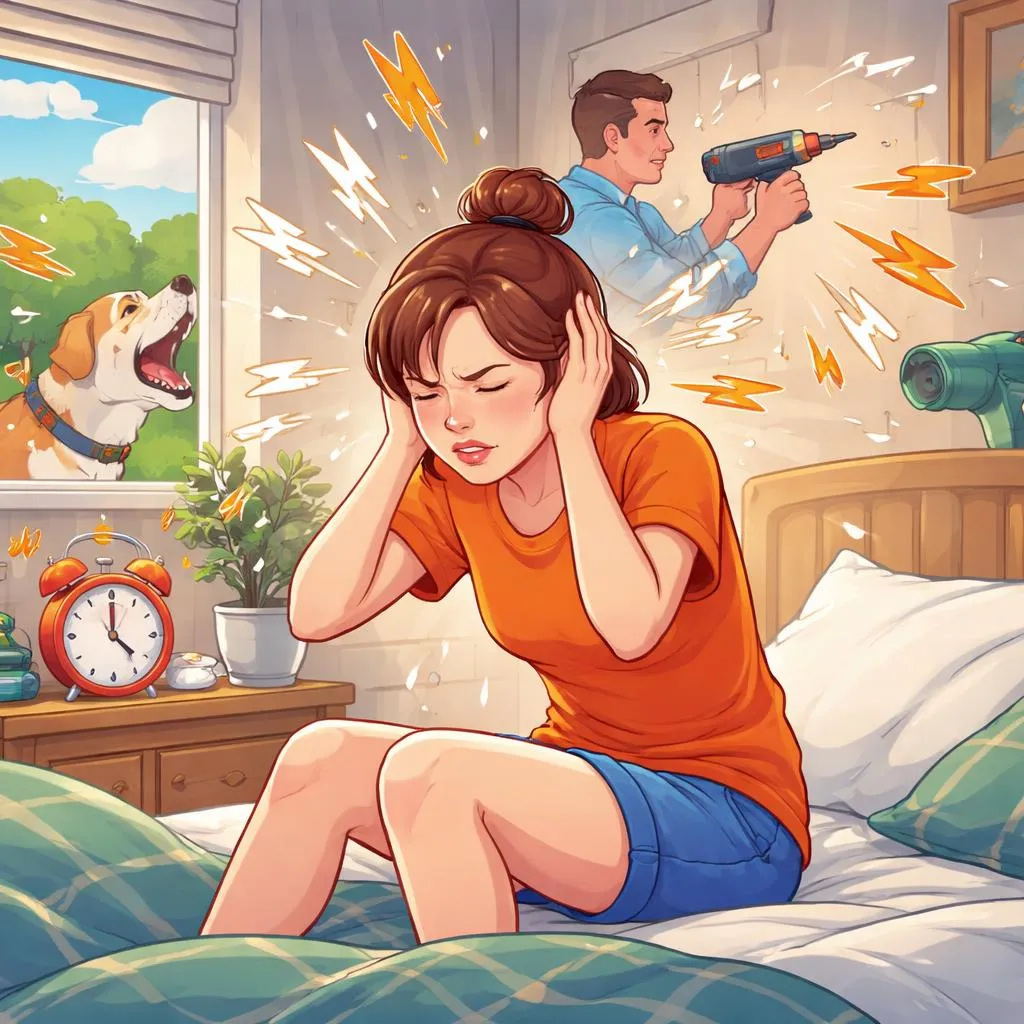

You try to read. Someone plays loud music. You lose your focus.
You are disturbed. Today we learn four words.
“Disturb,” “disturbance,” “disturbing,” and “disturbed.”
Each word shares the idea of interrupting or upsetting. Each does a different job.
Parents and children can learn these words together. They help with respect.
What Does “Same Word, Different Forms” Mean?
One action takes different shapes. The action here is interrupting calm or peace.
“Disturb” is a verb. “Please do not disturb the baby.” Action.
“Disturbance” is a noun. “A loud disturbance woke the neighbors.” Event.
“Disturbing” is an adjective. “A disturbing movie gives bad dreams.” Describes.
“Disturbed” is an adjective or past verb. “He was disturbed by the news.” Describes. “The cat disturbed the curtain.” Past action.
Same root. Different endings. Different jobs. The interruption stays.
Personal Pronouns Change Their Form
Pronouns change for grammar. “I” becomes “me.” “We” becomes “us.”
Our words change for role and time. “I disturb the quiet.” Present.
“The disturbance was brief.” Noun. “That image is disturbing.” Describes.
“She felt disturbed.” Describes.
Pronouns help us speak faster. Word families help us talk about noise and feelings.
When children know these four words, they ask for quiet politely.
From Verb to Noun to Adjective to Adverb – One Family, Many Words
“Disturb” is a verb. “Do not disturb the books on the shelf.” Action.
“Disturbance” is a noun. “A disturbance in the library was a loud laugh.” Event.
“Disturbing” is an adjective. “A disturbing trend is rising prices.” Worrying.
“Disturbed” is an adjective. “She was disturbed by the violent scene.” Upset.
“Disturbed” is also a past verb. “The earthquake disturbed the ground.” Past action.
We have adverbs “disturbingly” and “disturbedly.” “He spoke disturbingly.” Not in keywords.
Five members. Very useful for safety and emotions.
One Root, Many Roles – How Words Grow from Actions to Qualities
The root “disturb” comes from Latin “disturbare.” “Dis-” means apart. “Turbare” means to throw into disorder.
To throw apart.
From that root, we add “-ance” to make a noun. “Disturbance” means the act of disturbing.
We add “-ing” to make an adjective meaning “causing disturbance.”
We add “-ed” to make an adjective meaning “feeling upset” or a past verb.
Help your child see this pattern. Disturb is the action. Disturbance is the event. Disturbing describes the cause. Disturbed describes the feeling.
Same Meaning, Different Jobs – Is It a Verb or a Noun?
Look at “disturb.” Always a verb. “Please do not disturb the sleeping dog.” Action.
“Disturbance” is always a noun. “The disturbance was a falling chair.”
“Disturbing” is always an adjective. “A disturbing noise kept me awake.”
“Disturbed” can be an adjective or past verb. “He looked disturbed.” Adjective. “The wind disturbed the leaves.” Past verb.
Teach children to look at the endings. “-ance” noun. “-ing” adjective. “-ed” adjective or past verb.
“Disturb” alone is the present verb.
Adjectives and Adverbs – When Do We Add -ly?
We add “-ly” to “disturbing” to make “disturbingly.” This is an adverb.
“The movie was disturbingly violent.” Means in a disturbing way.
We add “-ly” to “disturbed” to make “disturbedly.” “He sighed disturbedly.” Rare.
For children, skip these adverbs. Focus on the main words.
Watch Out for Tricky Spelling Changes (Double Letters, y to i, and More)
Spelling here is very regular. No double letters. No y to i changes.
“Disturb” adds “-ance” to make “disturbance.” Just add.
“Disturb” adds “-ing” to make “disturbing.” Just add.
“Disturb” adds “-ed” to make “disturbed.” Just add.
No dropping. No vowel changes. Very clean.
Practice with your child. Write “disturb.” Add “ance.” You get “disturbance.” Add “ing.” You get “disturbing.” Add “ed.” You get “disturbed.”
No tricks.
Let’s Practice – Can You Choose the Right Form?
Try these sentences. Fill in the blank with disturb, disturbance, disturbing, or disturbed.
Please do not _____ the puzzle pieces; they are in order. (action verb)
A loud _____ came from the street outside. (noun)
The news was so _____ that I could not sleep. (adjective)
She felt _____ by the scary story. (adjective)
The baby’s cry _____ the peaceful night. (past tense verb)
His behavior was _____ to everyone in the room. (adjective)
The _____ lasted only a few seconds. (noun)
I am _____ by the graffiti on the wall. (adjective)
Answers: 1 disturb, 2 disturbance, 3 disturbing, 4 disturbed, 5 disturbed, 6 disturbing, 7 disturbance, 8 disturbed.
Number 4 and 8 use “disturbed” as an adjective describing a person’s feeling.
Number 3 and 6 use “disturbing” as an adjective describing the cause.
Tips for Parents – Help Your Child Learn Word Families in a Fun Way
Point to a “do not disturb” sign. “This means be quiet.”
Name a disturbance. “A dog barking is a disturbance.”
Call a scary movie disturbing. “That show is too disturbing for bedtime.”
Say how you feel. “I feel disturbed when I hear loud yelling.”
Play a game. You make a soft noise. Your child says “This is not disturbing.” Then you clap loudly. “This is disturbing!”
Draw a line of calm water. Then draw a rock making ripples. “Disturbance.”
Read a book about peace. “The Quiet Book” by Deborah Underwood.
Do not correct every mistake. If your child says “disturbing” for “disturbed,” gently say “The thing is disturbing. You feel disturbed.”
Celebrate when your child uses “disturbance” as a noun. That word is exact.
Explain that being disturbed can mean upset or interrupted. “A disturbed sleep means you woke up.”
Tomorrow you might disturb a spider web by accident. You will hear a disturbance at the mall. You will find a disturbing scene in a cartoon. You will feel disturbed by a loud crash.
Your child might say “You disturbed my game!” You will say sorry and wait.
Keep respecting quiet. Keep naming disturbances. Keep noting disturbing things. Keep talking about feeling disturbed.
Your child will grow in language and in respect for peace. Disturbance happens. Words help us fix it.