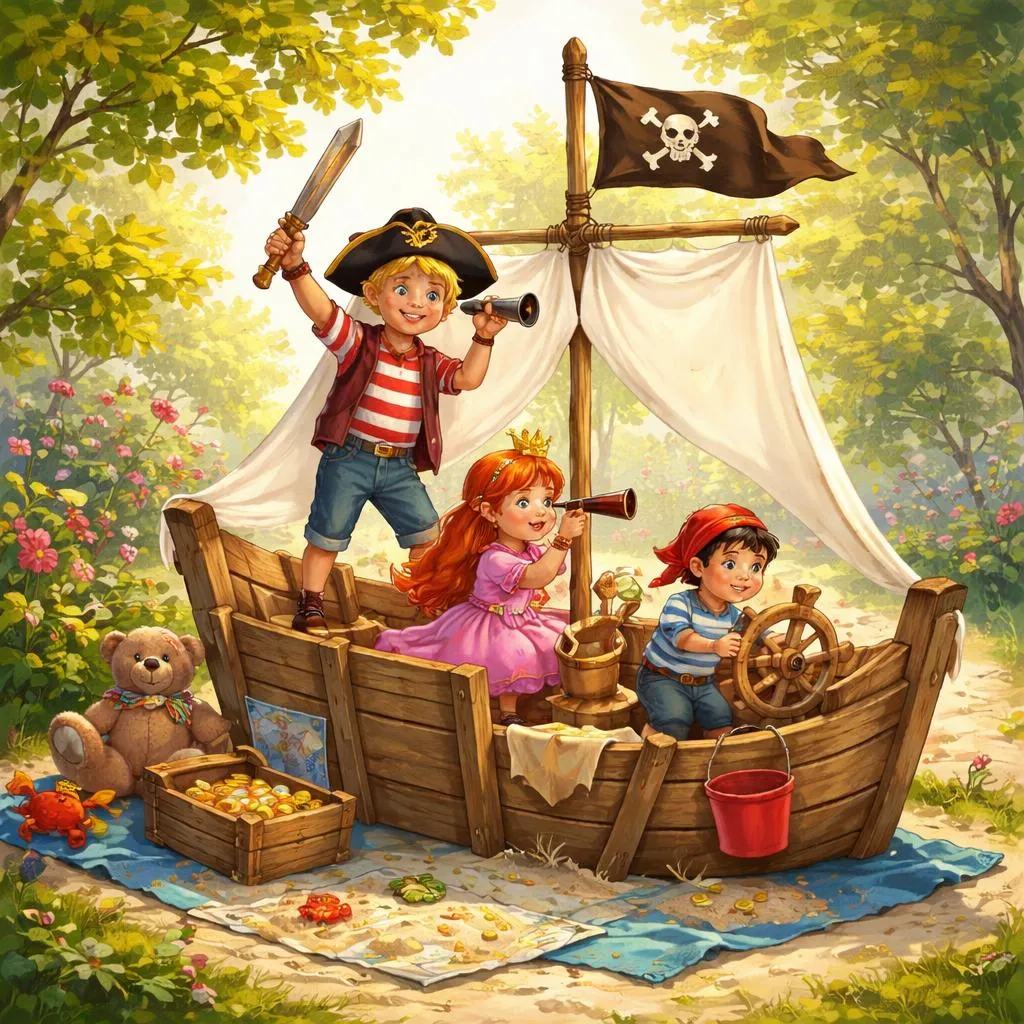

We built a ship upon the stairs All made of the back-bedroom chairs, And filled it full of sofa pillows To go a-sailing on the billows. We took a saw and several nails, And water in the nursery pails; And Tom said, “Let us also take An apple and a slice of cake;”— Which was enough for Tom and me To go a-sailing on, till tea. We sailed along for days and days, And had the very best of plays; But Tom fell out and hurt his knee, So there was no one left but me.
Story Background and Author Introduction
This charming poem, often enjoyed by children, was written by Robert Louis Stevenson, a famous Scottish author best known for his adventure stories and poetry. Stevenson had a deep love for children’s literature and created many works that spark imagination and joy. This particular poem is from his collection A Child’s Garden of Verses, which was published in 1885. The collection captures the innocence, creativity, and wonder of childhood through simple yet vivid language.
Detailed Story Interpretation and Meaning
The poem describes two children, Tom and the narrator, who use their imagination to turn ordinary household items into a grand sailing ship. They build their ship on the stairs using chairs and cushions, and prepare for their imaginary voyage with everyday objects like apples and cake. Their adventure is full of joy and playfulness until Tom gets hurt, leaving the narrator alone.
At its heart, this poem celebrates the power of imagination and creativity in children. It shows how ordinary things can become extraordinary through play and how children create their own worlds of adventure. The poem also gently touches on the reality of accidents and the feeling of being alone, which are part of growing up.
What Children and Students Can Learn
-
Imagination and Creativity: The poem encourages children to use their imagination to transform their environment and create stories. This skill is important for problem-solving and innovation later in life.
-
Resourcefulness: Tom and the narrator use simple household items to build their ship, showing that creativity does not require expensive toys or materials.
-
Friendship and Cooperation: The story highlights the joy of sharing adventures with friends and working together to create something fun.
-
Resilience: When Tom gets hurt and leaves, the narrator continues alone, teaching children about coping with setbacks and being brave.
Applying These Lessons in Daily Life
-
In Learning: Children can be encouraged to use creative play to explore new concepts, such as building models or acting out stories to better understand subjects.
-
In Social Settings: The poem’s emphasis on friendship and teamwork can inspire children to collaborate and share with peers, building social skills and empathy.
-
In Personal Growth: Understanding that accidents and challenges happen, like Tom’s injury, helps children develop resilience and problem-solving skills. They learn to adapt and continue even when things don’t go as planned.
Cultivating Positive Attitudes and Behaviors
Parents and educators can nurture the positive spirit found in this poem by:
-
Encouraging imaginative play regularly, providing children with time and space to create their own adventures.
-
Praising efforts in cooperation and kindness during group activities.
-
Helping children talk about feelings when things don’t go as expected, fostering emotional intelligence.
-
Teaching safety awareness gently, so children can enjoy play while minimizing risks.
Conclusion
This simple yet profound poem by Robert Louis Stevenson offers much more than a playful story. It opens a window into the world of childhood imagination, friendship, and resilience. By exploring and reflecting on these themes, children and students can develop important life skills that enrich their learning, social interactions, and personal growth. Encouraging these qualities through stories like this helps build a foundation for confident, creative, and compassionate individuals.