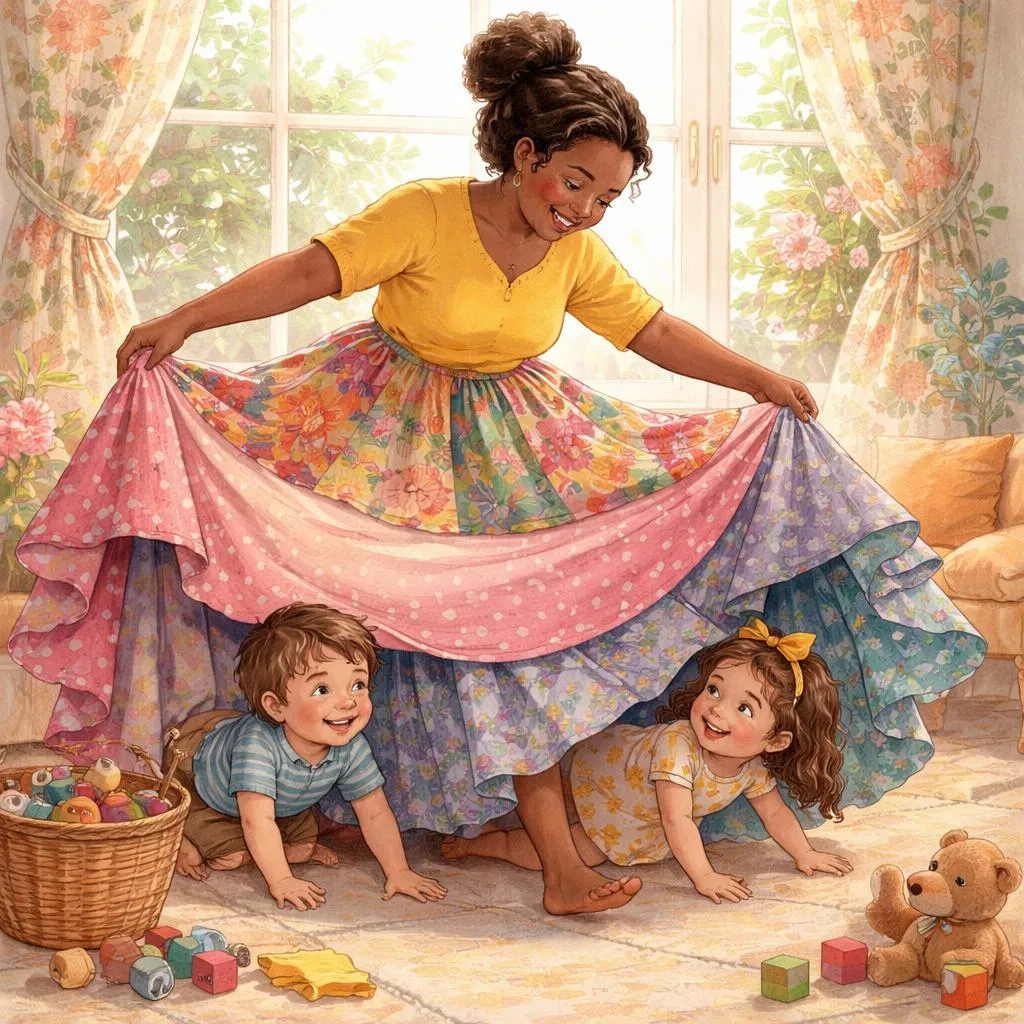

Whenever Auntie moves around, Her dresses make a curious sound, They trail behind her up the floor, And trundle after through the door.
Story Background and Author Introduction
This charming little verse captures a playful and vivid image of Auntie moving gracefully, her dresses trailing behind her and creating a curious sound. It comes from a tradition of children’s poetry and storytelling that delights in simple, sensory details that spark imagination. Although the specific author of this short poem is not widely known, it reflects the style of classic children’s poets like A.A. Milne or Edward Lear, who excelled at creating whimsical, rhythmic verses that appeal to young readers.
Detailed Story Interpretation and Meaning
At first glance, the poem is a delightful snapshot of Auntie’s movement, emphasizing the sounds and sights that accompany her. The “curious sound” made by her dresses trailing behind her invites children to imagine the texture and rustling noise of fabric as it brushes the floor. The words “trail behind her up the floor” and “trundle after through the door” create a sense of motion and continuity, painting a lively picture of Auntie’s presence in the home.
Beyond the literal description, this poem can be seen as celebrating the small, often unnoticed details of everyday life. It encourages children to pay attention to the world around them, to notice sounds, movements, and rhythms that make life interesting. The poem’s gentle rhythm and repetition also help young readers develop phonemic awareness and an appreciation for language’s musical qualities.
Knowledge and Lessons for Children and Students
-
Sensory Awareness: Children learn to use their senses to explore their environment. The poem encourages them to listen carefully and imagine sounds, helping develop auditory skills and attention to detail.
-
Imagination and Creativity: By picturing Auntie’s dresses trailing and making sounds, children practice visualizing scenes and creating mental images, which enhances creative thinking.
-
Language Development: The rhythmic and rhyming structure of the poem supports early literacy skills, including phonics, rhyme recognition, and vocabulary building.
-
Observation Skills: The poem teaches children to observe ordinary moments with curiosity and wonder, fostering mindfulness and appreciation for daily life.
Application in Life, Learning, and Social Settings
-
In Daily Life: Children can be encouraged to notice and describe sounds and movements around them, such as the rustling of leaves, footsteps, or the way clothes move when they walk. This practice nurtures mindfulness and a deeper connection to their surroundings.
-
In Learning: Teachers can use this poem to introduce poetry reading and writing, helping students experiment with rhyme, rhythm, and sensory description. It can also serve as a prompt for creative writing or drawing activities.
-
In Social Situations: The poem’s focus on Auntie, a family member, can open discussions about family roles, relationships, and the small ways people express themselves. Children can share stories about their own relatives, fostering communication and social bonding.
Cultivating Positive Traits and Behaviors
-
Curiosity: Encouraging children to be curious about everyday sounds and sights helps develop a lifelong love of learning.
-
Attention to Detail: Learning to notice small details supports academic skills like reading comprehension and scientific observation.
-
Appreciation of Art and Language: Exposure to poetic language nurtures an appreciation for literature and creative expression.
-
Mindfulness and Presence: The poem’s gentle focus on a simple moment teaches children to be present and find joy in the ordinary.
How to Foster These Qualities
-
Read Aloud and Discuss: Regularly read poems and stories aloud, inviting children to describe what they hear and see.
-
Creative Activities: Encourage drawing, acting out, or writing about sensory experiences inspired by poems like this one.
-
Mindfulness Exercises: Practice simple mindfulness activities that focus on listening and observing, helping children develop calm attention.
-
Family Story Sharing: Create opportunities for children to share stories about family members or people they know, building empathy and social skills.
By engaging with this poem, children and students from ages 3 to 18 can develop a richer sensory experience of the world, enhance their language skills, and cultivate positive social and emotional traits that benefit their growth in many areas of life.