
Do you love to make sounds? Do you tap a rhythm on the table with your fingers, or hum a tune while you play? Maybe you've shaken a rattle, banged a drum, or plucked the string of a guitar. Making music is a magical way to share feelings without using words. In India, a land with a deep and beautiful ocean of music, there’s a joyful song that celebrates making your own sounds. Let’s listen to the Hindi Song: The Little Musician (संगीतकार).
About the Song
Here is a musical verse from this popular song in Hindi and English:
मैं एक छोटा संगीतकार, मेरे पास ताल और सुर
(Main ek chhota sangeetkaar, mere paas taal aur sur)
I am a little musician, I have rhythm and tune
मैं बजाऊँगा ढोलक, बनाऊँगा मधुर संगीत
(Main bajaunga dholak, banaunga madhur sangeet)
I will play the dholak, I will make sweet music
सितार और बांसुरी, सब मिलकर बजाएंगे
(Sitar aur bansuri, sab milkar bajayenge)
Sitar and flute, all will play together
आओ सब गाएं, यह खुशी का गान
(Aao sab gaaye, yeh khushi ka gaan)
Come everyone sing, this song of happiness
This song’s original name uses the Hindi word “संगीतकार” (Sangeetkaar), which means “musician.” It is a popular modern Indian children’s song. The song is sung from the happy perspective of a child who is discovering the joy of being a musician. The music itself is lively and full of different instrumental sounds. The Hindi Song: The Little Musician (संगीतकार) is a celebration of rhythm, melody, and the wonderful noise that happens when friends make music together.
What the Song is About
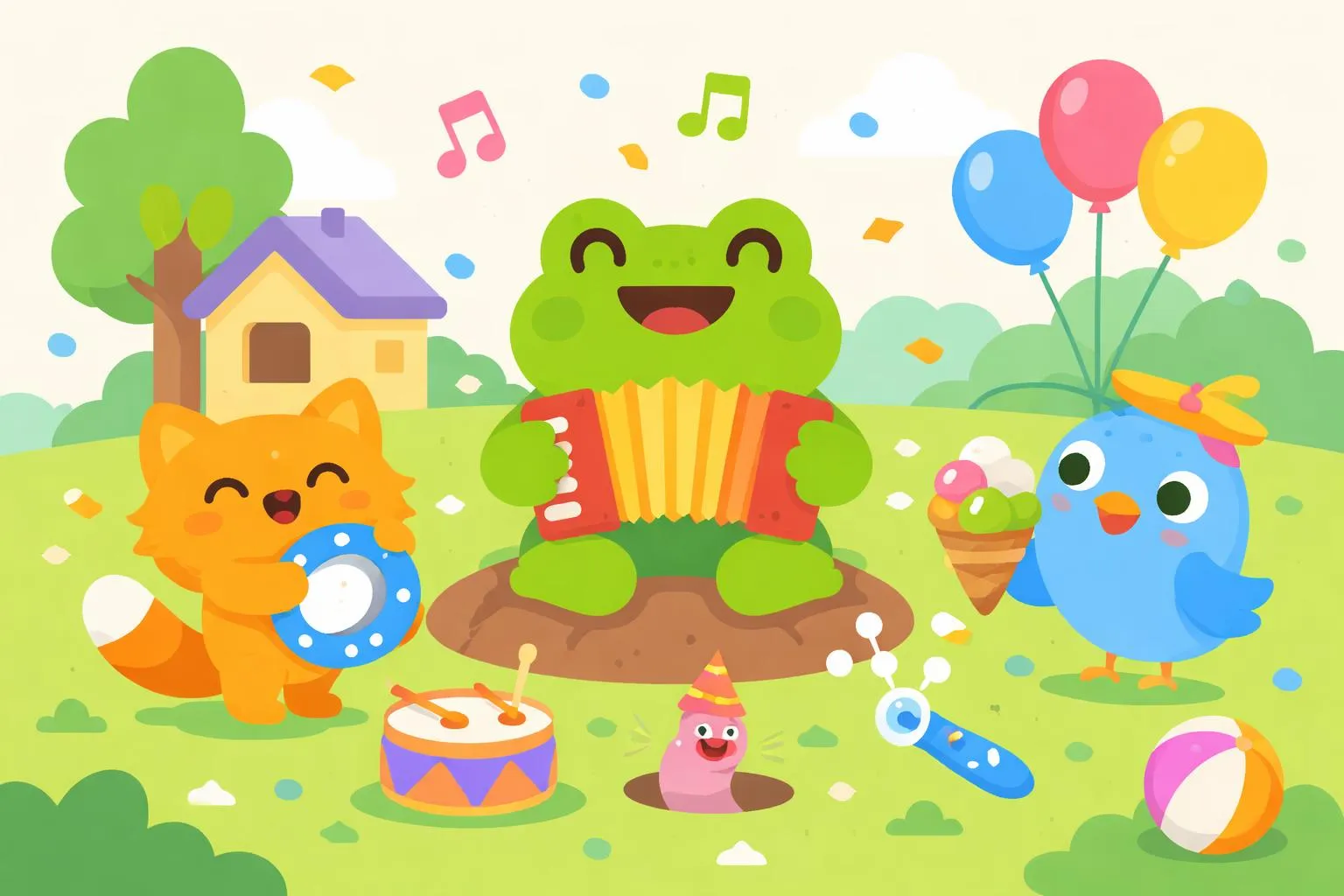
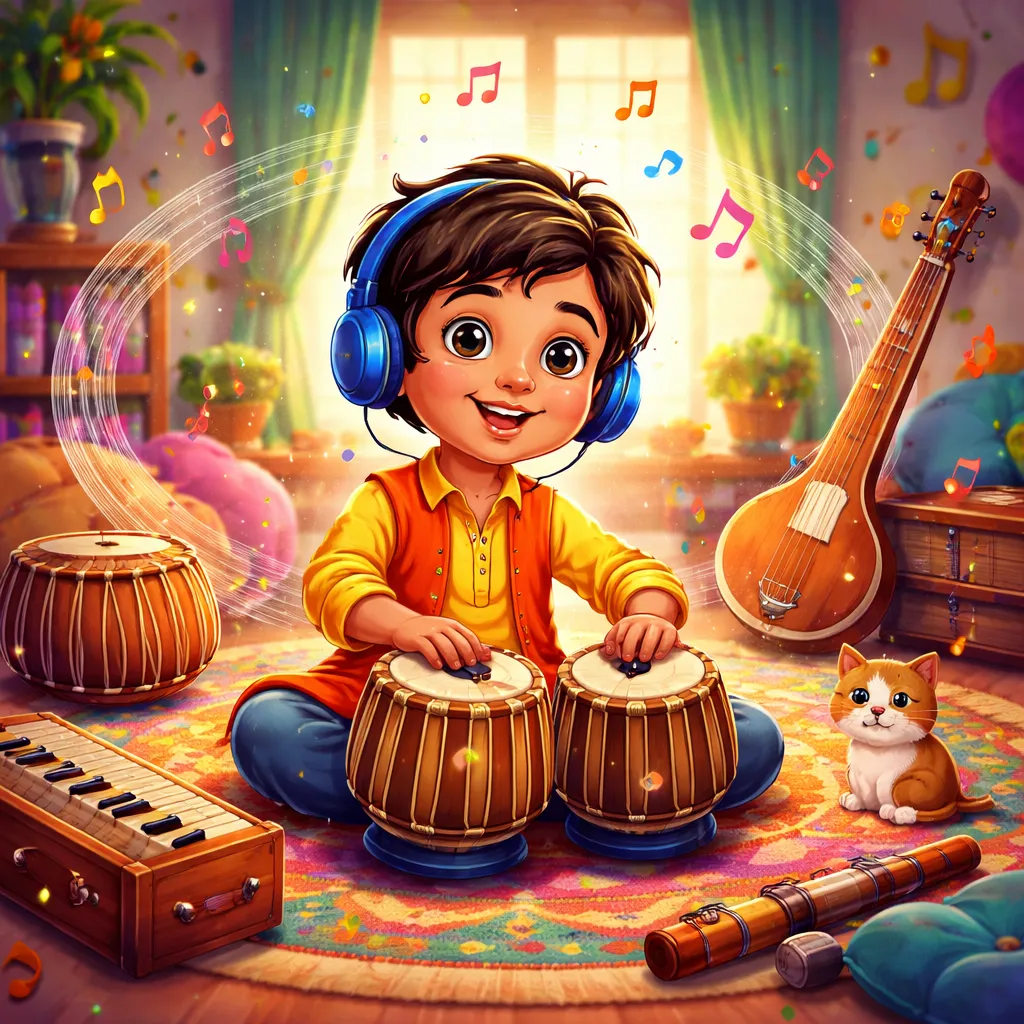
The song is an invitation to a musical party. First, the little musician introduces their two most important tools: rhythm (taal) and tune (sur). They pick up a dholak, a small Indian drum, and promise, “I will make sweet music.” We can hear the happy dub-dub sound of the drum. But a musician loves company! The song invites more instruments: the stringed sitar with its twangy sound and the bamboo flute (bansuri) with its soft, airy notes. “All will play together,” the song says. Finally, the musician calls everyone to join in, not just with instruments but with voices: “Come everyone sing, this song of happiness.” The song shows that music starts with one person but grows into a shared celebration that fills everyone with joy.
Who Made It & Its Story
This song comes from the heart of Indian children’s culture, where music is a part of daily life and grand festivals. While the specific creators aren’t widely listed, the song reflects India’s immense musical heritage, from classical ragas to Bollywood film songs. A day filled with public music and celebration is Republic Day (January 26th), when parades feature marching bands and cultural performances. The Hindi Song: The Little Musician (संगीतकार) makes that rich tradition accessible. It is popular for three harmonic reasons. First, it empowers every child to see themselves as a music-maker, not just a listener. Second, it introduces names of real Indian instruments in a fun, memorable way. Third, its tune is catchy and encourages movement and participation, perfectly capturing the collaborative spirit of music.
When to Sing It
You can sing this song with friends while playing with toy instruments or making sounds with pots and spoons, creating your own band. It’s perfect to hum during a family car ride, turning the journey into a musical adventure where everyone can contribute a sound. You could also sing it at school before a music class or a group activity, to get everyone excited about creating something together.
The Hindi Song: The Little Musician (संगीतकार) starts our musical journey. But to play in harmony, we need to learn the notes. This song is our sheet music for learning. It teaches us the language of music, how to talk about activities we enjoy, and the cultural importance of harmony and celebration. Let’s tune our instruments and explore the lessons in this melody.
What Children Can Learn
Vocabulary
This song introduces us to words for music, instruments, and collaboration.
Melody: A sequence of musical notes that is satisfying to listen to; the tune of a song. You can hum a melody.
Harmony: The combination of different musical notes played or sung at the same time to produce a pleasing sound. Singing together creates harmony.
Tempo: The speed of a piece of music. A happy song often has a fast tempo.
Ensemble: A group of musicians, actors, or dancers who perform together. The little musician wants to form an ensemble.
Improvisation: Creating music spontaneously, without preparation. Jamming and making up sounds is improvisation.
Celebration: A joyful occasion for a special event. Music is a big part of any celebration.
Language Skills
This song is a great way to learn about using the -ing Form (Gerund) as the Object of a Verb. We use this to talk about activities we enjoy or actions we are doing.
What Is It?: Think of the -ing form (like playing, singing, making) as the “activity name.” When it comes after verbs like “love,” “like,” or “enjoy,” it tells us what activity we are talking about. “I enjoy playing music.”
Finding the Secret: Look for a verb (like love, enjoy, like, stop, finish) followed by a word ending in “-ing.” The -ing word is the activity. Ask: “What is the person enjoying or doing? The word that answers ends in -ing.”
Using It:
◦   Formula: [Subject] + [verb like enjoy/love] + [verb-ing].

◦   Examples: “I love singing.” “She enjoys playing the drum.” “We like making music together.”

◦   In the spirit of the song: “The little musician enjoys playing the dholak.” “We all love singing the song of happiness.”
Sounds & Rhythm Fun
Listen to the collaborative rhythm! The Hindi Song: The Little Musician (संगीतकार) has a clear, infectious beat that makes you want to clap or dance. The melody often incorporates sounds that mimic Indian instruments. The rhythm is usually steady and inviting, encouraging everyone to join in at the right time. This clear, participatory rhythm helps you feel the “taal” (rhythm) and makes the names of the instruments and the act of coming together easy and fun to remember. You can use this same inviting, rhythmic pattern to make up a song about any group activity, like playing a game or cleaning up together.
Culture & Big Ideas
This song is a joyful echo of India’s living musical tradition. A fantastic example is a wedding procession (baraat), where a full band with drums and horns leads a joyful, dancing crowd—it’s all about community music. The Hindi Song: The Little Musician (संगीतकार) teaches three beautiful ideas. First, Music is a Universal Language: It allows people to share feelings and connect, even if they don’t speak the same words. Second, Collaboration Creates Beauty: One instrument sounds nice, but many instruments playing in harmony create something much more powerful and beautiful. Third, Joy in Participation: You don’t have to be a perfect singer or player to be a musician. The act of joining in, of adding your voice or clap, is what makes the music complete.
Values & Imagination
Imagine you are the little musician. You start a beat. One friend adds a tune. Another friend starts to hum. How does the sound change and grow? This song teaches you the value of listening to others as you play, of working together to create something bigger than yourself. It shows that making music is a powerful way to express happiness and bring people together. A simple idea: The next time you hear music, try to find the rhythm. Tap your foot to it. Then, try to hear a different instrument in the song. You are practicing active listening, the first skill of a good musician.
Your Core Takeaways
The Hindi Song: The Little Musician (संगीतकार) is a joyful lesson in collaboration, expression, and cultural sound. You learned music words like “melody,” “harmony,” and “tempo.” You discovered how to use the -ing form (like “playing” or “singing”) to talk about activities you enjoy. You moved to the song’s infectious, participatory rhythm. You also connected the music to Indian celebrations where community performance is key, like a wedding procession. Most importantly, the song teaches that everyone can be a musician, that making music with others is a powerful form of friendship, and that adding your own voice—however small—makes the song of the world more complete and beautiful.
Your Practice Missions
- Be a “Found Sound” Musician. For five minutes, explore a room (with a grown-up’s permission). Find three objects that are not instruments but can make interesting sounds when you tap, shake, or scrape them (like a box, a set of keys, a pan). Say, “I enjoy making sounds with this!” Create a short rhythm using your three “instruments.”
- Host a “Harmony Minute.” Gather two or three family members or stuffed animals. Choose a simple, well-known song (like “Happy Birthday” or “Twinkle Twinkle”). Sing it once through normally. Then, sing it again, but this time, one person hums the melody, one person sings the words, and one person claps a steady beat. You have just created a simple harmony! Talk about how the different parts sounded together.