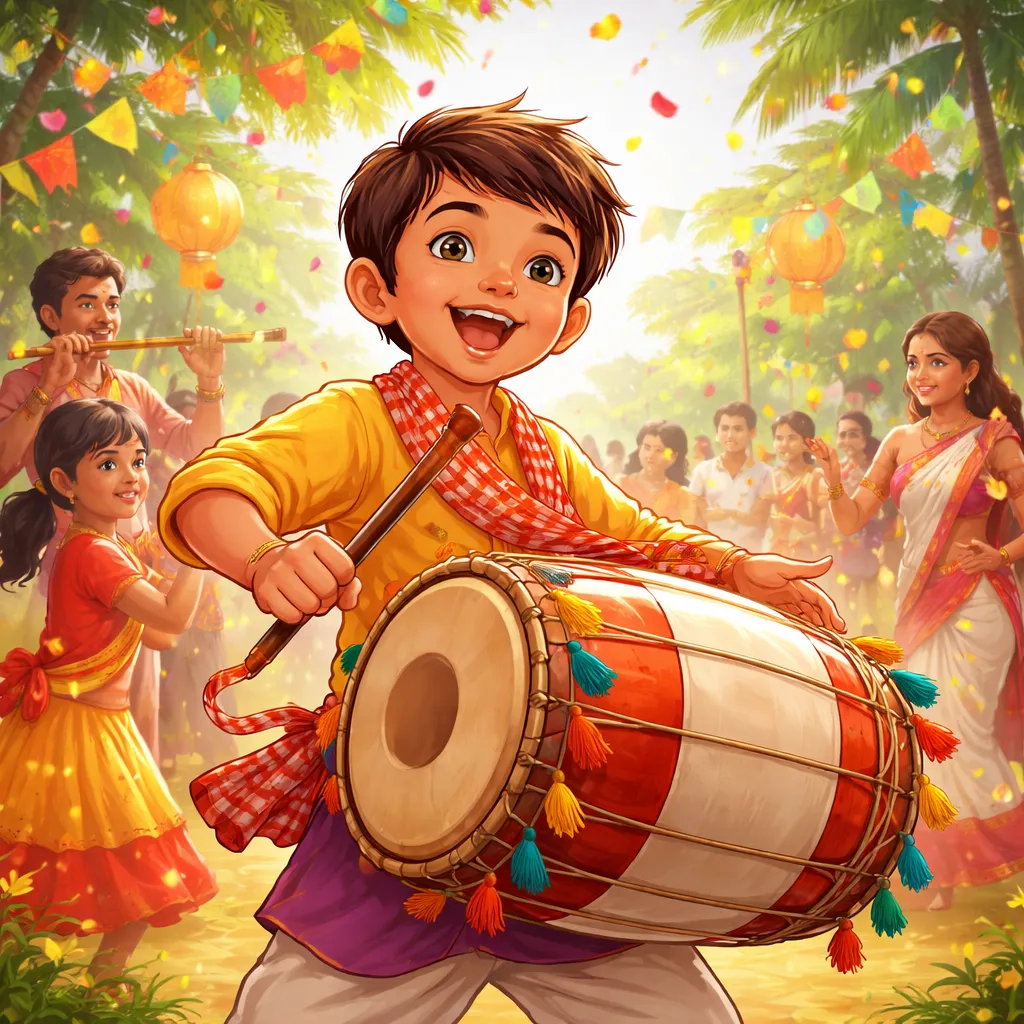

Have you ever tapped a rhythm on a table with your fingers? Or maybe you’ve heard the booming sound of a big drum in a parade or on TV? That deep, exciting sound can make your heart beat faster and your feet want to move. In Bangladesh and West Bengal, a land full of music and color, there is a joyful song that celebrates that very sound. Let’s listen to the Bengali Song: The Little Drum (ঢোল).
About the Song
Here is a rhythmic verse from this popular song in Bengali and English:
ঢোল, ঢোল, ছোট্ট ঢোল
(Dhol, dhol, chhoto dhol)
Drum, drum, little drum
তোমার শব্দে নাচে সবাই
(Tomar shobde nache shobai)
With your sound, everyone dances
বাদক তোমায় বাজায়, তালে তালে
(Badok tomay bajay, tale tale)
The drummer plays you, in rhythm
উঠে শব্দ দুম দুম
(Uthe shobdo dum dum)
The sound rises, dum dum
This song’s original name is “ঢোল” (Dhol), which is the Bengali word for a traditional double-headed drum. It is a beloved and energetic Bengali children’s song. The song is all about the power of the drum’s sound. The music is strong, rhythmic, and makes you want to clap or stomp. The Bengali Song: The Little Drum (ঢোল) is a musical celebration of how a simple instrument can bring people together and fill the air with excitement.
What the Song is About
The song is a shout of praise for the drum. First, we call out to it: “Drum, drum, little drum.” We notice its amazing effect: “With your sound, everyone dances.” The deep, booming noise of the dhol makes it impossible to stand still. The song then shows us the drummer, the person who makes the magic happen: “The drummer plays you, in rhythm.” We can see their hands moving fast, hitting the two heads of the drum. And we hear the sound it makes: “The sound rises, dum dum.” The whole song is about the energy that flows from the drummer, to the drum, to the people listening, creating a circle of music and movement.
Who Made It & Its Story
This song is a traditional Bengali folk song, born from the culture’s deep love for music and rhythm. The original creator is unknown, as it has been sung by children for generations. The dhol is a very important instrument in Bengali folk music and is central to many festivals and celebrations. The Bengali Song: The Little Drum (ঢোল) captures that importance in a way children can feel. It is popular for three powerful reasons. First, it is incredibly energetic and fun, encouraging children to move and make noise. Second, it teaches about a key part of their musical heritage in a simple, accessible way. Third, its rhythm is strong and easy to follow, making it perfect for group activities and performances.
When to Sing It
You can sing this song while tapping out a rhythm on your knees or a pillow, pretending it’s your own little drum. It’s perfect to chant during a pretend parade around your home, marching to the beat. You could also sing it with friends, taking turns being the drummer and the dancers.
The Bengali Song: The Little Drum (ঢোল) teaches us about the joy of rhythm. But to be a good musician, you need to know more than just the beat. This song is our first music lesson. It introduces us to sound words, shows us how to give clear instructions, and shares the cultural importance of the drum. Let’s pick up our imaginary drumsticks and start learning.
What Children Can Learn
Vocabulary
This song helps us learn words for music, sound, and performance.
Percussion: Musical instruments that you play by hitting, shaking, or scraping. A drum is a percussion instrument.
Beat: The main rhythm or pulse in music. You can clap to the beat of a song.
Tempo: The speed of the music. A fast drum has a quick tempo.
Echo: A sound that is repeated because it bounces off a surface. You can make an echo of the drum sound.
Ensemble: A group of musicians who play together. A drummer might play in an ensemble.
Celebration: A joyful gathering for a special event. Drums are often played at a celebration.
Language Skills
This song is a great example of using Exclamatory Sentences to show strong feeling. We use exclamations to express excitement, surprise, or joy, just like the excitement the drum brings.
What Is It?: Think of exclamatory sentences as your “Wow!” sentences. They show strong emotion and end with an exclamation mark (!).
Finding the Secret: Look for sentences that express a lot of feeling and end with an exclamation mark. They often start with “How” or “What,” or are short phrases. Ask: “Is this sentence showing a lot of excitement or surprise?”
Using It:
◦   Formula: They can be short phrases or sentences that convey emotion. [Exciting phrase]!

◦   Examples: “What a sound!” “How amazing!” “Play the drum!”

◦   The feeling of the song is exclamatory: “With your sound, everyone dances!” This shows the wonderful effect of the drum.
Sounds & Rhythm Fun
Listen to the booming rhythm! The Bengali Song: The Little Drum (ঢোল) has a strong, steady, and repetitive beat. It sounds like the deep dum dum of a real drum. The words and melody are designed to mimic the sound of drumming. This powerful, clear rhythm is easy to follow and makes the song exciting to sing. It helps you remember the connection between the instrument and the joy it creates. You can use this same strong, steady beat to create a rhythm for any action, like walking, clapping, or even cleaning up toys.
Culture & Big Ideas
This song connects to the heart of Bengali celebrations. The dhol is a star instrument during Pohela Boishakh (Bengali New Year) processions and Durga Puja festivals. Its powerful sound leads dances, parades, and prayers, filling the air with collective energy. The Bengali Song: The Little Drum (ঢোল) teaches three important ideas. First, Music Unites People: One drum’s sound can make a whole crowd move together, showing how rhythm connects us. Second, The Musician’s Role: The drummer is not just making noise; they are leading and setting the pace for everyone else, a job that requires skill and practice. Third, Joyful Noise: There is a time for quiet and a time for loud, happy sounds that express celebration and community spirit.
Values & Imagination
Imagine you are the drummer. How do your hands feel hitting the drum? How do you know when to play fast or slow? Now imagine you are the drum. What does it feel like to make such a powerful sound? This song teaches you about the responsibility of leading a rhythm and the joy of contributing to a group’s happiness. It shows that practice makes perfect, even in music. A simple idea: Find a box or an empty container. Gently tap different rhythms on it. Try a slow beat, then a fast one. You are exploring tempo, just like a real drummer.
Your Core Takeaways
The Bengali Song: The Little Drum (ঢোল) is a powerful lesson in rhythm, community, and cultural celebration. You learned music words like “percussion,” “beat,” and “tempo.” You discovered how to use exclamatory sentences to show strong, happy feelings. You moved to the song’s strong, booming rhythm. You also connected the drum to major Bengali festivals like Pohela Boishakh. Most importantly, the song teaches that music has the power to bring people together, that creating rhythm is a joyful skill, and that every voice—or drumbeat—adds to the celebration.
Your Practice Missions
- Be an “Exclamation” Conductor. With a family member, take turns being the drummer and the conductor. The conductor points to the drummer and shouts an exclamation like “Play a loud beat!” or “What a great rhythm!” The drummer then plays that rhythm on a table or a pot. Switch roles. This practices exclamatory language and rhythm.
- Create a “Festival Parade” at Home. Gather a few household items that can make noise (like spoons on pans, shaking rice in a box). Choose one person to be the main “dhol” drummer, setting a steady beat. Everyone else follows in a parade around the house, playing their instruments and singing the song. This shows how one drum leads a whole celebration.