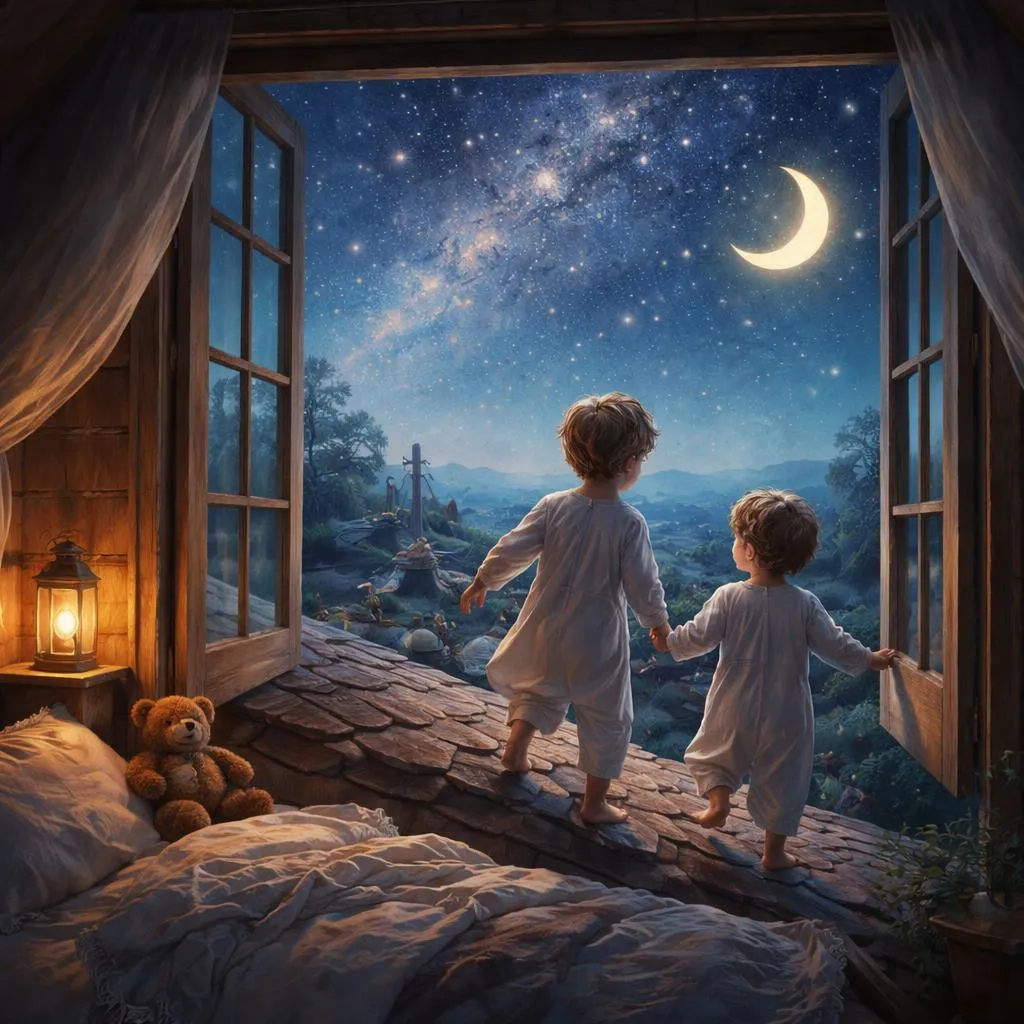

The lights from the parlour and kitchen shone out Through the blinds and the windows and bars; And high overhead and all moving about, There were thousands of millions of stars. There ne’er were such thousands of leaves on a tree, Nor of people in church or the Park, As the crowds of the stars that looked down upon me, And that glittered and winked in the dark. The Dog, and the Plough, and the Hunter, and all, And the star of the sailor, and Mars, These shown in the sky, and the pail by the wall Would be half full of water and stars. They saw me at last, and they chased me with cries, And they soon had me packed into bed; But the glory kept shining and bright in my eyes, And the stars going round in my head.
Story Background and Author Introduction
This beautiful poem captures a child's magical experience of looking at the night sky filled with countless stars. The imagery of stars twinkling above, the constellations like the Dog, the Plough, and the Hunter, and the sailor’s star and Mars, all create a vivid picture of wonder and curiosity about the universe. The poem reflects the timeless fascination children have with the night sky and the mysteries it holds.
The author of this poem is a classic poet known for their ability to evoke deep emotions and vivid imagery through simple yet powerful language. Their work often explores themes of nature, childhood innocence, and the vastness of the universe, encouraging readers to look beyond the ordinary and find magic in everyday moments.
Detailed Interpretation and Meaning
At its core, this poem is about the awe and wonder a child feels when gazing at the stars. The lights from the house contrast with the vast, dark sky filled with millions of stars, symbolizing the smallness of human life compared to the infinite universe. The child imagines the stars as crowds of people, leaves on a tree, and even familiar constellations, showing how imagination transforms the night sky into a lively and enchanting scene.
The poem also touches on the transition from play to bedtime, where the stars “chase” the child to bed, but the magic of the stars remains in the child's eyes and mind. This suggests that the wonder of the universe stays with us, even as we grow tired or face the routines of daily life.
What Children and Students Can Learn
-
Imagination and Curiosity: The poem encourages children to use their imagination to see the world in new and exciting ways. Looking at the stars becomes not just an observation but a story filled with characters and adventures.
-
Appreciation of Nature: It fosters a love and respect for the natural world, inspiring children to explore and learn about the night sky, stars, and constellations.
-
Connection to the Universe: The poem helps children understand their place in the vast universe, promoting a sense of wonder and humility.
-
Transition and Routine: The gentle reminder of bedtime shows the importance of routines, while also validating the feelings and thoughts children have as they wind down.
Applying the Lessons in Daily Life
-
In Learning: Encourage children to ask questions about the stars, planets, and space. Use the poem as a starting point for science lessons about astronomy, helping students connect poetry with real-world knowledge.
-
In Social Settings: Children can share their imaginative stories about the night sky with friends, fostering creativity and communication skills.
-
In Emotional Growth: The poem shows that it’s okay to feel wonder and excitement before sleep. Parents and teachers can use this to create calming bedtime rituals that include storytelling or star-gazing.
-
In Developing Positive Habits: The starry sky “chasing” the child to bed can be a metaphor for how positive habits (like a good night’s sleep) help us grow and shine in our daily lives.
Cultivating Positive Spirit and Behavior
-
Encourage Curiosity: Create opportunities for children to explore and ask questions about the world around them, especially about nature and the universe.
-
Promote Imagination: Use storytelling, drawing, and role-play to help children express their thoughts and feelings inspired by the poem.
-
Foster Respect for Nature: Teach children to observe and care for the environment, understanding that they are part of a larger world.
-
Support Emotional Expression: Help children articulate their feelings about the unknown or the vastness of the universe, turning wonder into confidence rather than fear.
This poem, with its simple yet profound imagery, is a wonderful tool for educators and parents to inspire children’s minds and hearts, nurturing a lifelong love of learning, imagination, and respect for the world around them.