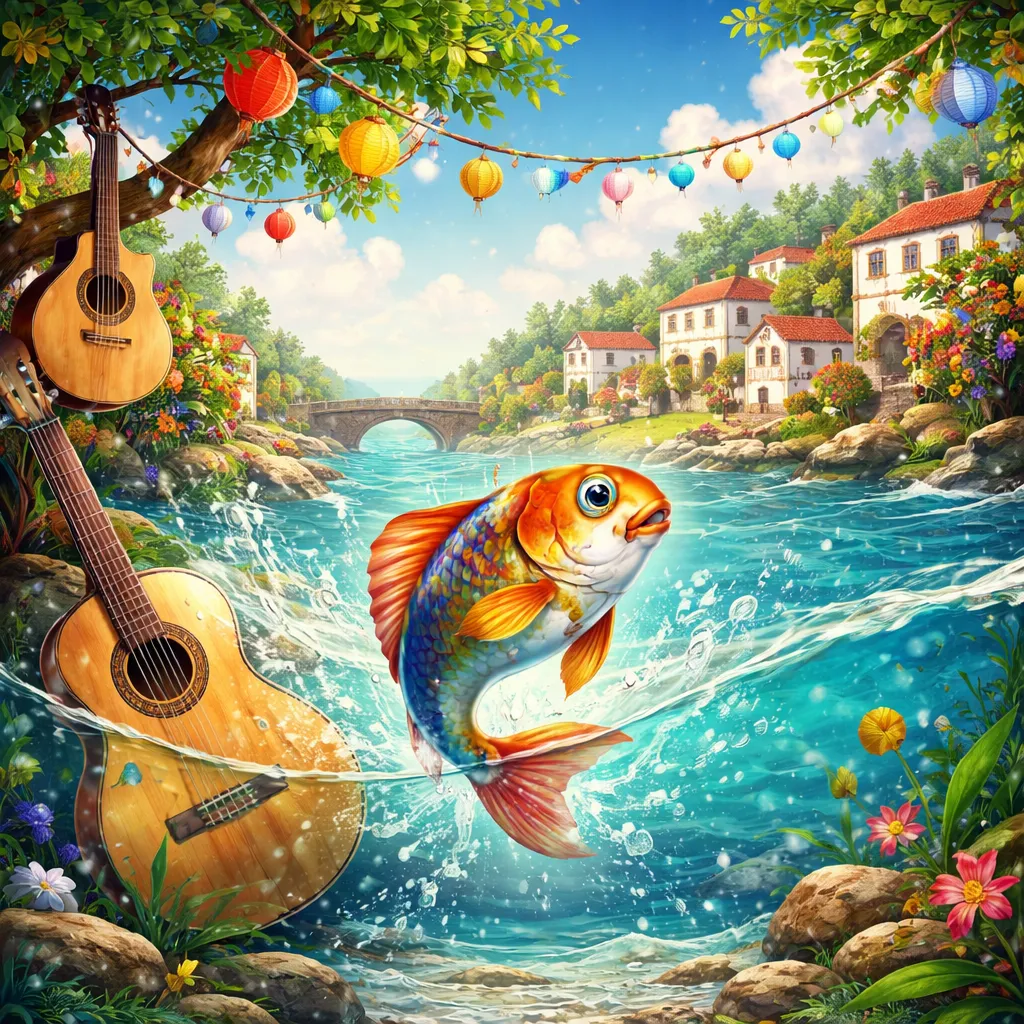

Have you ever watched a fish in a bowl, a pond, or the ocean? How does it move? How does it feel to touch? In Brazil, there is a very gentle, beautiful song that asks a question about the magic of a little fish. It is a song about feeling life, about gentle touch, and the wonder of a living creature. Let’s dip our hands in the water and learn the thoughtful, flowing song “Alive Fish (Peixe Vivo).”
About the Song
Here are the poetic, wondering lyrics of the beloved traditional Brazilian song. This is the classic and most cherished version:
Como pode um peixe vivo
Viver fora da água fria?
Como pode um peixe vivo
Viver fora da água fria?
Como pode um peixe vivo
Viver fora do mar?
Como pode viver
Como pode viver sem água?
Como pode viver
Como pode viver sem água?
Água, água, água fria.
Água, água, água fria.
English Translation:
How can a live fish
Live outside the cold water?
How can a live fish
Live outside the cold water?
How can a live fish
Live outside the sea?
How can it live
How can it live without water?
How can it live
How can it live without water?
Water, water, cold water.
Water, water, cold water.
This is a classic Portuguese-language lullaby and reflective song from Brazil, often sung softly to children. The song is a gentle, wondering question. The phrase “peixe vivo” means “alive fish” or “live fish.” The singer is amazed by the fish’s life and its deep need for water. The song asks the same beautiful question in different ways: “How can something so alive live outside the very thing that gives it life?” It compares the “água fria” (cold water) to the vast “mar” (sea). The melody is soft, flowing, and repetitive, like water or a gentle rocking motion, making it perfect for quiet, thoughtful moments.
What the Song is About
The song is a gentle, poetic observation about the essence of life. Imagine you are holding a small, shiny fish in your hands. You can feel it wiggle and move. It is alive! The song looks at this fish and asks a wondering question: “How can a live fish live outside the cold water?” You picture the fish needing the cool, clear water to breathe and swim. The song repeats the question, thinking about the big, wide sea. The fish belongs in that water. Without it, it cannot live. The singer keeps wondering, “How can it live without water?” The song does not give an answer. Instead, it ends by softly chanting the most important thing: “Water, water, cold water.” It is a song that makes you think about what every living thing needs to survive and be happy. It is about care, wonder, and the simple, vital need for a home.
Who Made It & Its Story
“Peixe Vivo” is a cherished traditional Brazilian folk song, its origins flowing from the country’s deep connection to its rivers, coastline, and the natural world. Its author is unknown, as it has been passed like a gentle stream from one generation to the next, often from parent to child. It is a staple in Brazilian early childhood, used as a lullaby, a quiet activity song, and a way to soothe and bond. The song reflects a cultural appreciation for nature’s delicate balance and a tender way to introduce children to the concept of an animal’s habitat and needs. It turns a simple biological fact—fish need water—into a thing of beauty and mystery.
This tender song is loved for three deep reasons. First, it expresses a childlike sense of wonder and deep curiosity about the natural world in a simple, profound way. Second, its melody is exceptionally calm, soothing, and repetitive, making it perfect for comforting, calming, and fostering a moment of peaceful connection. Third, it teaches empathy and care indirectly, by encouraging the listener to think from the perspective of another living creature and understand its fundamental need.
When to Sing It
This song is perfect for calm, quiet, or thoughtful moments. You can sing it softly as a lullaby at bedtime, gently rocking or swaying. You can hum it while watching fish in an aquarium or a pond, observing their peaceful movements. You can also chant it quietly during a car ride, looking out the window and thinking about the rivers and seas you pass.
What Children Can Learn
This gentle, wondering song is a wonderful teacher about nature, life, and Portuguese language.
Vocabulary
The song teaches us words for animals, nature, states of being, and questions in Portuguese. “How can” (Como pode) is a phrase for asking “in what way is it possible?” “A fish” (um peixe) is the swimming animal. “Alive” or “live” (vivo) means living, not dead. “To live” (viver) is the action of being alive. “Outside of” (fora da) means not inside. “The cold water” (a água fria). “The sea” (o mar) is the big ocean. “Without” (sem) means not having something. “Water” (água) is the clear liquid. The repetition of “água fria” emphasizes its importance.
Let’s use these words! You can say, “The bird is alive and can fly.” Or, “A plant cannot live without sun and water.” New word: Habitat. This is the natural home of a plant or animal. For the “peixe vivo,” its habitat is the “água fria” or the “mar.”
Language Skills
This song is a beautiful lesson in asking questions, specifically “how” questions using “Como”, and in using adjectives that describe a state of being, like “vivo” (alive).
Concept Definition: A question is a sentence that asks something. The song starts with a “how” question: “Como pode…?” which means “How can…?” This asks about the way or method something happens. An adjective is a word that describes a noun (a person, place, or thing). The key adjective here is “vivo” (alive), which describes the state of the fish.
Features and Types: Look at the question and description in the song. The main question pattern is: “Como pode [something happen]?” meaning “How can [something happen]?” The song asks: “Como pode um peixe vivo viver fora da água fria?” (How can a live fish live outside the cold water?). The adjective “vivo” comes right after the noun “peixe” to tell us what kind of fish it is—a live one, not a toy fish or a picture of a fish. Another describing word is “fria” (cold), which describes the water.
How to Spot Them: Here is a simple “curiosity detective” trick. Listen for the word “Como” at the very beginning of a sentence. This often means a “how” question is coming. To find descriptive words, look for words that tell you more about a noun. Ask: “What kind of fish? A live fish. What kind of water? Cold water.” Those describing words are adjectives.
How to Use Them: A great way to express wonder is the “how is it possible recipe”. The pattern is: “Como pode + [a thing] + [do an action] + [in a difficult situation]?”
Example from the song: “Como pode um peixe vivo viver fora da água fria?” (How can a live fish live outside the cold water?)
Example you can make: “Como pode um pássaro dormir em um galho?” (How can a bird sleep on a branch?)
Sounds & Rhythm Fun
Listen to the flowing, wave-like rhythm of the melody. The song has a slow, gentle, and rocking tempo. The repetition of the core question “Como pode um peixe vivo viver fora da água fria?” is like a soft, persistent wonder, easy for the mind to hold onto. The melody rises and falls gently, like a small wave. The shortening of the lines later (“Como pode viver / Como pode viver sem água?”) creates a feeling of deepening thought. The ending, with the three-time repetition of “Água, água, água fria,” is like a peaceful chant or a mantra, emphasizing the most important word.
The rhythm is calm and steady, not for dancing, but for thinking and feeling. The repetitive, contemplative structure makes the words and the deep question easy to remember and sit with. This musical pattern is perfect for creating other wondering questions. You can write your own “Como pode” song! Use the same gentle tune. Try: “Como pode uma flor crescer no concreto? Como pode uma flor crescer sem muito sol? Como pode crescer, como pode crescer sem luz? Luz, luz, luz do sol.” (How can a flower grow in the concrete? How can a flower grow without much sun? How can it grow, how can it grow without light? Light, light, sunlight.)
Culture & Big Ideas
“Peixe Vivo” connects to Brazil’s profound relationship with water—from the vast Amazon River and its tributaries to the long Atlantic coastline. Water is life, culture, and transportation in Brazil. This song, often sung as a lullaby, reflects a cultural value of nurturing (“cuidar”) and thoughtful observation of nature. It is a gentle way parents and grandparents use to instill a sense of care for living things and curiosity about the world’s simple, beautiful mysteries.
The song conveys three important, gentle ideas. First, it fosters empathy and perspective-taking by encouraging the listener to imagine the life and needs of another creature (the fish). Second, it introduces the concept of interdependence in nature—the idea that living things are connected to and need their specific environment to survive. Third, it celebrates contemplation and gentle curiosity, showing that asking soft, wondering questions about the world is a valuable and beautiful thing to do.
Values & Imagination
Imagine you are the “peixe vivo.” You are swimming in cool, clear water. It flows over your scales, and you breathe it through your gills. This water is your whole world—it holds you, feeds you, lets you move. How does it feel? Refreshing? Free? Then, imagine being lifted out. The air feels strange. You cannot move as you wish. You hear a soft voice singing, “How can you live outside the cold water?” You wish for nothing more than to return to your cool, liquid home. Now, imagine you are the singer, holding a fish gently in a small net or seeing one in a stream. You feel its life, its movement. You think about how amazing it is that it needs this specific water. What other living things do you wonder about? Draw the fish in its water. Use swirls of blue and green for the water. Draw the fish with a kind eye. Around the picture, write the words “água fria” (cold water) in a flowing way. This shows the song’s central image.
The song encourages gentle observation, care for living things, and appreciation for what every creature needs to live. A wonderful activity is a “Quiet Wonder Walk.” Go for a short walk in a park or your garden. Find a small creature—an ant, a worm, a bird. Watch it quietly for a minute. In your mind, ask a “Como pode…” question about it. “How can this ant carry such a big crumb?” “How can this bird sing so many songs?” This connects you to the song’s spirit of gentle curiosity.
So, from the first wondering question to the final, chanted word “water,” this song takes you on a quiet journey of thought and care. It is a vocabulary lesson in nature, life, and questions. It is a language lesson in asking “how” and using describing words. It is a music lesson in a soft, flowing, repetitive melody. “Alive Fish (Peixe Vivo)” teaches us to look closely at life, to ask gentle questions, and to understand the simple, vital needs that connect all living things.
Your Core Takeaways
You are now an expert on the song “Alive Fish (Peixe Vivo).” You know it is a gentle Brazilian lullaby that wonders how a live fish can survive outside the cold water it needs. You’ve learned Portuguese words like “peixe,” “vivo,” “água,” “fria,” and “mar,” and you’ve practiced asking “Como pode…” questions and using adjectives like “vivo.” You’ve felt its calm, flowing rhythm and created your own wondering verse. You’ve also discovered the song’s message about empathy for creatures, the importance of a natural home, and the value of quiet curiosity.
Your Practice Missions
First, be a “Quiet Observer.” Find a fish to watch—in a home aquarium, a pond in a park, or even a video online. Watch it for one minute. Then, say or sing one line about it in the style of the song. You can say, “Como pode o peixe dourado nadar tão devagar?” (How can the goldfish swim so slowly?) or “Como pode o peixe viver na água?” This mission helps you practice the song’s wondering question about a living creature.
Second, create a “Habitat Picture.” Think of your favorite animal. It could be a cat, a bird, a rabbit. Draw the animal in the middle of a page. Now, draw all the things it needs to live and be happy around it. For a cat: food, water, a cozy bed, toys. For a bird: a nest, seeds, water, trees. Label one important thing in Portuguese, like “água” (water) or “casa” (home). This mission helps you think about what “água fria” is for your animal—the essential things it cannot live without.