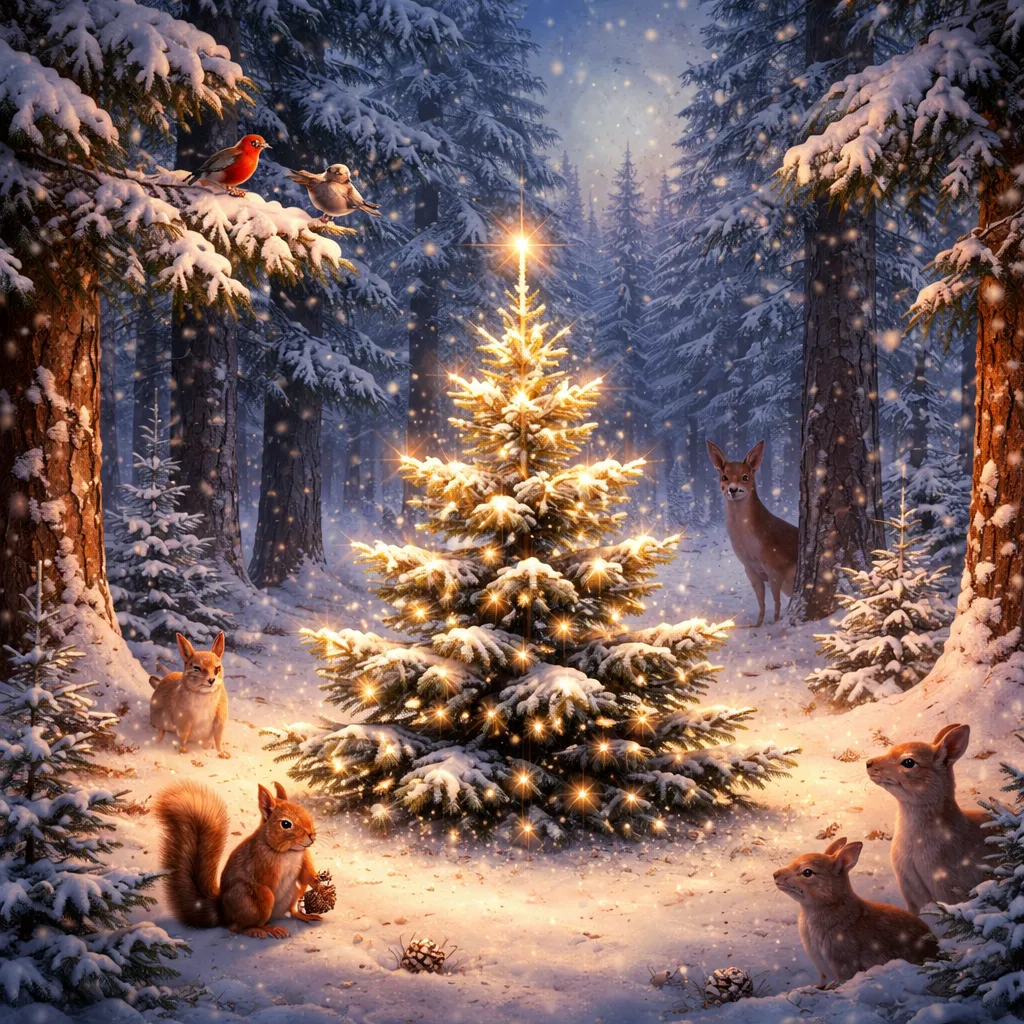

Think of a beautiful, green fir tree covered in sparkling snow and twinkling lights. This is a special sight in many homes during winter celebrations. In Russia, there is a beloved song about just such a tree, telling the story of its life. Let’s discover the journey in the Russian song “A Little Fir Tree Born in the Forest (В лесу родилась ёлочка).”
About the Song
Here is the first, most famous verse of the classic Russian New Year’s song, “A Little Fir Tree Born in the Forest”:
В лесу родилась ёлочка,
В лесу она росла.
Зимой и летом стройная,
Зелёная была.
Метель ей пела песенку:
«Спи, ёлочка, бай-бай!»
Мороз снежком укутывал:
«Смотри, не замерзай!»
Трусишка зайка серенький
Под ёлочкой скакал.
Порой сам волк, сердитый волк,
Рысцою пробегал.
English Translation:
In the forest a little fir tree was born,
In the forest it grew.
In winter and summer it was slender,
It was green.
The snowstorm sang a song to it:
“Sleep, little fir tree, bye-bye!”
The frost wrapped it in snow:
“Look, don’t freeze!”
The little grey cowardly bunny
Jumped under the little fir tree.
Sometimes the wolf himself, the angry wolf,
Would trot by.
This is the beloved Russian New Year’s song for children, originally a poem by Raisa Kudasheva, set to music by Leonid Beckman. The song tells the life story of a “yolochka” (little fir tree). It starts deep in the forest where the tree is born and grows tall and green all year round. The winter weather, personified as a snowstorm and frost, acts like a parent, singing it lullabies and tucking it in with snow. Forest animals, like a little grey bunny and a wolf, live around it. The song continues to describe how the tree is later cut down and brought to a joyful children’s New Year’s party, but this first part beautifully paints its peaceful, natural beginning.
What the Song is About
The song is a beautiful story about the life of a little fir tree. First, we see its beginning. “В лесу родилась ёлочка.” A little fir tree is born in the forest. It grows up there. “В лесу она росла.” It grows tall and “стройная” (slender), staying bright “зелёная” (green) in both winter and summer.
The forest cares for the tree. A swirling “метель” (snowstorm) sings a gentle lullaby to it: “Спи, ёлочка, бай-бай!” (Sleep, little fir tree, bye-bye!). The cold “мороз” (frost) covers it with a blanket of snow to keep it warm, saying, “Смотри, не замерзай!” (Look, don’t freeze!).
Animals visit the tree. A scared little grey bunny hops around under it for safety. Sometimes, even a big, grumpy wolf trots past nearby. The little fir tree stands in the middle of the quiet, snowy forest, watching everything.
Who Made It & Its Story
The words for this famous song were written as a poem in 1903 by a Russian writer named Raisa Kudasheva. A few years later, a man named Leonid Beckman composed a simple, beautiful melody for it so his daughter could sing it. He was not a famous composer, but a scientist who loved music! The song became a huge hit because it perfectly captured the magic of the New Year’s “yolka” (fir tree) celebration.
It is popular for three main reasons. First, its melody is gentle, nostalgic, and easy for everyone to sing and remember. Second, it tells a complete, magical story—from the tree’s birth in the quiet forest to its joyous role in a family party. Third, it is deeply connected to the Russian New Year tradition, where decorating the “yolka” is the most important part of the holiday, making the song a central piece of family celebrations for over a century.
When to Sing It
This song is perfect for cozy, festive moments. You can sing it softly while helping to decorate your own New Year’s or Christmas tree, thinking of its forest home. You can sing it on a quiet winter walk, imagining the trees sleeping under the snow. You can also sing it with family during a holiday gathering, celebrating the season’s magic together.
What Children Can Learn
This magical song is a wonderful teacher for learning about nature, seasons, and telling stories about where things come from in Russian.
Vocabulary
The song teaches us beautiful Russian words for nature, seasons, animals, and actions. “Forest” (лесу / lesu). “Was born” (родилась / rodilas’). “Little fir tree” (ёлочка / yolochka). “It grew” (росла / rosla). “Winter” (зимой / zimoy). “And” (и / i). “Summer” (летом / letom). “Slender” (стройная / stroynaya). “Green” (зелёная / zelyonaya). “Snowstorm” (метель / metel’). “Sang” (пела / pela). “Song” (песенку / pesenku). “Sleep” (спи / spi). “Frost” (мороз / moroz). “Snow” (снежком / snezhkom). “Wrapped” (укутывал / ukutyval). “Bunny” (зайка / zayka). “Grey” (серенький / seren’kiy). “Under” (под / pod). “Jumped” (скакал / skakal). “Wolf” (волк / volk).
Let’s use these words! You can describe trees: “Ёлка зелёная.” (The fir tree is green.) New word: Снег (sneg). This means “snow.” You can say, “В лесу много снега.” (There is a lot of snow in the forest.)
Language Skills
This song is excellent for learning to tell a story about where something is from using the phrase “в [месте]” (in [a place]). It also teaches us how to describe something with adjectives that match in gender, like “стройная” (slender) and “зелёная” (green) for the feminine “ёлочка.”
Concept Definition: We are learning about phrases that tell us the location where something happens, like “в лесу” (in the forest). We are also learning about describing words (adjectives) that change their ending to “match” the thing they describe, especially if it’s a “she” word like “ёлочка.”
Features and Types: The pattern for location is: “в + [place].“ The pattern for description is: “[Thing] + [adjective that matches].“ For feminine words like “ёлочка,” adjectives often end in “-ая” or “-яя.”
Example from the song: Location: “В лесу родилась ёлочка.“ (In the forest was born the little fir tree.) Description: “Ёлочка стройная, зелёная.“ (The little fir tree [is] slender, green.)
How to Spot Them: Here is the “Place Finder” trick. Look for sentences starting with “в”. The word right after it is usually the place. Ask: “Is this sentence telling me where something is or happens?“ For matching descriptions, look for a describing word right after a noun. Ask: “Does this describing word end with a similar sound to the thing it’s talking about?“
How to Use Them: A great way to start a story is the “Where-What” formula. Where: “В [place]…“ What: “[Thing] + [matching adjective].“
Example from the song: “В лесу… ёлочка зелёная.“
Example you can make: “В саду растёт яблоня. Яблоня красивая.“ (In the garden grows an apple tree. The apple tree is beautiful.)
Sounds & Rhythm Fun
Listen to the gentle, flowing melody of the song. The tune for “В лесу родилась ёлочка” is soft, nostalgic, and tells a story, like a musical lullaby. The rhythm is calm and steady, like falling snow.
The words have a poetic, musical sound. Phrases like “родилась ёлочка” and “зимой и летом” flow smoothly. The lullaby part, “Спи, ёлочка, бай-бай!” is especially soft and soothing. The sounds of animal names, like “зайка серенький” and “волк сердитый,” are fun to say. The song’s gentle rhythm makes it easy to remember the beautiful story. This storytelling rhythm is perfect for creating a song about another thing from nature. Try a flower song: “В поле рос цветочек, Яркий он и алый…“ (In the field grew a little flower, Bright and scarlet it was…).
Culture & Big Ideas
“A Little Fir Tree Born in the Forest” is the heart of Russian New Year (“Novy God”) celebrations. The decorated fir tree, or “yolka,” is the central symbol, much like a Christmas tree. This song tells the story of the tree’s journey from the quiet forest to the joyful party, making the tree a cherished character, not just a decoration.
The song conveys three deep and beautiful ideas. First, it connects celebration to nature, reminding us that the beautiful holiday tree has its own life story that began in the peaceful, snowy forest, fostering respect for nature. Second, it personifies nature, showing the snowstorm and frost as kind caregivers who sing and wrap the tree in snow, teaching us to see warmth and care in the cold winter world. Third, it celebrates transformation and bringing joy, as the little tree’s purpose is to eventually leave the forest to become the center of happy children’s celebrations, symbolizing sharing and holiday magic.
Values & Imagination
Imagine you are in a deep, quiet Russian forest. The snow is falling softly. There, a tiny “ёлочка” is born. “В лесу родилась ёлочка.” It grows strong and green. “Зимой и летом стройная, зелёная была.” The winter wind whispers to it, “Спи, ёлочка, бай-бай!” The frost gently covers its branches with a soft, white blanket of snow.
Under its branches, a little grey bunny finds shelter, hopping quietly. A big wolf walks by, but the little tree is safe. It stands there for years, part of the forest’s quiet life. Can you imagine the tree watching the seasons change? How does it feel to be that tree, growing in the peaceful woods, cared for by winter itself? Draw the tree’s life. Draw the forest (“лесу”). Draw the little green (“зелёная”) fir tree. Draw the snowstorm (“метель”) and frost (“мороз”) around it like gentle giants. Draw the bunny (“зайка”) underneath. This shows the song’s story of a peaceful beginning.
The song encourages us to think about where things come from, to see nature as full of life and stories, and to feel the magic that connects a quiet forest to a bright, joyful family celebration. A wonderful activity is to find a tree near your home. Imagine its story. Say, “В парке растёт дерево. Оно большое и старое.” (In the park grows a tree. It is big and old.) This connects the song’s “в [place]” pattern to your own world.
So, from the fir tree’s birth in the forest to its care by winter and visits from animals, this song is a lesson in nature’s story. It is a vocabulary lesson in the forest, seasons, and animals. It is a language lesson in saying “in a place” and using describing words. It is a music lesson in a gentle, storytelling tune. “A Little Fir Tree Born in the Forest” teaches us to appreciate nature’s journey, to find care in the world around us, and to understand the magic behind our holiday traditions.
Your Core Takeaways
You are now an expert on the Russian song “A Little Fir Tree Born in the Forest (В лесу родилась ёлочка).” You know it is a story-song about a little fir tree born and growing in the forest, cared for by the winter snowstorm and frost, and visited by forest animals like a bunny and a wolf. You’ve learned Russian words like “лесу,” “ёлочка,” “родилась,” “росла,” “зимой,” “летом,” “зелёная,” “метель,” and “мороз,” and you’ve practiced using “в” to tell where something happens and how describing words like “зелёная” match the thing they describe. You’ve felt its gentle, lullaby-like rhythm. You’ve also discovered the song’s message about nature’s own life, winter’s gentle care, and the deep tradition of the New Year’s tree in Russian culture.
Your Practice Missions
First, play the “В Где?” (In Where?) game. Look around and describe where things are using “в” (in/at). Point to a toy and say, for example, “В коробке живёт панда” (In the box lives a panda) or “В саду растёт цветок” (In the garden grows a flower). This mission helps you master the location phrase “в [place]” that starts the song’s story.
Second, create a “Лесная Ёлочка” (Forest Fir Tree) drawing. Draw your own little fir tree. Describe it in Russian like in the song. Is it “зелёная” (green)? Is it “стройная” (slender)? Draw the winter weather and an animal friend for it. Then, tell its story: “В моём рисунке родилась ёлочка…” (In my drawing was born a little fir tree…). This mission lets you use the song’s descriptive words and spark your imagination about nature.