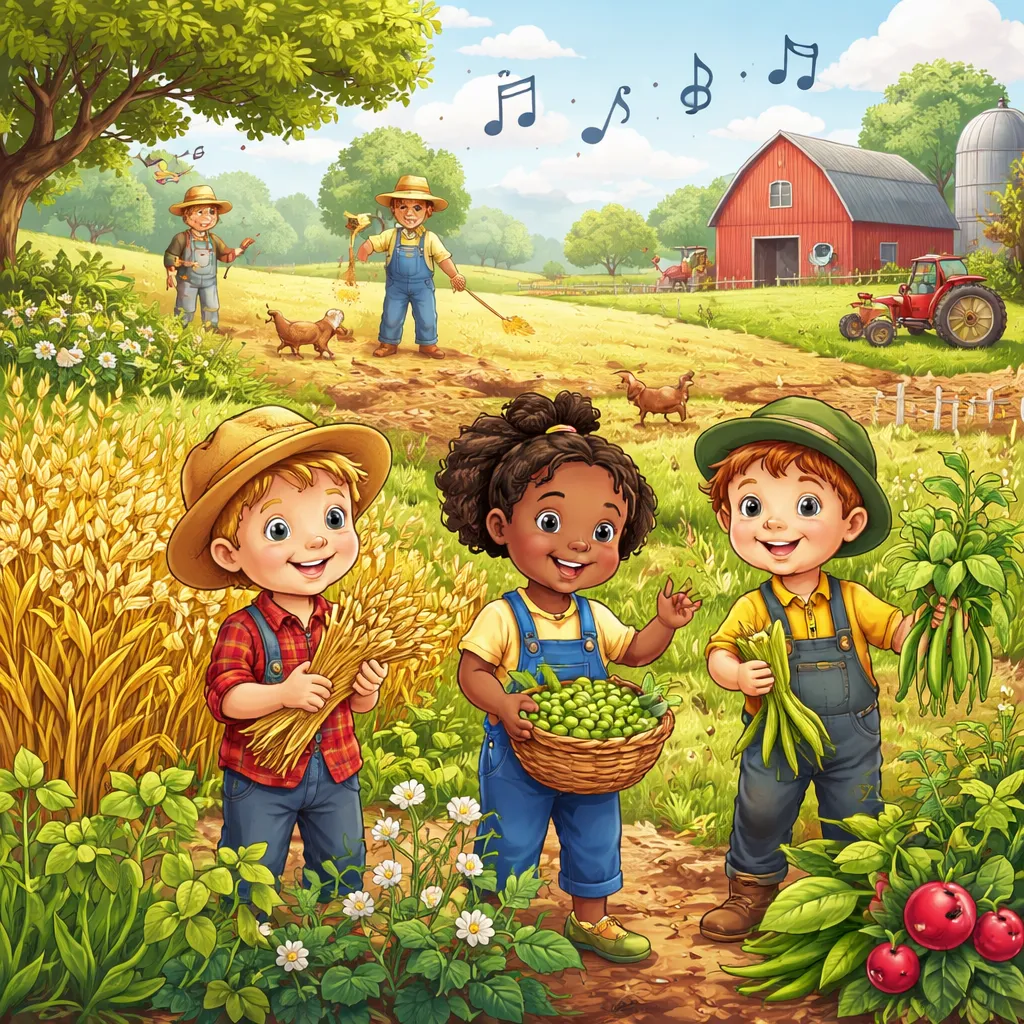

Some songs plant seeds of knowledge that grow for a lifetime. The English song: Oats, Peas, Beans and Barley Grow does exactly that. This traditional farming song teaches children where food comes from and how plants grow. The simple actions and repeated words make it perfect for young learners. For families learning English together, this song offers a wonderful way to explore nature, farming, and the magic of growth. Let us discover what makes this classic song so valuable for children.
What Is the Story Behind This Famous Song?
The English song: Oats, Peas, Beans and Barley Grow is a traditional folk song from England. Farmers and country people sang it for generations. It describes the process of growing crops from preparing the soil to harvesting the food.
The song likely began as a work song. Farm workers sang while planting fields. The rhythm helped them work together. Over time, it became a children's song and game. Children would stand in a circle and act out the farming actions.
The song mentions four important crops. Oats are grains used for porridge and animal feed. Peas are green vegetables that grow in pods. Beans come in many varieties like green beans and kidney beans. Barley is another grain used for soups and brewing.
These crops were staples of old English farming. Every family knew them. Children learned about farming by singing this song. They acted out plowing, sowing, and harvesting with their hands and bodies.
Understanding this背景 helps families appreciate the song's connection to the land. It teaches respect for farmers and the work that puts food on our tables.
The Complete Lyrics of the Song
Reading the words helps us understand the farming process. Here are the lyrics to the English song: Oats, Peas, Beans and Barley Grow. Let us look at them in sections.
Oats, peas, beans and barley grow
Oats, peas, beans and barley grow
Can you or I or anyone know
How oats, peas, beans and barley grow?
First the farmer sows his seeds
Then he stands and takes his ease
Stamps his foot and claps his hands
And turns around to view the lands
Oats, peas, beans and barley grow
Oats, peas, beans and barley grow
Can you or I or anyone know
How oats, peas, beans and barley grow?
Next the farmer waters the ground
Watches the rain come falling down
Pulls the weeds and shades his eyes
And watches crops grow to the skies
Oats, peas, beans and barley grow
Oats, peas, beans and barley grow
Can you or I or anyone know
How oats, peas, beans and barley grow?
Last the farmer cuts the grain
Gathers bundles in the lane
Takes his harvest home to store
Then the winter comes once more
Learning New Words from the Song
The English song: Oats, Peas, Beans and Barley Grow introduces many useful words. Let us explore them together.
First, the four crop names teach important food vocabulary. "Oats" are grains that grow in fields. "Peas" are small round green vegetables. "Beans" grow in pods and come in many types. "Barley" is another grain with long bristly heads.
The song asks "Can you or I or anyone know?" This question teaches pronouns. You, I, and anyone cover all people. Children learn to use these words correctly.
"Farmer" is the person who grows food. This job word helps children understand where food comes from. They can connect it to farmers markets and grocery store signs.
"Sows his seeds" means plants seeds in the ground. Sow is a special word for planting. Children learn this verb and can use it when gardening.
"Takes his ease" means rests. After hard work, the farmer rests and enjoys the fields. This phrase teaches about work and rest cycles.
"Stamps his foot" and "claps his hands" are action phrases. Children love doing these actions while singing. They learn verbs through movement.
"Views the lands" means looks at the fields. View is a more formal word for look. This expands children's vocabulary.
"Waters the ground" means puts water on the soil. This action is essential for growth. Children learn this verb for gardening.
"Pulls the weeds" means removes unwanted plants. Weeds steal water and light from crops. This teaches about plant care.
"Shades his eyes" means blocks the sun to see better. This is a common action children know.
"Crops grow to the skies" is a poetic way to say plants grow tall. Skies means the sky above.
"Cuts the grain" means harvests the mature plants. Grain is the seed part of oats and barley.
"Gathers bundles" means collects tied groups of plants. Bundles are tied together for carrying.
"Takes his harvest home" means brings the collected crops to storage. Harvest is the gathered food.
"Winter comes once more" teaches seasons. Winter follows harvest time. The cycle begins again in spring.
Exploring Pronunciation and Rhythm
The English song: Oats, Peas, Beans and Barley Grow offers wonderful practice with English rhythm. The steady beat makes it easy to feel the natural stress patterns.
Listen to the opening line "Oats, peas, beans and barley grow". The rhythm goes OATS, PEAS, BEANS and BAR-ley GROW. Each crop name gets strong stress. Clapping on each crop name helps children feel this pattern.
The question line "Can you or I or anyone know" has a different rhythm. CAN you or I or A-ny-one KNOW. The stress moves through the sentence naturally.
The action verses have a bouncy feel. "Stamps his foot and claps his hands" goes STAMPS his FOOT and CLAPS his HANDS. Children can do the actions while singing, connecting movement to words.
Finding Grammar Patterns in the Lyrics
The English song: Oats, Peas, Beans and Barley Grow offers useful grammar examples. One pattern appears in the repeated question. "Can you or I or anyone know" uses the modal verb "can" to ask about ability. We use "can" for what someone is able to do. For example, "Can you swim?" or "Can anyone help me?"
The song uses the present simple tense throughout. "The farmer sows his seeds" describes his regular actions. We use present simple for habits and routines. Farmers do these things every growing season.
Another pattern appears with "then" to show sequence. "First the farmer sows his seeds, then he stands and takes his ease." This teaches children to describe steps in order. For example, "First we wash our hands, then we eat dinner."
The song also uses the conjunction "and" to connect actions. "Stamps his foot and claps his hands" shows two things happening together or in sequence. This simple word appears constantly in English.
The phrase "to view the lands" uses the infinitive form. "To view" shows purpose. He turns around in order to view the lands. We use this structure often. For example, "I went to the store to buy milk" or "She sings to make us happy".
The song teaches seasons with "winter comes once more". Once more means again. This helps children talk about cycles and repetition.
Fun Learning Activities for the Whole Family
Listening to the English song: Oats, Peas, Beans and Barley Grow can inspire many family activities. Here are some ideas to try together.
First, plant a small garden together. Even a few pots on a windowsill work. Choose easy plants like beans or peas. Read the seed packets in English. "Plant 2 inches deep" or "Water every day". Watch the plants grow and describe what you see. "The seeds are sprouting" or "The leaves are getting bigger". This connects the song to real growing experiences.
Second, visit a farm or farmers market. Point out different crops. Name them in English. "Those are oats" or "Look at the beans". Talk to farmers about their work. Ask questions like "How do you plant these?" or "When do you harvest?" This builds real-world vocabulary.
Third, act out the farming actions while singing. Stand in a circle and do the motions together. Pretend to sow seeds, stamp your feet, clap your hands, water the ground, pull weeds, and harvest crops. This kinesthetic learning helps children remember words through movement.
Creating Printable Materials at Home
Families can make simple learning tools based on the English song: Oats, Peas, Beans and Barley Grow. These activities help reinforce new ideas.
Create crop flashcards with pictures. Find or draw images of oats, peas, beans, and barley. On each card, write the crop name and a simple sentence. "Oats are grains" or "Peas are green". Review these cards together and talk about foods made from each crop. "Oatmeal comes from oats" or "Bean soup comes from beans".
Make a growth sequence chart. Draw four boxes showing the farming cycle. Box one: farmer sowing seeds. Box two: plants growing. Box three: farmer harvesting. Box four: winter rest. Write simple sentences under each. "The farmer plants seeds" or "The crops grow tall". This builds understanding of cycles.
Create a fill-in-the-blank page using song lyrics. Remove key words like "oats", "peas", "beans", "barley", "farmer", "seeds", "ground", "weeds", "grain", and "harvest". Leave blanks where those words belong. Listen to the song together and fill in the missing words. This builds listening and spelling skills.
Connecting the Song to Daily Life
The English song: Oats, Peas, Beans and Barley Grow connects to daily life through food. Every meal comes from farming. This song helps children appreciate where their food comes from.
Talk with your children about the foods they eat. Point out foods made from the crops in the song. "Your oatmeal came from oats" or "These beans grew on a farm". Use English to describe the journey from farm to table.
The song also teaches about patience. Farmers wait months for crops to grow. Children learn that good things take time. When planting seeds, talk about waiting. "We need to be patient. The beans will grow soon."
Parents can model appreciation for farmers. When shopping, say things like "Farmers worked hard to grow these vegetables" or "Let's thank farmers for our food". This builds gratitude and vocabulary together.
Educational Games to Play Together
Games make learning with the English song: Oats, Peas, Beans and Barley Grow exciting. Here are some simple games to try.
Play the crop guessing game. One person describes a crop without naming it. "This crop is small, round, and green. It grows in pods." Others guess "Peas!" Take turns describing and guessing. This builds descriptive vocabulary.
Try the farmer says game like Simon Says. One person is the farmer and gives commands. "Farmer says stamp your feet" or "Farmer says clap your hands". Others follow only when "farmer says" comes first. This builds listening skills and following directions.
Play the growth sequence game. Put pictures of the farming cycle in order. Talk about each step in English. "First comes planting. Then comes growing. Then comes harvesting." This builds sequencing skills and vocabulary.
Why This Song Helps English Learning
The English song: Oats, Peas, Beans and Barley Grow helps learners in special ways. The simple vocabulary matches what beginners need. Words like grow, farmer, seeds, ground, rain, and winter appear in early lessons. Learning them through song makes them easy to recall.
The repetition in the chorus reinforces key phrases. "Oats, peas, beans and barley grow" repeats throughout. Repetition builds memory without effort.
The actions in the song engage multiple senses. Children see, hear, and move while learning. This multisensory approach strengthens memory.
The farming theme connects to real life. Children encounter food every day. The song gives them words to talk about where it comes from.
Making Music Part of Your Routine
Families can make songs a regular part of English time. Choose one song each week to explore together. Listen during meals or while gardening.
The English song: Oats, Peas, Beans and Barley Grow works perfectly for gardening days. Sing it while planting or watering. Let the music connect to the earth and growth.
Remember that language learning happens best through meaningful experiences. When children associate English with digging in soil and watching plants grow, they learn deeply. They understand that words connect to real things.
Keep singing, keep planting, and keep watching your family's English grow alongside the garden. In the rich soil of songs and stories, every new word takes root and flourishes.