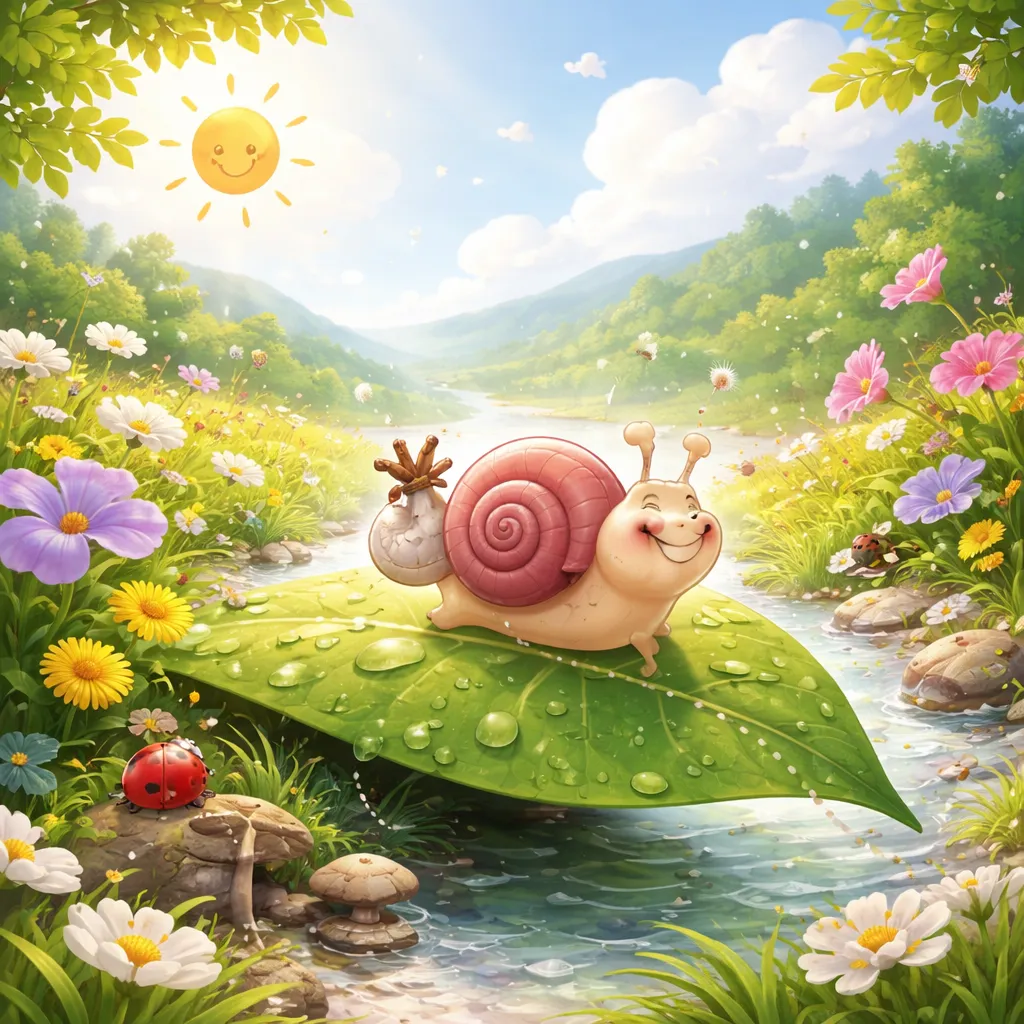

Have you ever seen a tiny, shiny trail on a sidewalk after the rain? If you follow it, you might find a small creature with a spiral shell on its back, moving so slowly you can hardly see it move. That’s a snail, a master of taking its time. In Korea, a country that values both nature and calm reflection, there is a gentle song about this patient traveler. Let’s slow down and listen to the Korean Song: The Little Snail (달팽이).
About the Song Here are the classic, thoughtful lyrics of this beloved song in Korean and English: 달팽이 달팽이 집을 지고 (Dalpaeng-i dalpaeng-i jib-eul jigo) Little snail, little snail, carrying your house 천천히 천천히 기어가네 (Cheoncheonhi cheoncheonhi gieogane) Slowly, slowly, you crawl 비가 오면 집에 들어가 (Biga omyeon jibe deureoga) When it rains, you go into your house 해가 나면 다시 기어가네 (Haega namyeon dasi gieogane) When the sun comes out, you crawl again
This song’s original Korean name is “달팽이” (Dalpaeng-i), which means “snail.” It is a very popular and traditional Korean children’s song. The song is a quiet observation of a snail’s life. The music is often slow, peaceful, and deliberate, matching the snail’s pace. The Korean Song: The Little Snail (달팽이) is a musical lesson in patience, showing us the world from the perspective of a creature that is never in a hurry and is always safely at home.
What the Song is About The song is a calm description of a snail’s day. First, we greet the snail and notice its amazing feature: it is “carrying your house.” Its shell is its home, which it takes everywhere. We see its speed, or lack of it: “Slowly, slowly, you crawl.” The song then shows how the snail reacts to the weather. It is smart and safe: “When it rains, you go into your house.” When the weather is good: “When the sun comes out, you crawl again.” The snail doesn’t fight the rain; it adapts. The whole song is about moving at your own pace, being prepared, and appreciating the simple, steady rhythm of life.
Who Made It & Its Story This song is a traditional Korean folk song, passed down through many generations. The original creator is unknown, as it comes from the simple, shared experience of observing nature. Snails are common in Korea’s gardens and green spaces. The Korean Song: The Little Snail (달팽이) reflects a cultural appreciation for patience and harmony with nature, values often emphasized in traditional Korean proverbs and stories. It is cherished for three gentle reasons. First, it teaches the virtue of patience and moving carefully in a world that often rushes. Second, it presents a clever survival strategy (carrying your house) in a way that feels magical to children. Third, its melody is slow, soothing, and easy to remember, making it perfect for calming down or for quiet time.
When to Sing It You can sing this song very slowly while walking at a snail’s pace around your room. It’s perfect to hum on a rainy day, watching the drops slide down the window like a snail’s trail. You could also sing it when you are feeling impatient, to remind yourself to slow down and breathe.
The Korean Song: The Little Snail (달팽이) teaches us to appreciate a slow, steady pace. But moving slowly doesn’t mean we stop learning. This song is a path to knowledge. It introduces us to new words, shows us how to talk about time and conditions, and shares a cultural value. Let’s take our time and explore.
What Children Can Learn
Vocabulary This song helps us learn words for nature, movement, and time. Mollusk: A type of soft-bodied animal, often with a shell. Snails and clams are mollusks.
Pace: The speed at which someone or something moves. The snail has a very slow pace.
Adapt: To change behavior to suit new conditions. The snail adapts to the rain by going inside.
Perseverance: Continued effort to do something despite difficulty. Moving slowly but steadily shows perseverance.
Trail: A mark or a path left by something that has passed. A snail leaves a shiny trail.
Shelter: A place giving protection from bad weather or danger. The shell is the snail’s shelter.
Language Skills This song beautifully uses Time Clauses with “When” to show cause and effect related to time. We use “when” to talk about one thing that happens at the time of another event. What Is It?: Think of “when” as your time connector. It links two events that happen at the same time. One event triggers the other.
Finding the Secret: Look for the word “when” followed by a clause (a subject and verb). It tells you the time condition for the main action. Ask: “Does this sentence tell me the time that something happens?”
Using It:
◦   Formula: When + [time event], + [main event]. or [Main event] + when + [time event].

◦   Examples: “When I am hungry, I eat.” “I go outside when it is sunny.”

◦   In the song: “When it rains, you go into your house. When the sun comes out, you crawl again.” The weather is the condition for the snail’s action.
Sounds & Rhythm Fun Listen to the slow, steady rhythm. The Korean Song: The Little Snail (달팽이) has a very deliberate, dragging beat. It might sound like the slow, steady pull of a snail moving. The repetition of “천천히” (slowly) emphasizes the pace. This slow, predictable rhythm is calming and makes the lyrics about patience and adaptation easy to remember and feel. You can use this same slow, steady rhythm to make up a song about any patient activity, like watching a plant grow or waiting for a cake to bake.
Culture & Big Ideas This song connects to the Korean value of 인내 (innae), meaning patience and endurance. A traditional Korean fable, The Hare and the Tortoise (토끼와 거북이), teaches a similar lesson about steady perseverance winning over speed. The Korean Song: The Little Snail (달팽이) teaches three important ideas. First, Patience as a Strength: Moving slowly and steadily is not a weakness; it is a wise way to move through the world safely and surely. Second, Home is Where You Carry It: The snail teaches us about self-sufficiency and security—you can feel at home anywhere if you carry your peace inside. Third, Adaptation: Being smart about changing conditions (like going inside when it rains) is a key to survival and comfort.
Values & Imagination Imagine you are the little snail. What does the world look like from so close to the ground? What does it feel like to always have your home with you? This song teaches you the value of taking your time and not comparing your pace to others. It shows that being prepared and adaptable is a form of wisdom. A simple idea: The next time you have a task that feels big, break it into tiny, “snail-paced” steps. Do just one small part, then rest. See how steady progress feels. You are practicing perseverance.
Your Core Takeaways The Korean Song: The Little Snail (달팽이) is a gentle, profound lesson in patience, preparedness, and perseverance. You learned words like “mollusk,” “pace,” and “adapt.” You discovered how to use time clauses with “when” to talk about cause and effect in time. You moved to the song’s slow, steady rhythm. You also connected the snail to Korean values of patience and classic fables. Most importantly, the song teaches that slow and steady wins the race, that true security comes from within, and that adapting to change is a sign of intelligence.
Your Practice Missions
- Be a “When” Reporter. For the next hour, notice one thing that happens and what you do because of it. Report it using “when.” Example: “When the clock chimed, I looked up.” “When I finished my snack, I washed my plate.” This practices noticing cause and effect in time.
- Create a “Snail’s Journey” Map. On a long strip of paper, draw a winding path. At the start, draw the snail. At the end, draw a goal (like a leafy plant). Along the path, draw obstacles (a puddle for rain, a big stick) and safe spots (a rock for shelter). Move your snail drawing along the path, explaining what it does “when” it meets each thing. This shows the snail’s adaptive journey.