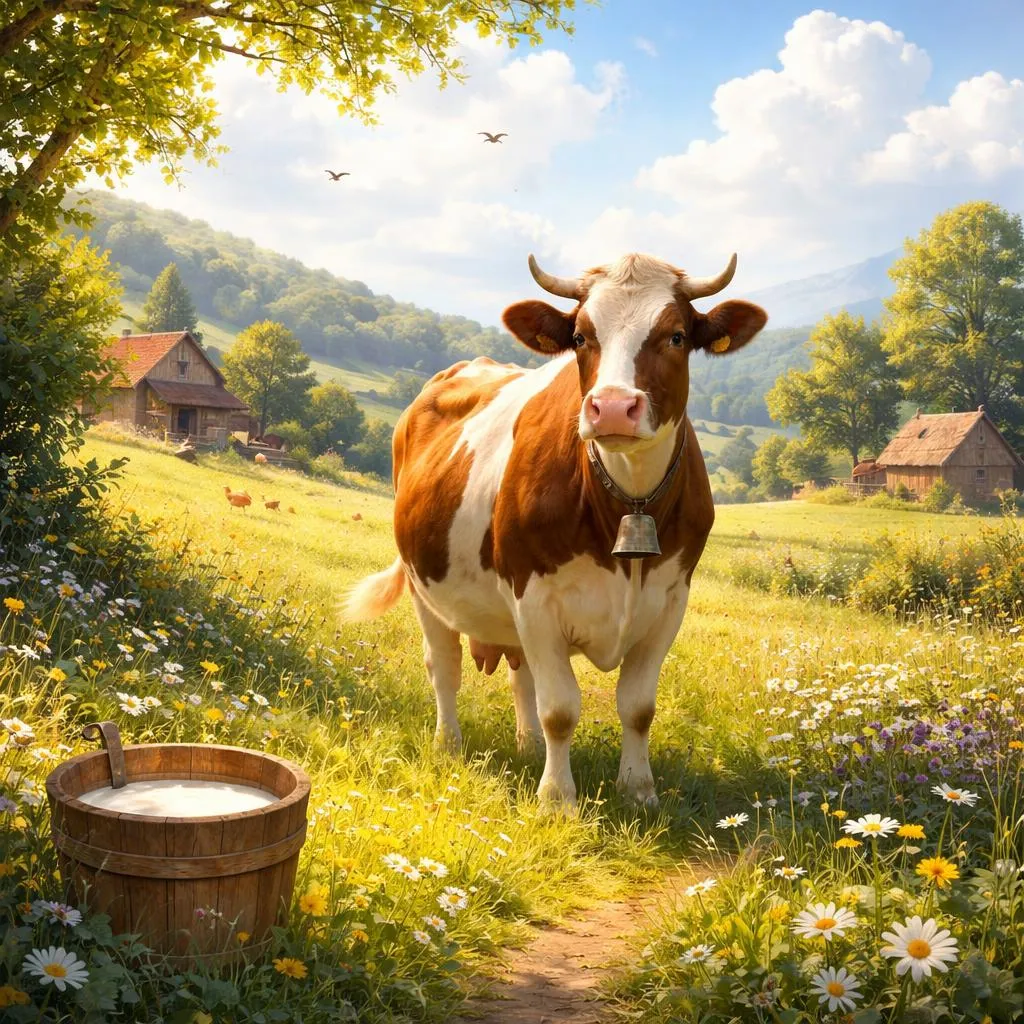

The friendly cow all red and white, I love with all my heart: She gives me cream with all her might, To eat with apple-tart. She wanders lowing here and there, And yet she cannot stray, All in the pleasant open air, The pleasant light of day; And blown by all the winds that pass And wet with all the showers, She walks among the meadow grass And eats the meadow flowers.
Story Background and Author Introduction
This charming poem, often known as "The Friendly Cow," was written by Christina Rossetti, a renowned English poet of the 19th century. Rossetti is celebrated for her children's poetry and stories that combine simplicity with deep emotional resonance. She wrote many poems that capture the beauty of nature and the innocence of childhood, making her work beloved by readers of all ages.
Detailed Interpretation and Meaning
At first glance, the poem appears to be a simple, affectionate description of a cow. The cow is "all red and white," a vivid image that helps children visualize the animal. The speaker expresses love for the cow, emphasizing the cow’s generosity in giving cream, which is enjoyed with apple tart—a delightful treat that connects the poem to everyday life and comfort.
The cow’s wandering "lowing here and there" suggests a peaceful, natural life in the open air. Despite her roaming, she "cannot stray," indicating safety and care within her environment. The poem celebrates the natural world—the winds, the showers, the meadow grass, and flowers—highlighting a harmonious relationship between the animal and its surroundings.
This poem gently teaches children to appreciate nature, animals, and the simple pleasures of life. It evokes kindness, care, and a sense of belonging, all important values for young readers.
What Children and Students Can Learn
-
Appreciation for Nature and Animals
The poem encourages children to observe and appreciate the natural world around them. Understanding how animals live and interact with their environment fosters empathy and respect for living creatures. -
Gratitude and Kindness
The speaker’s love for the cow and enjoyment of the cream symbolize gratitude. Children learn to appreciate what others, including animals, provide for them, nurturing a thankful attitude. -
Safety and Care in Freedom
The cow’s ability to wander freely yet remain safe teaches children about the balance between independence and responsibility. It can lead to discussions about boundaries and trust. -
Connection to Everyday Life
Mentioning apple tart links the poem to familiar experiences, helping children relate literature to their own lives and cultures.
How to Apply These Lessons in Daily Life
-
In Learning:
Teachers and parents can encourage children to observe animals and plants around them, fostering curiosity and scientific thinking. Writing or drawing about these observations can enhance literacy and creativity. -
In Social Settings:
Children can practice kindness and gratitude by acknowledging the help they receive from family, friends, and even pets. This builds positive relationships and emotional intelligence. -
In Personal Growth:
Understanding the balance between freedom and safety helps children develop self-discipline and respect for rules, important for school and social environments.
Cultivating Positive Values from the Story
To nurture the positive spirit of this poem, educators and parents can:
-
Encourage Outdoor Activities:
Spending time in nature helps children connect with the themes of the poem, making the lessons more tangible. -
Promote Empathy Through Storytelling:
Discussing the cow’s life and feelings can help children develop empathy and kindness toward animals and people. -
Use Creative Arts:
Drawing or crafting cows, meadows, or apple tarts can deepen engagement and reinforce learning. -
Model Gratitude:
Adults can show appreciation for small acts of kindness, teaching children to do the same.
By embracing these approaches, children not only enjoy a beautiful story but also grow in understanding, compassion, and responsibility—qualities that will serve them well throughout their lives.