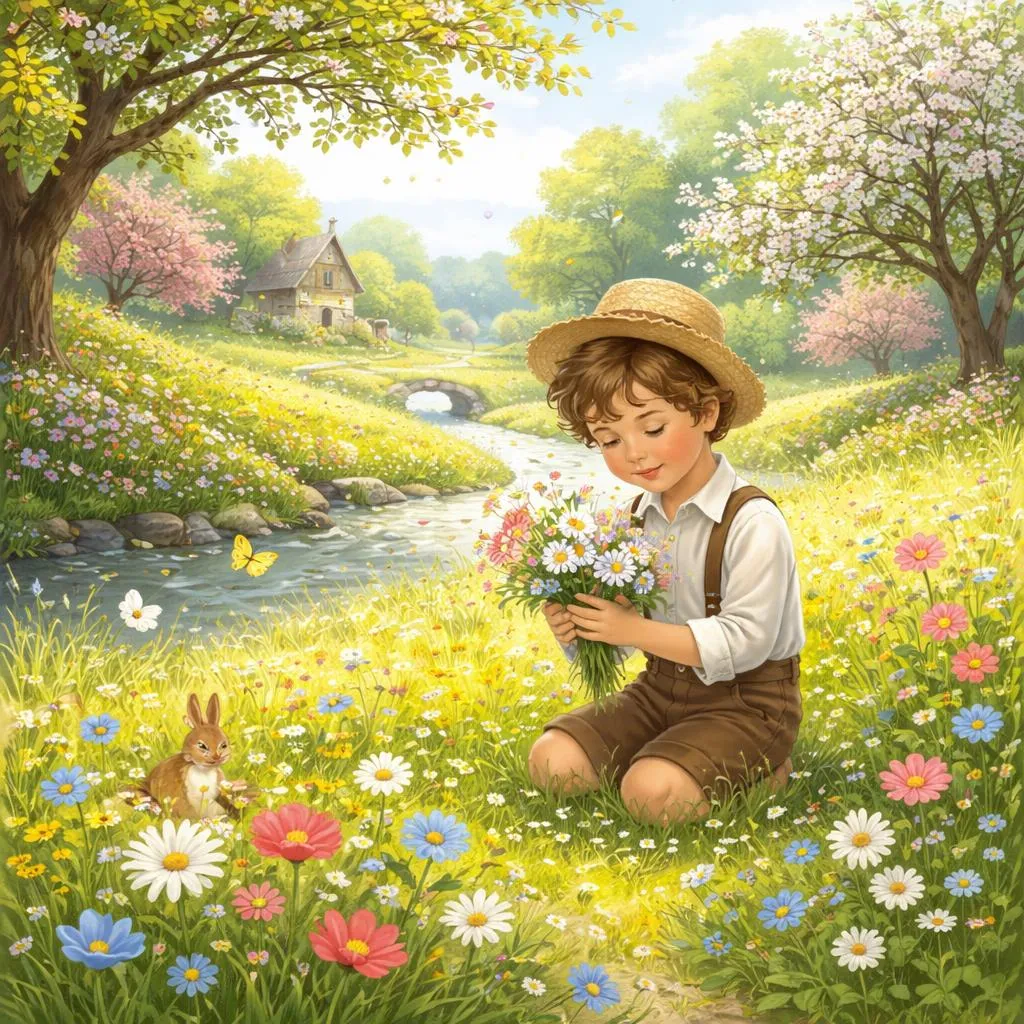

All the names I know from nurse: Gardener’s garters, Shepherd’s purse, Bachelor’s buttons, Lady’s smock, And the Lady Hollyhock. Fairy places, fairy things, Fairy woods where the wild bee wings, Tiny trees for tiny dames— These must all be fairy names! Tiny woods below whose boughs Shady fairies weave a house; Tiny tree-tops, rose or thyme, Where the braver fairies climb! Fair are grown-up people’s trees, But the fairest woods are these; Where, if I were not so tall, I should live for good and all.
Story Background and Author Introduction
This charming poem comes from a world where nature and imagination blend beautifully. It was written by Christina Rossetti, a famous English poet of the 19th century known for her simple yet deeply imaginative works that often explore themes of childhood, nature, and fantasy. Rossetti’s poems are loved by children and adults alike because they invite readers to see the magic in the everyday world around them.
Detailed Interpretation and Meaning
The poem describes a child’s view of the natural world, filled with plants that have whimsical names like Gardener’s garters and Lady Hollyhock. The child imagines these plants and the small woods as fairy places, where tiny fairies live and play. This poem beautifully captures the innocence and wonder of childhood, highlighting how children see the world differently from adults. The “fairy woods” symbolize a magical place of safety, joy, and imagination. The child wishes to live in this magical world forever, showing a deep longing for the simplicity and enchantment of childhood.
What Children and Students Can Learn
-
Imagination and Creativity: The poem encourages children to use their imagination to see the magic in the natural world. It teaches them that everyday things, like plants and trees, can become part of a wonderful fantasy if they look closely and dream big.
-
Appreciation of Nature: Through the vivid descriptions of plants and woods, children learn to appreciate the beauty and diversity of nature. This can inspire curiosity about plants, insects, and the environment.
-
Emotional Expression: The poem shows how feelings of wonder and longing can be expressed through words and poetry. Children can learn to use creative writing as a way to share their own emotions and ideas.
Applying These Lessons in Life, Learning, and Social Situations
-
In Life: Children can practice mindfulness by observing nature around them, noticing small details like the shapes and colors of leaves or flowers. This helps develop patience and a sense of calm.
-
In Learning: Teachers and parents can encourage children to write their own poems or stories inspired by nature, helping them build language skills and creativity.
-
In Social Settings: Sharing imaginative stories or poems with friends can improve communication skills and build confidence. It also fosters empathy as children learn to appreciate different perspectives.
Cultivating Positive Spirit and Behavior
This poem encourages a positive attitude toward curiosity and exploration. To nurture this spirit, children can be guided to:
- Spend time outdoors exploring safely and respectfully.
- Keep a nature journal to record their observations and feelings.
- Participate in group storytelling or creative writing activities to build teamwork and self-expression.
- Practice kindness toward living things, understanding that every plant and creature has its own special role.
By embracing the wonder and magic in the world, children develop a lifelong love of learning and a respectful attitude toward nature and others. This poem is a gentle reminder that sometimes, seeing the world through a child’s eyes can bring the greatest joy and inspiration.