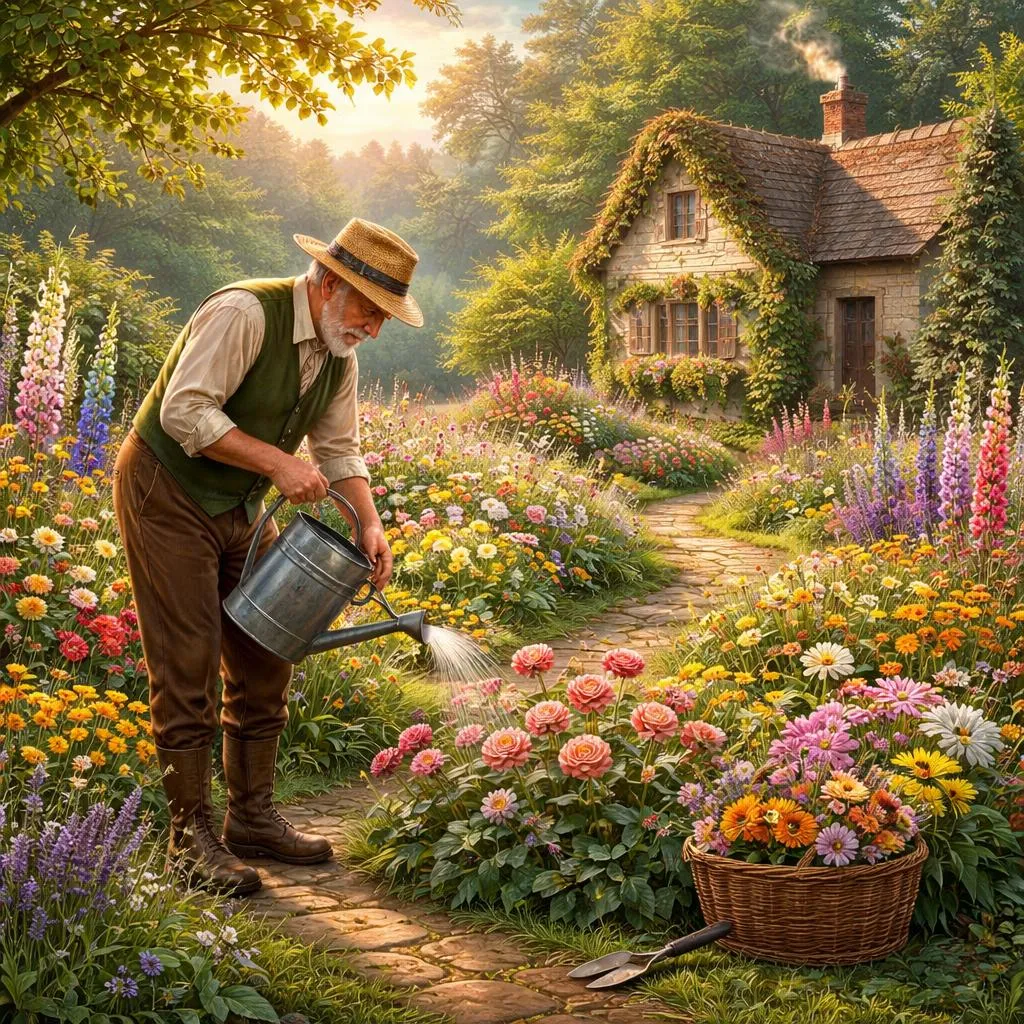

The gardener does not love to talk. He makes me keep the gravel walk; And when he puts his tools away, He locks the door and takes the key. Away behind the currant row, Where no one else but cook may go, Far in the plots, I see him dig, Old and serious, brown and big. He digs the flowers, green, red, and blue, Nor wishes to be spoken to. He digs the flowers and cuts the hay, And never seems to want to play. Silly gardener! summer goes, And winter comes with pinching toes, When in the garden bare and brown You must lay your barrow down. Well now, and while the summer stays, To profit by these garden days O how much wiser you would be To play at Indian wars with me!
Story Background and Author Introduction
This charming poem, often attributed to the style of early 20th-century children's poetry, captures the quiet life of a gardener through the eyes of a child. The gardener is portrayed as a serious, hardworking man who prefers solitude and dedication to his work rather than play or conversation. The poem reflects a simple but vivid scene of garden life, emphasizing the contrast between the gardener's diligence and the child's playful spirit. The author, whose identity remains unknown in many versions, likely aimed to highlight themes of work, nature, and childhood imagination.
Detailed Story Interpretation and Meaning
At first glance, the poem is a straightforward observation of a gardener at work. The gardener "does not love to talk," suggesting he is a man of few words, focused on his duties. The child narrator is both an observer and a participant in this garden world, tasked with keeping the gravel walk clean and watching the gardener dig and tend to the flowers. The imagery of colorful flowers—green, red, and blue—paints a lively picture of the garden, contrasting with the gardener’s serious demeanor.
The gardener’s solitude and dedication to his tasks symbolize responsibility and the value of hard work. The child, however, yearns for play and companionship, inviting the gardener to join in “Indian wars,” a playful game. This contrast highlights the different ways adults and children experience the world: adults often focus on duty and routine, while children seek fun and imagination.
The poem also subtly touches on the passing of seasons, with summer giving way to winter, reminding readers of the cycles of nature and the importance of enjoying the present moment. The child's invitation to play while summer lasts encourages readers to balance work and play, responsibility and joy.
Lessons and Insights for Children and Students
-
Appreciation of Hard Work: The gardener’s dedication teaches children about the importance of responsibility and perseverance. Whether it’s schoolwork, chores, or personal goals, consistent effort is valuable.
-
Respect for Nature: Through the imagery of flowers and garden work, children learn to appreciate the natural world and the care it requires. This can inspire environmental awareness and love for gardening or outdoor activities.
-
Balancing Work and Play: The child’s desire to play alongside the gardener reminds young readers that life should include both effort and enjoyment. Balancing study and leisure is key to a happy, healthy life.
-
Observation and Reflection: The poem encourages children to observe their surroundings carefully and reflect on the people and activities they see, fostering mindfulness and curiosity.
Applying These Lessons in Daily Life
-
In Learning: Students can relate the gardener’s focus to their own study habits, understanding that dedication leads to growth and success. They can also remember to take breaks and enjoy playful activities to refresh their minds.
-
In Social Situations: The poem shows the value of inviting others to join in play or conversation, promoting kindness and inclusion. Children can practice reaching out to peers who may seem quiet or reserved.
-
In Personal Growth: Observing the gardener’s patience and care can inspire children to be patient with themselves and others, nurturing skills and relationships over time.
Cultivating Positive Traits from the Story
-
Responsibility: Encourage children to take on small tasks at home or school, teaching them to be dependable like the gardener.
-
Curiosity and Imagination: Like the child narrator, children should be encouraged to explore their environment and create imaginative games, balancing creativity with discipline.
-
Respect for Others: Understanding that some people may be quiet or serious helps children develop empathy and respect for different personalities.
-
Connection with Nature: Activities like planting flowers, caring for a garden, or simply spending time outdoors can help children develop a lifelong appreciation for the environment.
In summary, this simple yet profound poem offers rich opportunities for children and students to learn about work ethic, nature, imagination, and social skills. By reflecting on the gardener’s quiet dedication and the child’s playful spirit, young readers can find inspiration to grow both in responsibility and joy.