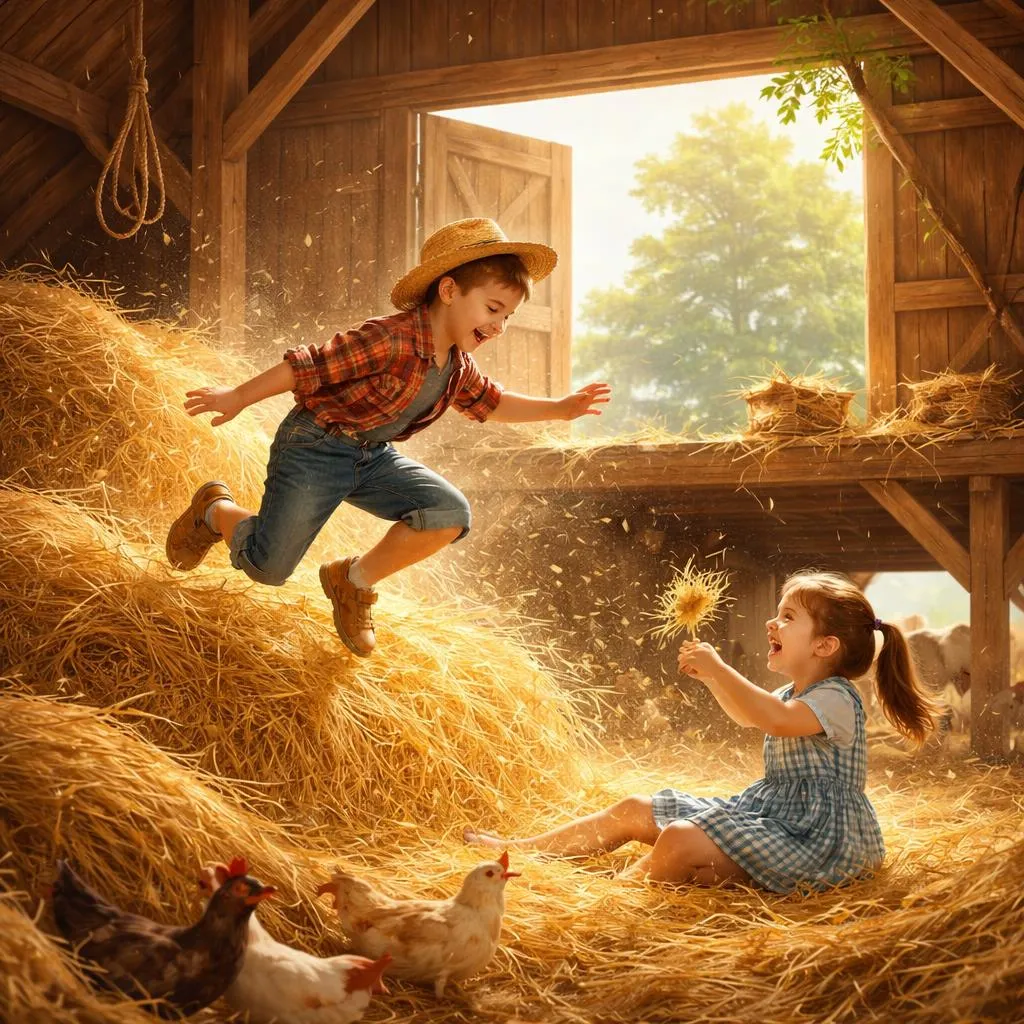

Through all the pleasant meadow-side The grass grew shoulder-high, Till the shining scythes went far and wide And cut it down to dry. Those green and sweetly smelling crops They led in waggons home; And they piled them here in mountain tops For mountaineers to roam. Here is Mount Clear, Mount Rusty-Nail, Mount Eagle and Mount High;— The mice that in these mountains dwell, No happier are than I! Oh, what a joy to clamber there, Oh, what a place for play, With the sweet, the dim, the dusty air, The happy hills of hay!
A Joyful Journey Through the Happy Hills
Imagine a wide, green meadow where the grass grows tall, reaching up to your shoulders. This meadow is full of life and smells sweet like fresh hay. One day, farmers come with their shining scythes—long, sharp tools that cut the grass carefully and neatly. They work together, cutting the grass all across the meadow until it lies flat and ready to dry under the warm sun.
Once the grass is dry and sweet-smelling, it is loaded onto big wagons. These wagons carry the hay up to the mountain tops, where it is piled high in big, soft hills. These hills are not just ordinary piles of hay—they are magical places with special names like Mount Clear, Mount Rusty-Nail, Mount Eagle, and Mount High.
In these happy hills, little mice live and play. They climb and jump, exploring every corner, feeling the soft, dusty air around them. The mice are as happy as can be, enjoying their wonderful playground made of hay. It’s a perfect place for adventure, fun, and friendship.
Background of the Story
This poem-like story paints a picture of simple joys found in nature and the countryside. It captures a moment in time when the natural world and human work come together in harmony. The story likely draws from rural life, where harvesting hay is a common and important activity. The author uses vivid imagery to bring the meadow and the hay hills to life, inviting readers to imagine the sights, sounds, and smells of this peaceful place.
About the Author
While the specific author of this piece is not mentioned, the style suggests a writer who loves nature and enjoys sharing the beauty of simple, everyday scenes with children. Such authors often aim to connect young readers with the natural world, encouraging them to appreciate the environment and find happiness in small, ordinary moments.
Detailed Interpretation and Meaning
At its heart, this story is about joy, nature, and the magic of play. It shows how work (cutting and collecting hay) can create something wonderful—a playground for the mice and a place of happiness. The story teaches us to see beauty in the world around us and to find pleasure in simple things.
The mice symbolize innocence and contentment. Their happiness in the hay hills reminds us that joy can be found in the smallest places and moments. The story also highlights the connection between humans and nature, showing how human efforts can support and enhance the natural environment.
Lessons and Inspirations for Children and Students
-
Appreciation of Nature: Children learn to observe and value the natural world—the grass, the air, the mountains, and the animals living there. This appreciation can lead to a lifelong love of nature and a desire to protect it.
-
The Value of Hard Work: The farmers’ work of cutting and gathering hay is essential to creating the happy hills. This teaches children that effort and teamwork can produce wonderful results.
-
Joy in Simple Things: The story encourages children to find happiness in everyday moments, whether it’s playing outside, exploring nature, or spending time with friends.
-
Imagination and Play: The magical names of the hay hills and the playful mice inspire creativity and imaginative play, which are important for cognitive and emotional development.
Applying These Lessons in Daily Life
-
In Learning: Students can be encouraged to observe their surroundings during outdoor activities or field trips, noting the plants, animals, and natural features they see. This builds curiosity and scientific thinking.
-
In Social Settings: Just as the mice enjoy playing together in the hay hills, children can learn the importance of friendship, sharing, and enjoying group activities.
-
In Personal Growth: Understanding the value of hard work helps children develop responsibility and perseverance. They learn that effort leads to positive outcomes.
-
In Environmental Awareness: By appreciating nature’s beauty, children are more likely to engage in behaviors that protect the environment, such as recycling, conserving water, and respecting wildlife.
Cultivating Positive Attitudes and Behaviors
To nurture the positive spirit shown in the story, parents and teachers can:
- Encourage outdoor play and exploration to connect children with nature.
- Share stories and poems that celebrate simple joys and natural beauty.
- Teach children about the importance of teamwork and helping others.
- Foster creativity through imaginative games and storytelling.
- Discuss the importance of caring for the environment and all living creatures.
By embracing these lessons, children can grow into kind, responsible, and joyful individuals who appreciate the world around them and contribute positively to their communities.