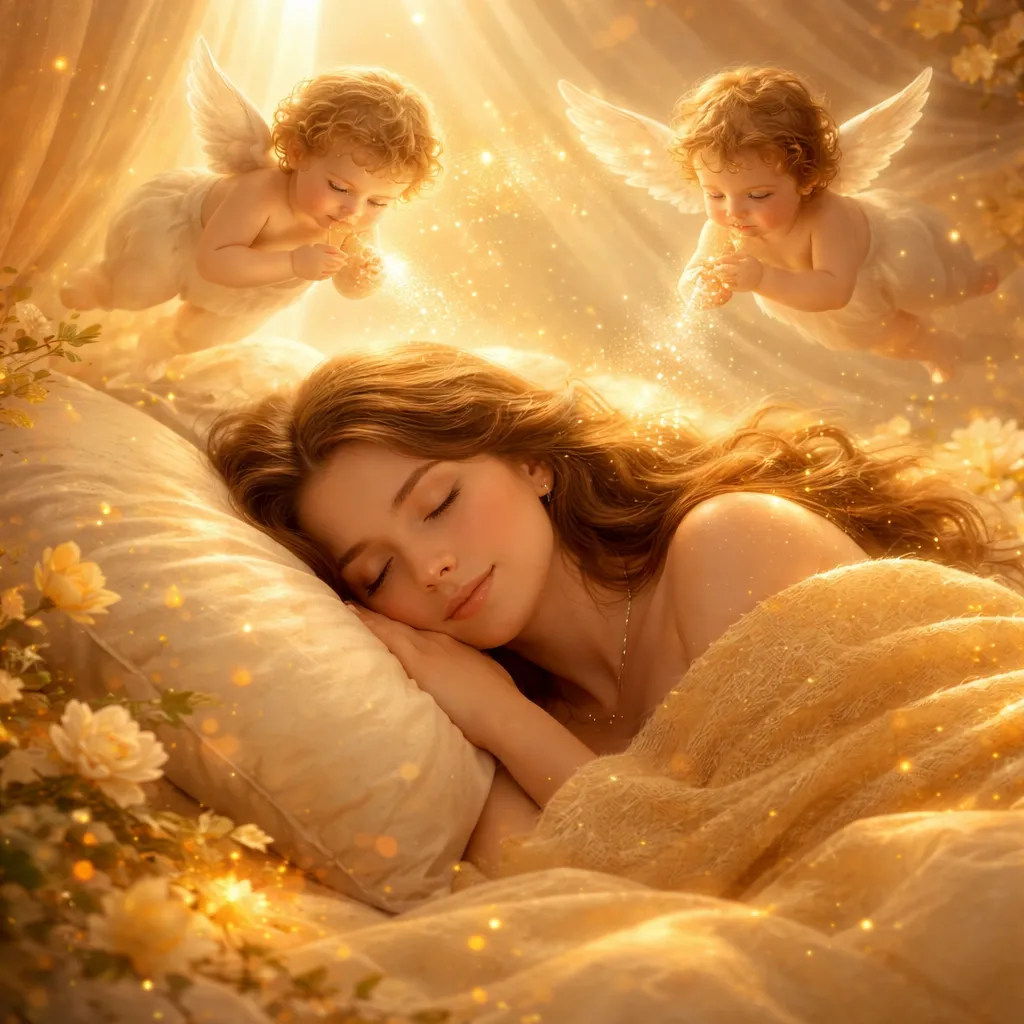

Have you ever had a day that felt a bit long or tough? Maybe you had a small disappointment, or you just feel tired. When that happens, sleep can feel like a warm, soft friend that wipes the day away. There is a very old, beautiful song that calls sleep “golden” and promises that it makes everything better. Let’s learn about the comforting lullaby “Golden Slumbers.”
About the Song
Let’s read the gentle, hopeful words of this famous song.
Golden slumbers kiss your eyes,
Smiles awake you when you rise.
Sleep, pretty wantons, do not cry,
And I will sing a lullaby.
Care you know not, therefore sleep,
While I o’er you watch do keep.
Sleep, pretty wantons, do not cry,
And I will sing a lullaby.
This song is a traditional English lullaby. The words are from a much older poem written by the English playwright Thomas Dekker in 1603. The beautiful melody we know today was composed much later. The song became world-famous when the legendary rock band The Beatles (Paul McCartney) recorded a version for their 1969 album Abbey Road. The song is a promise of protection and rest. It tells a child (or anyone) that sleep is a golden gift that will bring new smiles in the morning, and that a loving caregiver will watch over them while they dream.
What the Song is About
The song paints a picture of a caregiver soothing a child at the end of the day. The child might be fussy or crying (“wantons” is an old word for playful children). The singer describes sleep itself in a magical way. They say “Golden slumbers kiss your eyes.” This means the coming sleep is precious, warm, and gentle like a kiss.
The singer makes a wonderful promise: when you wake up (“when you rise”), smiles will be there to greet you. The night’s rest will wash away the troubles of the day. The singer then tells the child to sleep and not to cry. In return for the child’s peaceful sleep, the singer promises to do their part: “I will sing a lullaby.” The second verse explains why the child can sleep so deeply: they do not know serious worry or “care.” The singer promises to keep watch (“o’er you watch do keep”) so the child can remain free from worry. It is a perfect deal: the child rests, and the adult protects.
Who Made It & Its Story
The lyrics of “Golden Slumbers” were written by the English Renaissance playwright and poet Thomas Dekker for a play in 1603. The poem was a standalone lullaby within the play. The melody we associate with it today is a folk tune. The song’s journey to modern fame is thanks to Paul McCartney of The Beatles. In 1969, he remembered the first two lines from a piano songbook his father used to play. He couldn’t recall the rest, so he wrote his own tune and the additional lines “Sleep, pretty wantons…” for the Abbey Road album. The Beatles’ version transformed the old poem into a rock ballad that is both powerful and deeply tender, introducing it to millions of new listeners.
This lullaby has touched people for centuries for three beautiful reasons. First, its central metaphor is perfect. Calling sleep “golden” makes it sound valuable, warm, and magical. Second, it balances a child’s vulnerability with an adult’s steadfastness. The child is told to let go of care, and the adult promises to hold that care for them, which is the core of parental love. Third, its melody (especially The Beatles’ version) is incredibly moving. It starts soft and gentle, then grows strong and comforting, like a musical hug.
When to Sing It
This song is perfect for moments that need deep comfort. You can sing it very softly to a younger sibling who is upset and needs to calm down. You can hum it to yourself after a hard day, as a reminder that rest will help. You can also play the Beatles’ version on a quiet evening, listening to how the music swells with feeling, and talk with your family about what the words mean to you.
What Children Can Learn
This poetic and powerful song is full of lessons about language and emotion. Let’s explore its golden layers.
Vocabulary
The song teaches us rich, poetic words. “Slumbers” means periods of sleep. “Golden” here means precious, wonderful, and warm. To “kiss your eyes” is a poetic way to say sleep is gently closing your eyes. “Wantons” is an old-fashioned word for playful, sometimes mischievous, children. “Care” means worry, trouble, or sadness. “Therefore” means for that reason. “O’er” is a short, poetic way to say “over.”
Let’s use these words! You can say, “The puppy fell into deep slumbers on the rug.” Or, “I was tired, therefore I went to bed early.” New word: Metaphor. This is when you describe one thing as being another to show they are alike. “Golden slumbers” is a metaphor for wonderful sleep.
Language Skills
This song is a wonderful lesson in using archaic (old) English and understanding cause and effect. The song uses old structures like “Care you know not,” which in modern English would be “You do not know care.” The word “therefore” clearly links cause and effect: Because you do not know care, therefore you can sleep.
The song also uses the imperative mood for gentle commands: “Sleep, pretty wantons, do not cry.” It then uses the future tense for a promise: “And I will sing a lullaby.” This “if you do this, I will do that” structure is a simple, powerful way to make a deal or a promise.
Sounds & Rhythm Fun
Listen to the gentle, rocking rhythm of the traditional melody, or the stronger, sweeping rhythm of The Beatles’ version. The poem has a clear rhyme scheme: “eyes” and “rise,” “cry” and “lullaby,” “sleep” and “keep.” The lines are short and musical.
The Beatles’ arrangement starts with a slow, gentle piano, like a lullaby. Then, the rhythm section (drums, bass) comes in, making it feel solid and secure, like a parent’s strong arms. The melody rises and falls with emotion. This combination of softness and strength in the music makes it incredibly memorable and comforting. You can write your own comfort song! Use the same idea of a promise. Try: “Quiet dreams will calm your mind, morning joy you then will find. Rest, dear friend, and don’t you sigh, I’ll be right here by your side.”
Culture & Big Ideas
“Golden Slumbers” is a bridge between two great cultural traditions: English Renaissance poetry and 20th-century rock music. It shows how timeless the themes of care and protection are. The song reflects a very human ideal: that childhood should be a time shielded from “care,” and that a society is measured by how well it protects its young. The Beatles’ version, coming at the end of their time together, adds a layer of nostalgia and farewell, making it a lullaby for lost innocence as well as for a sleeping child.
The song conveys three profound ideas. First, it’s about the healing power of sleep and the new start it brings. Each morning offers a chance to wake with “smiles,” no matter what happened yesterday. Second, it’s about the beautiful bargain of caregiving. The child’s job is to rest and grow; the adult’s job is to watch and worry on their behalf. Third, it speaks to emotional security. The promise “care you know not” is the greatest gift—a childhood where adult worries are kept at bay by a protective presence.
Values & Imagination
Imagine the “golden slumbers.” What color are they? Do they look like shimmering, gold light slowly covering your bed? Do they feel warm? Now, imagine the “smiles” that are waiting to wake you. Are they your own? Are they the sun’s? Who is the “I” watching over you? Draw a picture of a child sleeping. Instead of drawing a normal blanket, draw the blanket as waves of golden light. Outside the window, draw a smiling sun just peeking over the horizon, ready for the child to rise.
The song inspires us to be protectors of each other’s peace and to value rest. A lovely idea is to create a “Care Jar.” With your family, decorate a jar. The song says the adult will hold the “care.” If someone in the family has a small worry, they can write or draw it on a piece of paper and put it in the Care Jar. This is a symbolic way of letting the family share and hold worries together, so no one has to carry them alone, just like in the song.
So, as the last promise to “sing a lullaby” fades, think about the deep comfort of this old poem and its modern tune. It is a vocabulary lesson in poetic beauty. It is a grammar lesson in old structures and promises. It is a music lesson in emotional melody. From the first golden kiss to the final watchful vow, it wraps a lesson in healing, protective love, and the sacred bargain of care in words and music that feel like a safe haven. “Golden Slumbers” teaches us that rest is a treasure, that we are meant to watch over each other, and that even after the longest day, smiles are always waiting for the morning.
Your Core Takeaways
You are now an expert on “Golden Slumbers.” You know its words are a 1603 poem by Thomas Dekker, and it was famously sung by The Beatles. You’ve learned words like “slumbers,” “wantons,” and “care,” and you’ve seen how old English and cause-and-effect work in poetry. You’ve felt the emotional power of its melody and created your own comforting verse. You’ve also discovered the song’s message about the healing power of sleep, the loving deal between child and caregiver, and the gift of a worry-free night.
Your Practice Missions
First, host a “Golden Slumbers” listening session. Find two versions: a simple, traditional lullaby version and The Beatles’ version from Abbey Road. Listen to both. How do they make you feel? Is one softer? Is one stronger? Talk with a family member about the difference. This helps you hear how music can change the feeling of the same words.
Second, make a “Morning Smiles” chart. The song says “smiles awake you when you rise.” For one week, draw a small picture of one thing that makes you smile when you wake up. It could be the sun, your breakfast, your pet, or a thought. At the end of the week, look at your chart. You’ve made a map of your own “morning smiles,” just like the song promises.