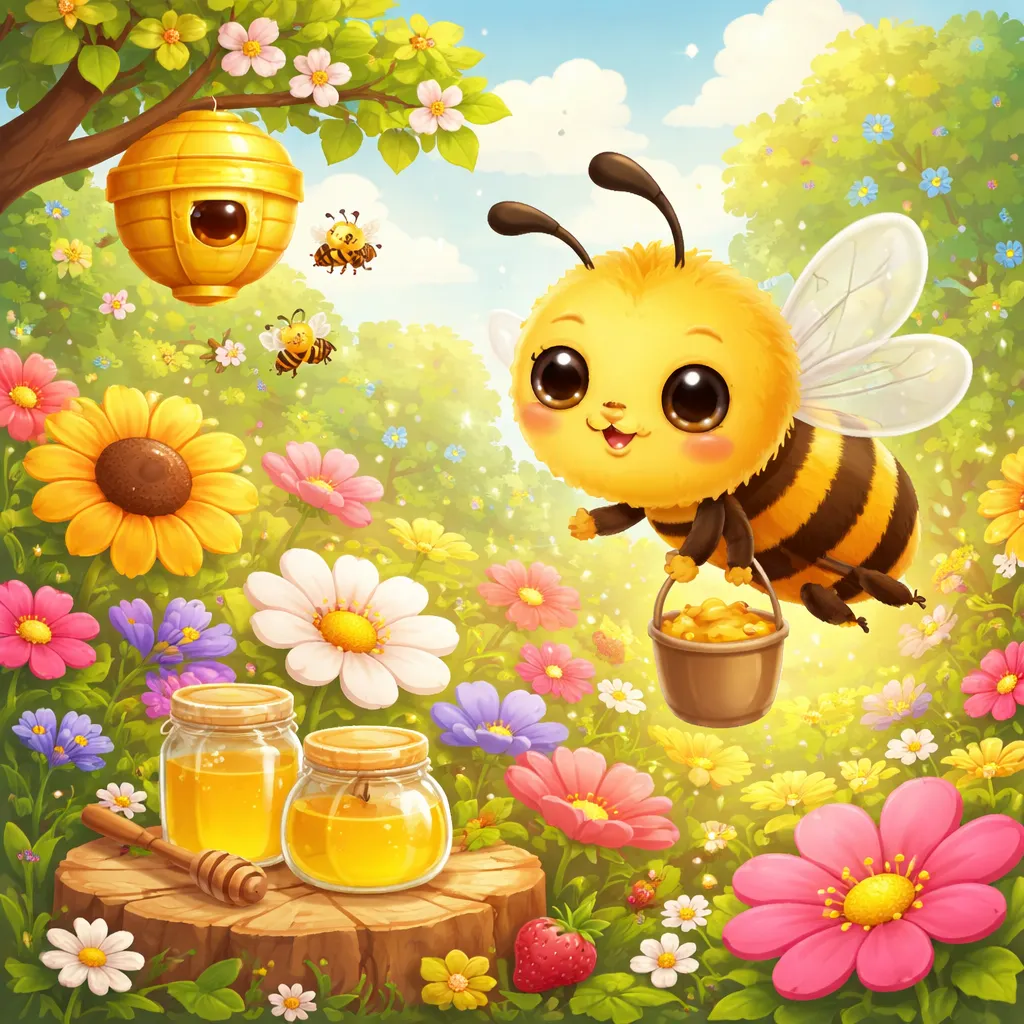

Have you ever watched a bee buzzing from flower to flower in a garden? Have you wondered what it is doing and where it is going? Bees are amazing, hard-working insects that help our world. In Portugal, there is a sweet, active song that tells the story of a little bee’s important job. Let’s follow its flight and learn the busy song “The Little Bee (A Abelhinha).”
About the Song
Here are the descriptive and rhythmic lyrics of a cherished traditional Portuguese children’s song. This version celebrates the bee’s daily journey:
A abelhinha, a abelhinha
Voa, voa, no jardim.
A abelhinha, a abelhinha
Busca o pólen, sem parar.
A abelhinha, a abelhinha
Faz o mel, faz o mel.
A abelhinha, a abelhinha
Trabalha muito, é fiel.
Zum zum zum, zum zum zum!
English Translation:
The little bee, the little bee
Flies, flies, in the garden.
The little bee, the little bee
Looks for pollen, without stopping.
The little bee, the little bee
Makes the honey, makes the honey.
The little bee, the little bee
Works a lot, is faithful.
Zum zum zum, zum zum zum!
This is a classic Portuguese-language children’s song from Portugal that describes the life and work of a honeybee. The word “abelhinha” means “little bee.” The song is a beautiful, simple tribute to this tiny insect’s big role. It follows the bee as it flies busily through the garden. Its mission is to look for pollen, the yellow powder from flowers, and it never stops. Then, the bee uses what it collects to make sweet, golden honey. The song praises the bee for being a hard and faithful worker. It ends with the classic buzzing sound, “Zum zum zum!”. This song teaches us to appreciate the bee’s essential work in nature.
What the Song is About
The song is a close-up look at a bee’s important day. Imagine a small, fuzzy bee with yellow and black stripes. The song starts, and you see it lift into the air. Its tiny wings move so fast they are a blur. “The little bee flies, flies, in the garden,” the song says. It zooms from one bright flower to another.
The bee is on a very important mission. It is not just playing; it is working. It carefully lands on a flower and gathers the yellow pollen onto its legs. “The little bee looks for pollen, without stopping.” The bee is always moving, always working. Then, it takes all this pollen back to its home, the hive. There, with the other bees, it turns the pollen into delicious honey. “The little bee makes the honey, makes the honey.” The song tells us the bee works very hard and is faithful to its job. Finally, we hear the happy sound of its success: “Zum zum zum!”
Who Made It & Its Story
“A Abelhinha” is a beloved traditional Portuguese folk song, part of a rich tradition of nature songs that teach children about the environment. Its composer is unknown, as it has been passed down through families and schools for generations. The song reflects the importance of nature, agriculture, and bees in Portuguese culture, where beekeeping and gardens are common. It is sung widely in Portuguese kindergartens and homes to teach about this crucial insect in a joyful, memorable way, fostering respect for nature’s small workers from a young age.
This delightful song is loved for three important reasons. First, it is a wonderful, gentle introduction to the vital science of pollination and how honey is made, explained in a way a young child can grasp. Second, its lyrics are full of action verbs and repetition (“voa, voa,” “faz o mel, faz o mel”), making it excellent for language learning and easy to remember. Third, it celebrates positive values like hard work, dedication, and being part of a community (the hive), all through the charming character of the little bee.
When to Sing It
This song is perfect for active, learning moments. You can sing it while walking through a park or garden, watching for real bees on flowers. You can chant it during a craft time where you draw or make a bee and a flower. You can also hum it while helping with a task at home, pretending to be a busy, helpful bee yourself.
What Children Can Learn
This busy bee song is a wonderful teacher about nature, action words, and positive values in Portuguese.
Vocabulary
The song teaches us words for insects, actions, and nature in Portuguese. “The little bee” (A abelhinha). “Flies” (Voa). “In the garden” (no jardim). “Looks for” or “seeks” (Busca). “The pollen” (o pólen). “Without stopping” (sem parar). “Makes” or “does” (Faz). “The honey” (o mel). “Works” (Trabalha). “A lot” (muito). “Is faithful” (é fiel). “Zum zum zum” is the buzzing sound.
Let’s use these words! You can say, “A abelha voa.” (The bee flies.) Or, “Eu como mel.” (I eat honey.) New word: Pollination. This is the very important job the bee is doing. When a bee visits a flower for pollen, it carries tiny grains from one flower to another, which helps new flowers and fruits grow.
Language Skills
This song is a fantastic lesson in using many different action words (verbs) to describe what someone or something is doing right now or as a habit. It also shows us how to use the word “muito” (a lot, very) to describe how much someone does an action.
Concept Definition: Action words (verbs) are words that tell us what is happening. They show actions, like fly, look for, or make. The word “muito” is a word that describes the amount or degree of an action. It tells us if someone works “a lot” or is “very” faithful.
Features and Types: Look at all the actions the little bee does in the song. It “voa” (flies), “busca” (looks for), “faz” (makes), and “trabalha” (works). These are all different action words. Then, see how “muito” is used: “Trabalha muito” (Works a lot). Here, “muito” tells us how much the bee works. In “é fiel” (is faithful), we could also say “muito fiel” (very faithful).
How to Spot Them: Here is a simple “action detective” trick. Ask yourself: “What is happening? What is the subject doing?” The word that answers that question is often an action word. In the song, ask: “What does the bee do?” It flies, seeks, makes, works! To find “muito,” listen for this word that comes after an action to make it stronger or before a describing word.
How to Use Them: A great way to talk about a busy creature or person is the “Busy Bee Formula”. The pattern is: “[Who/What] + [Action Word] + [Where/What] + (muito).”
Example from the song: “A abelhinha busca o pólen.” (The little bee looks for pollen.) “A abelhinha trabalha muito.” (The little bee works a lot.)
Example you can make: “O pássaro canta muito.” (The bird sings a lot.) “Eu leio livros.” (I read books.)
Sounds & Rhythm Fun
Listen to the busy, buzzing rhythm of the melody. The song has a steady, active pace that makes you think of fast-beating wings. The repetition of words like “voa, voa” and “faz o mel, faz o mel” sounds like the bee’s persistent, hard work. The best part is the sound effect at the end: “Zum zum zum!” This is the Portuguese way to write a bee’s buzz, and it’s so fun to say! The melody often goes up and down, like a bee flying from flower to flower.
The rhythm is constant and energetic, perfect for moving your hands like fluttering wings. The repeating lines make the words stick in your mind easily. The “zum zum zum” is a playful finish that everyone can join in on. This musical pattern is perfect for creating your own busy insect song. You can write your own “A Formiguinha” (The Little Ant) song! Use the same tune. Try: “A formiguinha, a formiguinha, anda, anda, no caminho. A formiguinha, a formiguinha, carrega uma folha, sem parar…” (The little ant, the little ant, walks, walks, on the path. The little ant, the little ant, carries a leaf, without stopping…)
Culture & Big Ideas
“A Abelhinha” connects to the importance of nature, agriculture, and beekeeping in Portuguese culture. Portugal has many gardens, orchards, and wildflowers that depend on bees. The song reflects a deep respect for these tiny workers who help plants grow. It also connects to the cultural value of “trabalho” (work) and being “fiel” (faithful or dedicated) to your responsibilities, even for the smallest member of the community.
The song conveys three beautiful, important ideas. First, it introduces the basic science of pollination and honey-making in a simple, joyful way, fostering early curiosity about nature. Second, it celebrates the value of hard work, perseverance (“sem parar” - without stopping), and dedication to a task. Third, it teaches appreciation for even the smallest creatures and shows how every being has an important role to play in our world.
Values & Imagination
Imagine you are the “abelhinha.” You are a tiny bee, leaving your hive home in the early morning. Your wings hum as you fly into the bright garden. You see a field of colorful flowers below. “I fly, fly, in the garden,” you think. You land on a big, sunny sunflower. The yellow pollen dust gets all over your fuzzy legs. “I look for pollen, without stopping,” you buzz. You visit flower after flower after flower. You feel the weight of the pollen on your legs. You fly back to the dark, warm hive. There, with thousands of your sisters, you work hard to turn the pollen into thick, golden honey. “I make the honey, I work a lot, I am faithful,” you think, proud of your job for the hive. Finally, you rest, your wings making a happy, tired sound: “Zum zum zum!” How does the pollen smell? How does the honey taste? Draw the little bee’s world. Draw a garden full of different flowers. Draw the bee flying between them with little lines to show movement. Draw a beehive in a tree. Show the bee making honey inside. Write the sound “ZUM ZUM ZUM” in the air. This shows the song’s story.
The song encourages us to notice the hard work of insects, appreciate how food like honey is made, and value our own helpful tasks. A wonderful activity is a “Helpful Bee Mission.” Choose a small job you can do to help your family or class, like putting away toys or setting the table. While you do it, buzz softly “zum zum zum” and think, “I am working like the little bee, I am helpful and faithful.” This connects you to the song’s spirit of dedicated work.
So, from the first flight to the final buzz, this song creates a picture of a tiny creature doing a giant job. It is a vocabulary lesson in nature and actions. It is a language lesson in using many action verbs and the word “muito.” It is a music lesson in a busy, repetitive, buzzing melody. “The Little Bee (A Abelhinha)” teaches us about nature’s wonders, the importance of hard work, and the sweet results of being faithful to our tasks.
Your Core Takeaways
You are now an expert on the song “The Little Bee (A Abelhinha).” You know it is a Portuguese song about a bee’s important work of flying, finding pollen, making honey, and buzzing. You’ve learned Portuguese words like “abelhinha,” “voa,” “jardim,” “pólen,” “mel,” and “trabalha,” and you’ve practiced using action verbs and the describing word “muito.” You’ve felt its busy, buzzing rhythm and created your own hard-working insect verse. You’ve also discovered the song’s message about nature’s cycles, the value of hard work and perseverance, and appreciating every creature’s role.
Your Practice Missions
First, be a “Buzzing Bee Actor.” Sing the song. For each action, do a movement: flap your arms to fly (“voa”), pretend to gather pollen from a flower (“busca o pólen”), pretend to stir a pot of honey (“faz o mel”), and wipe your brow from hard work (“trabalha muito”). End by buzzing “Zum zum zum!” as you fly away. This mission helps you remember the words through actions.
Second, do a “Muito Detective” hunt. Look around you for someone or something that is doing an action “a lot.” It could be a clock ticking a lot, a friend laughing a lot, or a fan spinning a lot. Say a simple Portuguese sentence about it using “muito.” For example, “O relógio faz tique-taque muito.” (The clock goes tick-tock a lot.) This mission helps you practice using “muito” to describe actions.