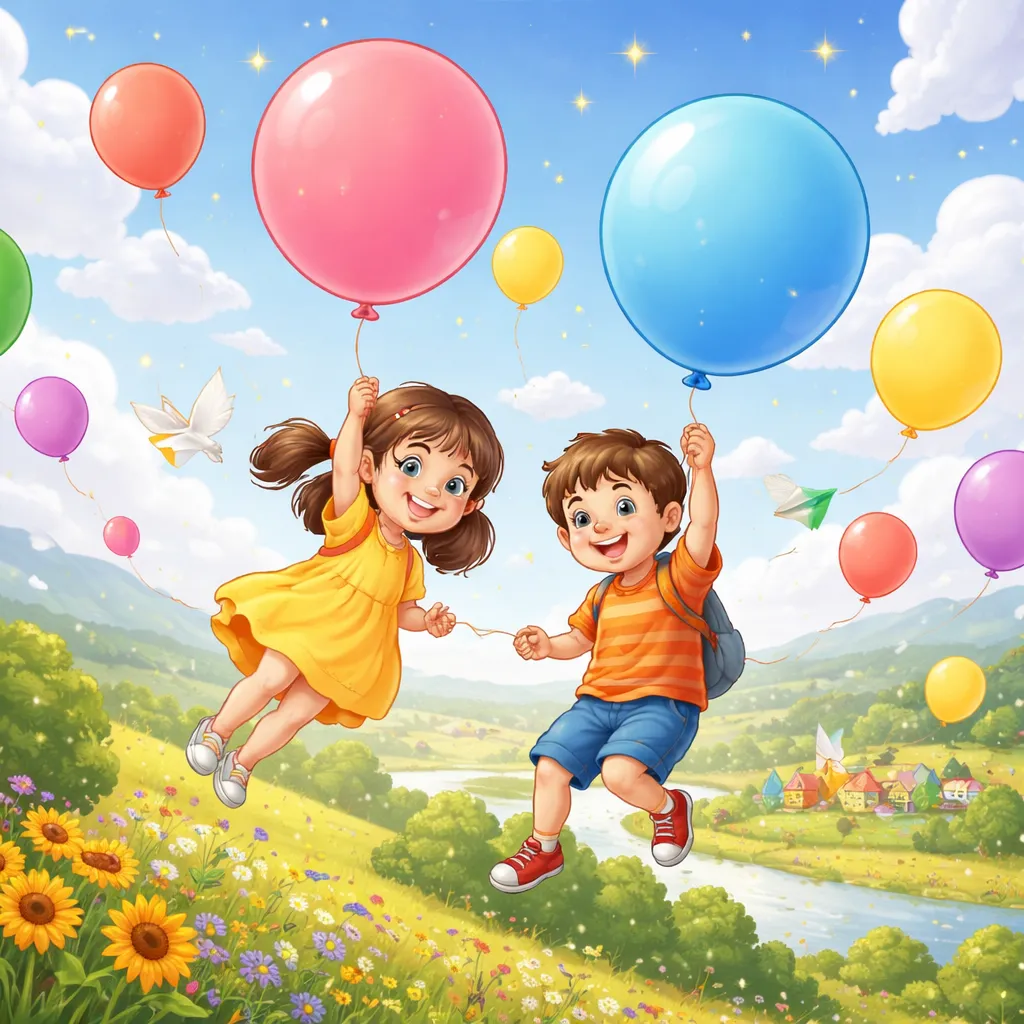

Some songs lift children's spirits as high as balloons in the sky. The Chinese Songs: Little Balloon (小气球) does exactly that. This joyful children's song celebrates the simple delight of watching a colorful balloon float higher and higher. For families learning English and Chinese together, this song offers a wonderful way to explore sky words, colors, and the pure happiness of letting dreams take flight. Let us discover what makes this traditional song so uplifting for young learners.
What Is the Story Behind This Famous Song?
The Chinese Songs: Little Balloon (小气球) is a beloved children's song from China. It describes a child holding a beautiful balloon that wants to fly up to the sky. The song captures the bittersweet moment of letting go and watching something dear float away.
Balloons bring special joy to children everywhere. Their bright colors and light, floating movement fascinate young minds. A child holding a balloon feels connected to the sky. Letting one go can bring tears, but also wonder as it drifts away.
In Chinese culture, releasing balloons can symbolize sending wishes or dreams upward. The balloon carries hopes as it rises. Children imagine their balloon reaching the clouds, maybe even touching the sun.
The song's melody is light and airy, like a balloon floating on wind. It rises and falls gently. Children often stretch their arms up while singing, imagining themselves floating away.
Understanding this背景 helps families appreciate the song's connection to childhood wonder and the universal experience of holding something that wants to fly. It opens conversations about sky, wind, and the dreams we send upward.
The Complete Lyrics of the Song
Reading the words helps us understand this floating adventure. Here are the lyrics to the Chinese Songs: Little Balloon (小气球) in Chinese characters, pinyin, and English.
小气球,小气球,圆圆的脸儿真可爱
Xiǎo qì qiú, xiǎo qì qiú, yuán yuán de liǎn er zhēn kě ài
Little balloon, little balloon, round round face really cute
红橙黄绿青蓝紫,五彩缤纷真美丽
Hóng chéng huáng lǜ qīng lán zǐ, wǔ cǎi bīn fēn zhēn měi lì
Red orange yellow green cyan blue purple, colorful really beautiful
小气球,小气球,想要飞到天上去
Xiǎo qì qiú, xiǎo qì qiú, xiǎng yào fēi dào tiān shàng qù
Little balloon, little balloon, wants to fly to sky up
风儿吹,轻轻飘,越飞越高真自由
Fēng er chuī, qīng qīng piāo, yuè fēi yuè gāo zhēn zì yóu
Wind blows, gently float, more fly more high really free
小气球,小气球,慢慢飞走啦
Xiǎo qì qiú, xiǎo qì qiú, màn màn fēi zǒu la
Little balloon, little balloon, slowly fly away
我挥挥手说再见,愿你快乐在天涯
Wǒ huī huī shǒu shuō zài jiàn, yuàn nǐ kuài lè zài tiān yá
I wave wave hand say goodbye, wish you happy at sky's edge
Learning New Words from the Song
The Chinese Songs: Little Balloon (小气球) introduces many useful words. Let us explore them in both Chinese and English.
First, "小气球" (xiǎo qì qiú) means little balloon. "气" (qì) means air. "球" (qiú) means ball. Together they describe a ball filled with air.
"圆圆的脸儿" (yuán yuán de liǎn er) means round round face. Repeating "圆" (yuán) emphasizes the roundness. "脸" (liǎn) means face. This personification makes the balloon feel like a friend.
"真可爱" (zhēn kě ài) means really cute. "真" (zhēn) means really or truly. "可爱" (kě ài) means cute or lovable.
The next line lists seven colors: "红橙黄绿青蓝紫" (hóng chéng huáng lǜ qīng lán zǐ). This teaches the rainbow colors in Chinese. Red, orange, yellow, green, cyan, blue, purple. Learning color words in sequence helps memory.
"五彩缤纷" (wǔ cǎi bīn fēn) means colorful. This phrase describes many colors together beautifully.
"真美丽" (zhēn měi lì) means really beautiful. "美丽" (měi lì) is a common word for beautiful.
"想要飞到天上去" (xiǎng yào fēi dào tiān shàng qù) means wants to fly to sky up. "想要" (xiǎng yào) means want. "飞" (fēi) means fly. "到" (dào) means to. "天上" (tiān shàng) means sky above. "去" (qù) means go.
"风儿吹" (fēng er chuī) means wind blows. The "儿" (er) adds a gentle, affectionate tone.
"轻轻飘" (qīng qīng piāo) means gently float. Repeating "轻" (qīng) makes the floating even softer.
"越飞越高" (yuè fēi yuè gāo) means more fly more high. This structure shows increasing height. "越...越..." means "the more... the more..."
"真自由" (zhēn zì yóu) means really free. "自由" (zì yóu) means freedom. The balloon feels free floating in the sky.
"慢慢飞走啦" (màn màn fēi zǒu la) means slowly fly away. "走" (zǒu) here means away. "啦" (la) adds a gentle, sad tone.
"挥挥手" (huī huī shǒu) means wave wave hand. This shows the child waving goodbye.
"说再见" (shuō zài jiàn) means say goodbye. "再见" (zài jiàn) is the common word for goodbye.
"愿你快乐在天涯" (yuàn nǐ kuài lè zài tiān yá) means wish you happy at sky's edge. "愿" (yuàn) means wish. "快乐" (kuài lè) means happy. "天涯" (tiān yá) means the edge of the sky, far away.
Exploring Pronunciation and Rhythm
The Chinese Songs: Little Balloon (小气球) offers wonderful practice with Mandarin tones and rhythm. The floating melody matches the balloon's movement.
Listen to "Xiǎo qì qiú" repeated. The tones go: xiǎo (third tone, falling then rising), qì (fourth tone, falling), qiú (second tone, rising). The rising tone on "qiú" suggests upward movement.
The color list "hóng chéng huáng lǜ qīng lán zǐ" uses multiple tones: hóng (second tone), chéng (second tone), huáng (second tone), lǜ (fourth tone), qīng (first tone), lán (second tone), zǐ (third tone). This variety makes the list musical.
"Yuè fēi yuè gāo" uses fourth tone for "yuè" (falling), first tone for "fēi" (high level), fourth tone for "yuè" (falling), and first tone for "gāo" (high level). The pattern emphasizes the increasing height.
Finding Grammar Patterns in the Lyrics
The Chinese Songs: Little Balloon (小气球) offers useful grammar examples for Chinese learners. One pattern appears with the desiderative "想要" (xiǎng yào) meaning want. This shows desire or intention. Children learn to express what they want.
The song uses directional complements. "飞到天上" (fēi dào tiān shàng) uses "到" (dào) to show reaching a destination. "飞走" (fēi zǒu) uses "走" (zǒu) to show moving away.
Another pattern appears with "越...越..." (yuè...yuè...). "越飞越高" means the more it flies, the higher it gets. This structure is essential for describing increasing qualities.
The phrase "挥挥手" (huī huī shǒu) shows verb repetition. Repeating the verb makes the action seem light or brief.
The final line uses "愿" (yuàn) to express a wish. This verb introduces hopes and dreams for others.
Fun Learning Activities for the Whole Family
Listening to the Chinese Songs: Little Balloon (小气球) can inspire many family activities. Here are some ideas to try together.
First, blow up balloons together. Use different colors. Practice color names in Chinese while inflating. "红色气球" (red balloon), "蓝色气球" (blue balloon). Tie them and watch them float. This connects language to hands-on play.
Second, have a balloon release ceremony. If appropriate, release a biodegradable balloon outdoors. Watch it float away. Say goodbye in Chinese. "再见,小气球" (goodbye, little balloon). Talk about where it might go. This creates a memorable language moment.
Third, draw balloon pictures. Draw balloons in all colors. Label each with its Chinese color name. Add a sky background with clouds. Describe the scene in Chinese. "气球飞在天上" (balloon flies in sky). This builds art and language skills together.
Creating Printable Materials at Home
Families can make simple learning tools based on the Chinese Songs: Little Balloon (小气球). These activities help reinforce new ideas.
Create bilingual color flashcards with balloon shapes. Cut out balloon-shaped cards. On one side, write the Chinese character and pinyin for a color. On the other side, color the balloon that color and write the English word. Practice by holding up balloons and naming colors.
Make a balloon height chart. Draw a simple chart showing balloons at different heights. Label heights in Chinese. "低" (low), "高" (high), "更高" (higher), "最高" (highest). Practice describing where balloons are.
Create a fill-in-the-blank page using song lyrics in pinyin. Remove key words like "qì qiú", "yán sè", "fēi", "fēng", "gāo", and "zì yóu". Leave blanks where those words belong. Listen to the song together and fill in the missing words. This builds listening and character recognition.
Connecting the Song to Daily Life
The Chinese Songs: Little Balloon (小气球) connects to daily life through play and emotions. Every child has held a balloon. Many have felt the sadness of letting one go.
Talk with your children about times they lost something they loved. A balloon, a toy, a pet. Use Chinese to share these feelings. "我的气球飞走了" (my balloon flew away) or "我很难过" (I was sad). This builds emotional vocabulary.
The song also teaches about letting go with love. The child waves goodbye and wishes the balloon happiness. This models healthy goodbyes. Use Chinese to practice saying goodbye kindly. "祝你快乐" (wish you happiness) or "再见,朋友" (goodbye, friend).
Parents can model graceful letting go. When a child outgrows a toy or loses something, say "像小气球一样,它飞走了,我们祝它快乐" (like little balloon, it flew away, we wish it happiness). This teaches acceptance.
Educational Games to Play Together
Games make learning with the Chinese Songs: Little Balloon (小气球) exciting. Here are some simple games to try.
Play the color balloon game. Call out a color in Chinese. Children find something of that color or pretend to hold a balloon of that color. "红色的气球" (red balloon) - everyone holds up imaginary red balloon. This builds color recognition.
Try the balloon volleyball game. Gently bat a real balloon back and forth. Each time you hit it, say a word from the song in Chinese. "飞" (fly), "高" (high), "风" (wind). This builds vocabulary through movement.
Play the wish game. Take turns making wishes for others. Use the "愿" (yuàn) structure from the song. "愿你快乐" (wish you happy) or "愿你好梦" (wish you sweet dreams). This builds kindness and sentence structure.
Why This Song Helps Language Learning
The Chinese Songs: Little Balloon (小气球) helps learners in special ways. The light, airy tempo makes words easy to hear. Each phrase is clear. This helps children catch new vocabulary without feeling rushed.
The color list teaches essential vocabulary in a memorable sequence. Children learn the rainbow order while singing.
The themes of flight and freedom capture imagination. Children love thinking about floating away. This engagement keeps them interested in the language.
The goodbye message teaches emotional expression. Children learn to express wishes for others' happiness.
Making Music Part of Your Routine
Families can make songs a regular part of bilingual learning. Choose one song each week to explore together. Listen during playtime or while doing crafts.
The Chinese Songs: Little Balloon (小气球) works perfectly for outdoor play. Sing it while watching clouds or flying kites. Let the music float with the wind.
Remember that language learning thrives in joyful moments. When children associate Chinese with colorful balloons and floating dreams, they learn naturally. They understand that words connect to their happiest experiences.
Keep singing, keep floating, and keep sending dreams up to the sky together. In the great blue sky of bilingual learning, every new word is like a little balloon, rising higher and carrying joy with it.