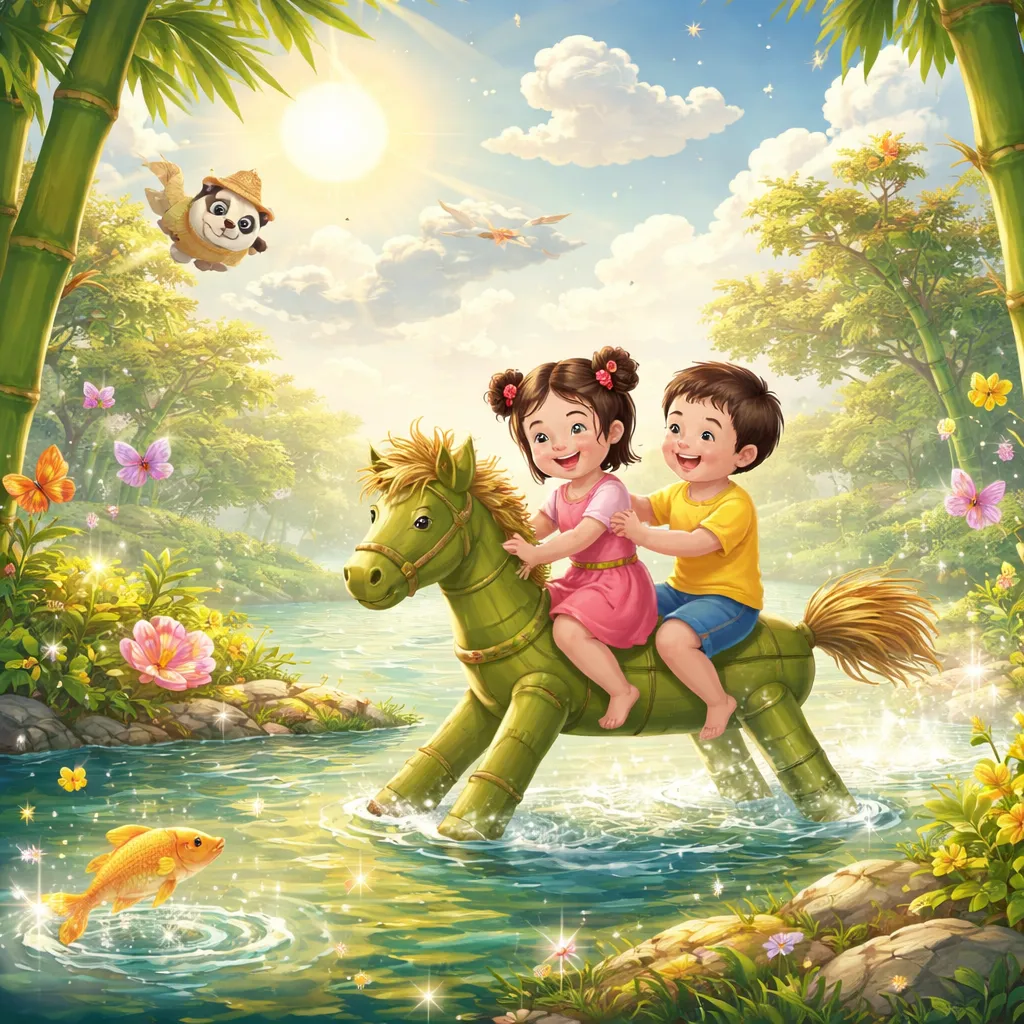

Some songs carry children on imaginary journeys. The Chinese Songs: Little Bamboo Horse (小竹马) does exactly that. This playful children's song celebrates the simple joy of pretending a bamboo stick is a galloping horse. For families learning English and Chinese together, this song offers a wonderful way to explore movement words, nature vocabulary, and the pure delight of imaginative play. Let us discover what makes this traditional song so special for young learners.
What Is the Story Behind This Famous Song?
The Chinese Songs: Little Bamboo Horse (小竹马) is a beloved children's song from China. It describes a child who pretends a bamboo stick is a horse, galloping through imaginary adventures. The song captures the timeless joy of make-believe play that children everywhere share.
In traditional China, children often made toys from natural materials. A simple bamboo stick became a horse to ride. A leaf became a boat. A stick became a sword. This creativity with simple objects taught children to use their imaginations.
The bamboo horse has special meaning in Chinese culture. Bamboo represents strength and flexibility. It bends but does not break. A child riding a bamboo horse imagines themselves strong and free, galloping across fields and through villages.
The song's rhythm imitates the galloping of a horse. Children often bounce or trot while singing, pretending they are riding. The repetitive sounds "得得得" (de de de) mimic hoofbeats.
Understanding this背景 helps families appreciate the song's connection to traditional play and the universal childhood joy of pretending. It opens conversations about imagination, nature, and the simple toys children create.
The Complete Lyrics of the Song
Reading the words helps us understand this galloping adventure. Here are the lyrics to the Chinese Songs: Little Bamboo Horse (小竹马) in Chinese characters, pinyin, and English.
小竹马,小竹马,得得得得跑得快
Xiǎo zhú mǎ, xiǎo zhú mǎ, dé dé dé dé pǎo de kuài
Little bamboo horse, little bamboo horse, clip clop clip clop run fast
骑上它,骑上它,哒哒哒哒过小河
Qí shàng tā, qí shàng tā, dā dā dā dā guò xiǎo hé
Ride on it, ride on it, clatter clatter cross small river
小竹马,小竹马,得得得得上山坡
Xiǎo zhú mǎ, xiǎo zhú mǎ, dé dé dé dé shàng shān pō
Little bamboo horse, little bamboo horse, clip clop clip clop up hillside
穿过林,跳过沟,带我飞到云里头
Chuān guò lín, tiào guò gōu, dài wǒ fēi dào yún lǐ tou
Go through woods, jump over ditch, take me fly to inside clouds
小竹马,小竹马,你是我的好朋友
Xiǎo zhú mǎ, xiǎo zhú mǎ, nǐ shì wǒ de hǎo péng you
Little bamboo horse, little bamboo horse, you are my good friend
Learning New Words from the Song
The Chinese Songs: Little Bamboo Horse (小竹马) introduces many useful words. Let us explore them in both Chinese and English.
First, "小竹马" (xiǎo zhú mǎ) means little bamboo horse. "竹" (zhú) means bamboo, a tall plant used for many things. "马" (mǎ) means horse. Together they create a toy horse made from bamboo.
"得得得得" (dé dé dé dé) is onomatopoeia for horse hoofbeats. These sharp sounds imitate a horse trotting. Children love saying them.
"跑得快" (pǎo de kuài) means run fast. "跑" (pǎo) is run. "得" (de) connects the verb to the description. "快" (kuài) means fast.
"骑上它" (qí shàng tā) means ride on it. "骑" (qí) is the verb for riding horses or bikes. "上" (shàng) means onto. "它" (tā) means it.
"哒哒哒哒" (dā dā dā dā) is another hoofbeat sound, slightly different from "得得". These sound words enrich children's phonological awareness.
"过小河" (guò xiǎo hé) means cross small river. "过" (guò) means cross or pass. "小河" (xiǎo hé) means small river.
"上山坡" (shàng shān pō) means go up hillside. "山" (shān) means mountain or hill. "坡" (pō) means slope.
"穿过林" (chuān guò lín) means go through woods. "穿" (chuān) means pass through. "林" (lín) means woods or forest.
"跳过沟" (tiào guò gōu) means jump over ditch. "跳" (tiào) means jump. "沟" (gōu) means ditch or small trench.
"带我飞到云里头" (dài wǒ fēi dào yún lǐ tou) means take me fly to inside clouds. "带" (dài) means bring or take. "飞" (fēi) means fly. "云" (yún) means cloud. "里头" (lǐ tou) means inside.
"好朋友" (hǎo péng you) means good friend. This sweet phrase shows the child's love for their toy horse.
Exploring Pronunciation and Rhythm
The Chinese Songs: Little Bamboo Horse (小竹马) offers wonderful practice with Mandarin tones and rhythm. The galloping rhythm makes it exciting to say.
Listen to "Xiǎo zhú mǎ" repeated. The tones go: xiǎo (third tone, falling then rising), zhú (second tone, rising), mǎ (third tone). The pattern of rising and falling tones mimics a horse's motion.
The hoofbeat sounds "dé dé dé dé" all use second tone (rising). This rising pitch sounds like a horse picking up speed.
"Pǎo de kuài" uses third tone for "pǎo" (falling then rising), neutral for "de", and fourth tone for "kuài" (falling). The falling tone on "kuài" emphasizes speed.
The phrase "dài wǒ fēi dào yún lǐ tou" combines multiple tones: dài (fourth tone, falling), wǒ (third tone), fēi (first tone, high level), dào (fourth tone), yún (second tone, rising), lǐ (third tone), tou (neutral). This variety creates a flowing melody.
Finding Grammar Patterns in the Lyrics
The Chinese Songs: Little Bamboo Horse (小竹马) offers useful grammar examples for Chinese learners. One pattern appears with directional complements. "骑上" (qí shàng) uses "上" (shàng) to show getting onto something. "过" (guò) in "过小河" and "跳过" shows crossing or passing.
The song uses "得" (de) in "跑得快" to connect the verb to its description. This structure is essential for describing how actions are done. For example, "跳得高" (jump high) or "飞得远" (fly far).
Another pattern appears with serial verb constructions. "带我飞到云里头" uses multiple verbs in sequence. "带" (bring), "飞" (fly) - the first verb shows how the second happens. This is common in Chinese.
The word "里" (lǐ) with "头" (tou) in "里头" shows location. These location words help describe where things are.
The final line uses the "是...的" (shì...de) structure for emphasis. "你是我的好朋友" emphasizes that the horse truly is a good friend.
Fun Learning Activities for the Whole Family
Listening to the Chinese Songs: Little Bamboo Horse (小竹马) can inspire many family activities. Here are some ideas to try together.
First, make your own bamboo horse. Find a sturdy stick about waist height. Decorate it with ribbons or yarn for a mane. Practice Chinese words while crafting. "竹子" (bamboo), "马" (horse), "绳子" (string). This connects language to hands-on creation.
Second, go on imaginary rides. Use your bamboo horses to gallop around the house or yard. Pretend to cross rivers, climb hills, and jump over ditches. Use Chinese words from the song. "过小河" (cross river), "上山坡" (up hillside), "跳过沟" (jump ditch). This makes the song come alive.
Third, create an obstacle course. Set up pillows for hills, blue towels for rivers, and cushions for ditches. Gallop through on your bamboo horses. Describe each obstacle in Chinese. This builds action vocabulary through movement.
Creating Printable Materials at Home
Families can make simple learning tools based on the Chinese Songs: Little Bamboo Horse (小竹马). These activities help reinforce new ideas.
Create bilingual movement flashcards. On one side, write the Chinese character and pinyin for action words from the song. Run, 跑. Ride, 骑. Cross, 过. Jump, 跳. Fly, 飞. On the other side, draw a picture of the action. Practice doing each action while saying the word.
Make a landscape coloring page. Draw a simple scene with a river, hill, woods, and clouds. Label each feature in Chinese. 小河, 山坡, 林, 云. Color together while saying the words. This builds nature vocabulary.
Create a fill-in-the-blank page using song lyrics in pinyin. Remove key words like "zhú mǎ", "pǎo", "hé", "shān", "lín", and "yún". Leave blanks where those words belong. Listen to the song together and fill in the missing words. This builds listening and character recognition.
Connecting the Song to Daily Life
The Chinese Songs: Little Bamboo Horse (小竹马) connects to daily life through imagination and play. Every child has pretended something ordinary was something wonderful.
Talk with your children about their favorite pretend games. A box becomes a spaceship. A stick becomes a sword. A blanket becomes a cave. Use Chinese to describe these games. "这是我的飞船" (this is my spaceship) or "我骑着竹马" (I'm riding a bamboo horse). This builds imagination vocabulary.
The song also teaches about friendship with nature. The bamboo horse is made from a plant. It becomes a friend. Talk about how we can be friends with nature. Use Chinese words for plants and trees. This builds environmental awareness.
Parents can model imaginative play. Pick up a stick and say "这是我的竹马" (this is my bamboo horse). Gallop around with your child. This shows that imagination is for everyone, not just children.
Educational Games to Play Together
Games make learning with the Chinese Songs: Little Bamboo Horse (小竹马) exciting. Here are some simple games to try.
Play the follow the leader gallop. One person leads on a bamboo horse, doing different movements. Gallop fast, slow, high steps, low steps. Others follow and describe the action in Chinese. "跑得快" (run fast) or "跳得高" (jump high). This builds action vocabulary.
Try the obstacle course challenge. Set up a course with different challenges. Call out each challenge in Chinese. "过小河" (cross river) and "上山坡" (up hillside). Children navigate the course while repeating the words. This builds listening and following directions.
Play the sound effects game. One person makes a horse sound or movement. Others guess what the horse is doing in Chinese. "得得得" means trotting. "哒哒哒" means galloping. "嘶" (sī) means neighing. This builds sound vocabulary.
Why This Song Helps Language Learning
The Chinese Songs: Little Bamboo Horse (小竹马) helps learners in special ways. The galloping rhythm makes words exciting to say. Children want to move while singing, which helps memory.
The onomatopoeia like "得得得" and "哒哒哒" are fun to practice. They build confidence with Chinese sounds through playful repetition.
The movement theme connects to physical activity. Children learn action words they can use immediately. Run, jump, ride, cross, fly - these verbs appear in daily conversation.
The imagination theme captures children's natural play. They already pretend and imagine. The song gives them Chinese words for what they already do.
Making Music Part of Your Routine
Families can make songs a regular part of bilingual learning. Choose one song each week to explore together. Listen during active play or outdoor time.
The Chinese Songs: Little Bamboo Horse (小竹马) works perfectly for outdoor adventures. Play it while walking or running. Let the rhythm match your steps.
Remember that language learning thrives in active moments. When children associate Chinese with galloping and jumping, they learn naturally. They understand that words connect to their whole bodies in motion.
Keep singing, keep galloping, and keep imagining wonderful adventures together. In the great meadow of bilingual learning, every new word is like a bamboo horse ready to carry your child on an exciting journey.