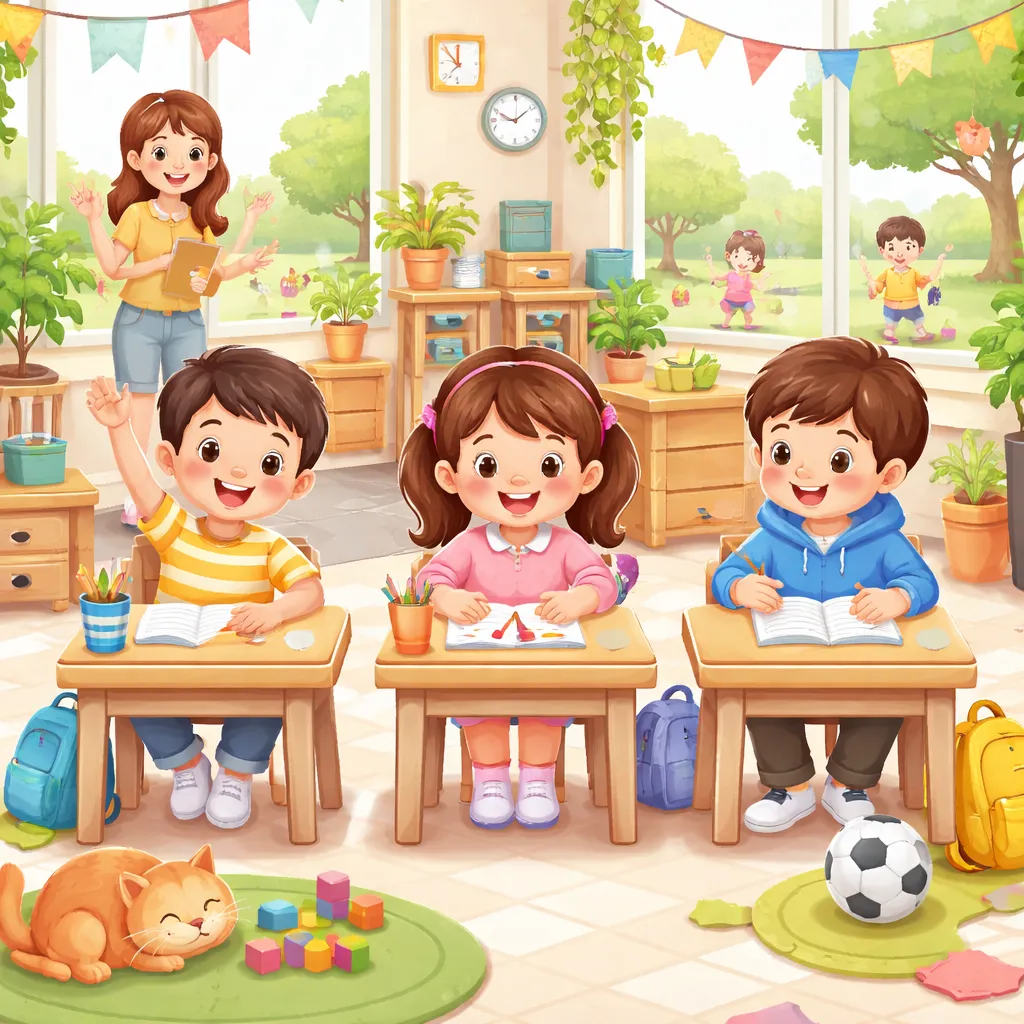

Some songs celebrate the quiet places where learning happens every day. The Chinese Songs: Little Desk (小课桌) does exactly that. This gentle children's song honors the little desk where children sit, write, and dream. For families learning English and Chinese together, this song offers a wonderful way to explore school vocabulary, daily routines, and the special relationship between a child and their learning space. Let us discover what makes this traditional song so meaningful for young learners.
What Is the Story Behind This Famous Song?
The Chinese Songs: Little Desk (小课桌) is a beloved children's song from China. It describes a child's desk at school where books are stacked, pencils are arranged, and lessons are learned. The song teaches children to appreciate and care for their personal learning space.
In Chinese classrooms, each child has their own desk. This small space becomes their home away from home during school hours. They keep their books there, rest their arms while writing, and sometimes even hide small treasures inside.
The song personifies the little desk as a faithful friend who supports the child every day. It never complains about heavy books or messy papers. It simply stands ready each morning for another day of learning.
The melody is gentle and steady, like a desk that remains constant through all the school years. Children often pat their desks while singing, feeling grateful for this special place.
Understanding this背景 helps families appreciate the song's message of gratitude and responsibility. It opens conversations about school, organization, and taking care of our things.
The Complete Lyrics of the Song
Reading the words helps us understand this special learning space. Here are the lyrics to the Chinese Songs: Little Desk (小课桌) in Chinese characters, pinyin, and English.
小课桌,小课桌,每天陪着我
Xiǎo kè zhuō, xiǎo kè zhuō, měi tiān péi zhe wǒ
Little desk, little desk, every day accompany me
课本作业放上面,写字又画画
Kè běn zuò yè fàng shàng miàn, xiě zì yòu huà huà
Textbooks homework place on top, write characters and draw pictures
小课桌,小课桌,肚子里面藏
Xiǎo kè zhuō, xiǎo kè zhuō, dù zi lǐ miàn cáng
Little desk, little desk, belly inside hide
铅笔橡皮和尺子,都是好伙伴
Qiān bǐ xiàng pí hé chǐ zi, dōu shì hǎo huǒ bàn
Pencils erasers and rulers, all are good companions
小课桌,小课桌,我要爱护你
Xiǎo kè zhuō, xiǎo kè zhuō, wǒ yào ài hù nǐ
Little desk, little desk, I will cherish you
不乱画,不弄脏,天天谢谢你
Bù luàn huà, bù nòng zāng, tiān tiān xiè xiè nǐ
Not scribble, not make dirty, every day thank you
Learning New Words from the Song
The Chinese Songs: Little Desk (小课桌) introduces many useful words. Let us explore them in both Chinese and English.
First, "小课桌" (xiǎo kè zhuō) means little desk. "课" (kè) means lesson or class. "桌" (zhuō) means table. Together they describe a table used for lessons.
"每天陪着我" (měi tiān péi zhe wǒ) means every day accompany me. "每天" (měi tiān) means every day. "陪" (péi) means accompany. "着" (zhe) shows ongoing action.
"课本作业放上面" (kè běn zuò yè fàng shàng miàn) means textbooks homework place on top. "课本" (kè běn) means textbook. "作业" (zuò yè) means homework. "放" (fàng) means place. "上面" (shàng miàn) means on top.
"写字又画画" (xiě zì yòu huà huà) means write characters and draw pictures. This phrase shows two common desk activities.
"肚子里面藏" (dù zi lǐ miàn cáng) means belly inside hide. Desks often have storage underneath. "肚子" (dù zi) means belly, personifying the desk. "藏" (cáng) means hide.
"铅笔橡皮和尺子" (qiān bǐ xiàng pí hé chǐ zi) lists common school supplies. Pencils, erasers, and rulers. "和" (hé) means and.
"都是好伙伴" (dōu shì hǎo huǒ bàn) means all are good companions. These tools become friends in learning.
"我要爱护你" (wǒ yào ài hù nǐ) means I will cherish you. The child promises to care for the desk.
"不乱画" (bù luàn huà) means not scribble. Keeping the desk clean shows respect.
"不弄脏" (bù nòng zāng) means not make dirty. "弄" (nòng) means make or do. "脏" (zāng) means dirty.
"天天谢谢你" (tiān tiān xiè xiè nǐ) means every day thank you. Gratitude is expressed daily.
Exploring Pronunciation and Rhythm
The Chinese Songs: Little Desk (小课桌) offers wonderful practice with Mandarin tones and rhythm. The steady melody matches the reliable desk.
Listen to "Xiǎo kè zhuō" repeated. The tones go: xiǎo (third tone, falling then rising), kè (fourth tone, falling), zhuō (first tone, high level). The first tone provides stability.
The phrase "měi tiān péi zhe wǒ" uses third tone for "měi" (falling then rising), first tone for "tiān" (high level), second tone for "péi" (rising), neutral for "zhe", and third tone for "wǒ" (falling then rising). The pattern feels like daily routine.
"Qiān bǐ xiàng pí hé chǐ zi" uses first tone for "qiān" (high level), third tone for "bǐ" (falling then rising), fourth tone for "xiàng" (falling), second tone for "pí" (rising), second tone for "hé" (rising), third tone for "chǐ" (falling then rising), and neutral "zi". The variety keeps it interesting.
Finding Grammar Patterns in the Lyrics
The Chinese Songs: Little Desk (小课桌) offers useful grammar examples for Chinese learners. One pattern appears with the particle "着" (zhe) in "陪着" (péi zhe). This shows an ongoing state. The desk continuously accompanies the child.
The song uses "放上面" (fàng shàng miàn) with "上面" (shàng miàn) indicating location. This structure is essential for describing where things go.
Another pattern appears with "和" (hé) connecting nouns. "铅笔橡皮和尺子" lists items together. This basic conjunction appears constantly.
The negative commands "不乱画" and "不弄脏" use "不" (bù) plus verb to express what not to do. This teaches how to make negative requests.
The phrase "天天" (tiān tiān) repeats "天" to mean every day. This pattern works with other time words too.
Fun Learning Activities for the Whole Family
Listening to the Chinese Songs: Little Desk (小课桌) can inspire many family activities. Here are some ideas to try together.
First, organize a desk or study space together. Whether it's a real school desk or a table at home, practice arranging supplies. Name each item in Chinese as you place it. "放课本" (place textbook), "放铅笔" (place pencil), "放橡皮" (place eraser). This connects language to real organization.
Second, create a desk care promise. Talk about how to keep a desk clean and organized. Write promises in Chinese. "我不乱画" (I won't scribble), "我天天整理" (I organize every day). Sign the promise together. This builds responsibility and vocabulary.
Third, practice gratitude for learning spaces. Go around and say one thing you're thankful for about your desk or study area. Use Chinese. "谢谢我的桌子" (thank you my desk), "谢谢我的椅子" (thank you my chair). This builds gratitude vocabulary.
Creating Printable Materials at Home
Families can make simple learning tools based on the Chinese Songs: Little Desk (小课桌). These activities help reinforce new ideas.
Create bilingual school supply flashcards. On one side, write the Chinese character and pinyin for school items. Desk, 课桌. Textbook, 课本. Pencil, 铅笔. Eraser, 橡皮. Ruler, 尺子. On the other side, draw a picture and write the English word. Practice by matching items to their names.
Make a desk organization chart. Draw a simple picture of a desk with labeled areas. "上面" (top), "里面" (inside), "左边" (left side), "右边" (right side). Practice placing items in different areas while saying the location words.
Create a fill-in-the-blank page using song lyrics in pinyin. Remove key words like "kè zhuō", "kè běn", "qiān bǐ", "xiàng pí", "chǐ zi", and "ài hù". Leave blanks where those words belong. Listen to the song together and fill in the missing words. This builds listening and character recognition.
Connecting the Song to Daily Life
The Chinese Songs: Little Desk (小课桌) connects to daily life through school and study spaces. Every child has a place where they learn and do homework.
Talk with your children about their desk or study area. What do they keep there? How do they feel when it's organized? Use Chinese to share. "我的桌子很整齐" (my desk is very neat) or "我喜欢我的课桌" (I like my desk). This builds personal connection to vocabulary.
The song also teaches about responsibility. The child promises to care for their desk. In daily life, children can take responsibility for their own spaces. Use Chinese to encourage this. "整理你的课桌" (organize your desk) or "爱护你的东西" (cherish your things).
Parents can model good organization. Keep your own workspace tidy and say "我在爱护我的桌子" (I'm cherishing my desk). Children learn by watching.
Educational Games to Play Together
Games make learning with the Chinese Songs: Little Desk (小课桌) exciting. Here are some simple games to try.
Play the supply scavenger hunt. Call out school supply names in Chinese. "找铅笔" (find pencil), "找橡皮" (find eraser). Children find them and place them on their desk. This builds listening and object recognition.
Try the what's missing game. Place several school supplies on a desk. Have children close their eyes. Remove one item. They open eyes and say what's missing in Chinese. "铅笔不见了" (pencil disappeared). This builds observation and vocabulary.
Play the desk clean-up race. Set a timer and see who can organize their desk fastest while saying what they're doing in Chinese. "放课本" (place textbook), "放铅笔" (place pencil). This builds action vocabulary and organization skills.
Why This Song Helps Language Learning
The Chinese Songs: Little Desk (小课桌) helps learners in special ways. The steady tempo makes words easy to hear. Each phrase is clear. This helps children catch new vocabulary without feeling rushed.
The school theme connects to daily experience. Children encounter desks and school supplies every day. This makes the Chinese words meaningful and immediately useful.
The responsibility theme teaches character along with language. Children learn to care for their things while learning new words.
The gratitude expression creates positive emotions. Saying "谢谢" daily builds kindness and vocabulary together.
Making Music Part of Your Routine
Families can make songs a regular part of bilingual learning. Choose one song each week to explore together. Listen during homework time or while organizing spaces.
The Chinese Songs: Little Desk (小课桌) works perfectly for study time. Play it while children do homework. Let the music remind them to care for their learning space.
Remember that language learning thrives in organized moments. When children associate Chinese with their own desks and supplies, they learn naturally. They understand that words help them describe their daily world.
Keep singing, keep organizing, and keep learning together at the desk of life. In the great classroom of bilingual learning, every new word is like a pencil or book, ready to help your child grow.